

How ClearPath Reduces the Need for Stenting (What the Evidence Actually Shows)
If you searched for “ClearPath reduces the need for stenting,” you’re not alone. Many patients want to know whether a newer option can help them avoid a stent—especially when they’re weighing procedures, recovery, and long-term medication plans.
Important accuracy note (please read first)
In the available published sources reviewed for this article, “ClearPath” is not documented as a cardiology technology that reduces the need for coronary or other vascular stenting. Instead, the name “ClearPath” appears in three separate, unrelated contexts:
- Ahmed ClearPath: an ophthalmology glaucoma drainage device used to help lower eye pressure in glaucoma, not a cardiology product. Sources: Eyewiki (Ahmed ClearPath Glaucoma Drainage Device) and The Ophthalmologist (Ahmed ClearPath ST).
- ClearPath Medical: a manufacturer of medical cables and cable assemblies, not a stent, catheter, or angioplasty tool.
- ClearPath Nasal: an ENT (ear, nose, and throat) brand context for nasal and sinus procedures (for example, tools used in balloon-assisted septoplasty and office-based sinus treatments). This ENT use is unrelated to heart or vascular stents. For patients who may have intended to find the ENT product, see ClearPath Nasal patient resources and the overview What is balloon-assisted septoplasty?
Across these sources, there is no evidence for a cardiology product named “ClearPath” that reduces the need for coronary or vascular stenting. If you’ve seen that claim online, it may reflect brand-name overlap, search-engine mix-ups across different specialties, or assumptions not tied to cardiology evidence.
Bottom line: “ClearPath” in current sources refers to eye surgery, medical manufacturing, or ENT—not a cardiology stent-sparing device.
Why patients ask about reducing the need for stenting
What a stent is (plain-language explanation)
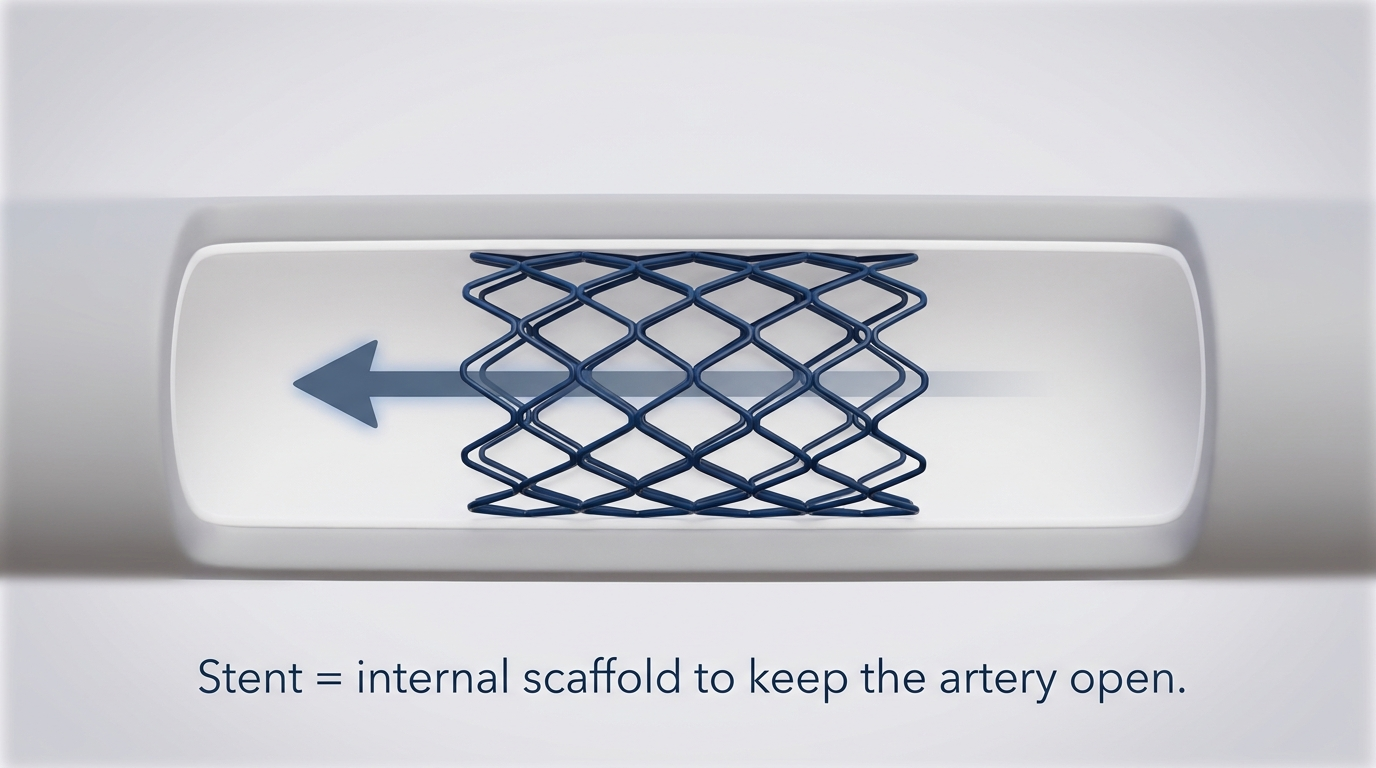
A stent is a small mesh tube placed inside an artery to help keep it open after a narrowing is treated with a catheter-based procedure (often called angioplasty). Think of a stent like internal scaffolding that supports blood flow once the tight spot is widened.
Common reasons patients hope to avoid a stent
- Preference to avoid a permanent implant if a safe, effective non-implant option exists
- Concerns about follow-up medications (and how they fit with other conditions)
- Worry about future procedures, including the possibility of re-narrowing
Key takeaway
Many strategies can be “stent-sparing,” but whether they’re appropriate depends on your anatomy, symptoms, and the exact type and location of the narrowing. The right approach is chosen for your specific lesion—not in a generic “stent vs no stent” debate.
Quick clarification—what “ClearPath” means in current sources
Ahmed ClearPath (ophthalmology)
Ahmed ClearPath is a glaucoma drainage device used in eye surgery to help lower intraocular pressure. It is not related to heart or vascular stents. Sources: Eyewiki and The Ophthalmologist.
ClearPath Medical (manufacturing)
ClearPath Medical is described as a provider of medical cables and cable assemblies. It is not presented as a stent, catheter, angioplasty tool, or cardiology implant.
ClearPath Nasal (ENT)
ClearPath Nasal appears in ENT contexts (for example, tools used in balloon-assisted septoplasty and office-based sinus procedures). This is unrelated to coronary stenting. If you landed here by accident while searching for nasal or sinus information, see ClearPath Nasal patient resources and What is balloon-assisted septoplasty? If you meant the ENT product, you’re in the right place now; if you meant cardiology, there is no “ClearPath” stent-sparing device documented in the cardiac literature reviewed.
What does have evidence in cardiology for reducing stent use?
Drug-coated balloons (DCBs): a stent-sparing option in selected cases
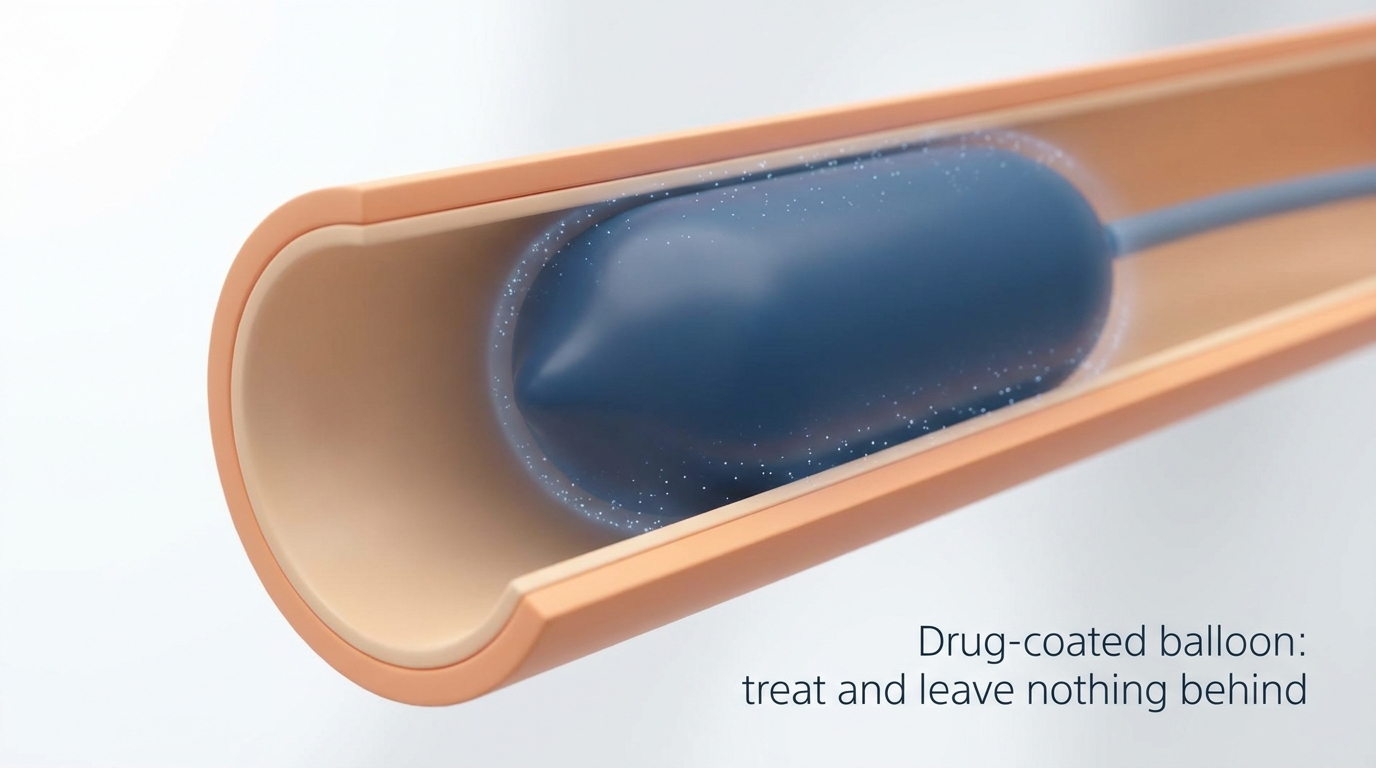
A drug-coated balloon delivers medication to the artery wall during angioplasty without leaving a permanent implant. It aims to treat the narrowing and then leave nothing behind. Whether DCBs are appropriate depends on the vessel’s location, size, disease pattern, and whether it is a previously treated area. See 2023 review (PMC) for context on evolving coronary DCB use: https://pmc.ncbi.nlm.nih.gov/articles/PMC10475729/
In the right anatomy, DCBs can reduce reliance on permanent implants, but they are not a one-size-fits-all solution.
Treating in-stent restenosis to avoid “another” stent
In-stent restenosis is re-narrowing inside a prior stent. When it occurs, teams often look for ways to restore flow without adding more metal layers, when feasible. UVA Health (2024) describes a newly approved coronary in-stent restenosis approach and why it matters for patients with recurring narrowing: https://www.uvahealth.com/healthy-practice/newly-approved-coronary-in-stent-restenosis
Effective treatment of restenosis can sometimes reduce the need to add additional stents.

Other strategies your cardiology team may consider
- Optimizing medical therapy
- Managing risk factors such as cholesterol, blood pressure, diabetes, and smoking
- Careful imaging and lesion assessment to match the safest, most effective strategy to your anatomy
Procedure tools are only part of the plan—medical therapy and risk control remain essential.

Questions to ask your cardiologist if your goal is “no stent (if possible)”
- Am I a candidate for a drug-coated balloon approach?
- If a stent is recommended, what’s the plan to lower restenosis risk?
- What are the tradeoffs of stent vs stent-sparing strategies in my case?
- What follow-up testing and symptoms should I watch for?
If you were actually searching for ENT or nasal information rather than cardiology, you may find answers in the ClearPath FAQs. Bring your goals to your appointment and ask how the plan fits your specific anatomy and risks.
Safety and expectations
“No stent” doesn’t always mean “lower risk”
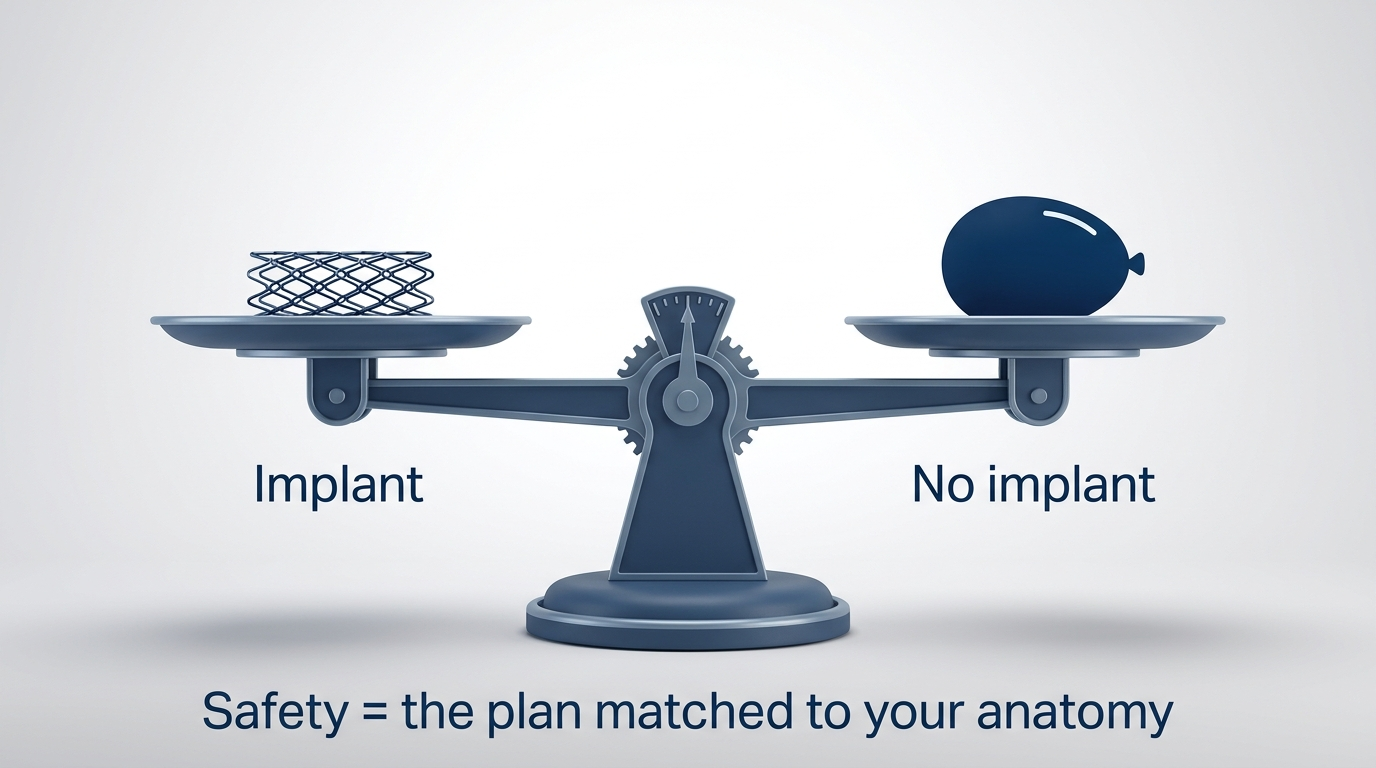
A “no implant” pathway can be appealing, but it isn’t automatically safer or better. The best option depends on urgency, anatomy, and how reliably each strategy restores and maintains blood flow.
When a stent is still the best option
In emergencies such as a suspected heart attack, rapidly restoring blood flow may require tools and steps that differ from elective, planned care. In other cases, artery anatomy or lesion complexity may make a stent the most predictable and durable choice.
Medical disclaimer
This article is for general education and is not medical advice. Only a licensed clinician who knows your history and imaging can tell you what’s appropriate for your situation. Note: See the final, required disclaimer at the end of this article. The safest plan is the one tailored to you by a clinician who has your full picture.
Bottom line—what to remember about “ClearPath” and stenting
- In the sources reviewed, “ClearPath” is not a cardiology stent-reduction technology.
- “ClearPath” refers to an ophthalmology device (Ahmed ClearPath), a medical manufacturing company (ClearPath Medical), and an ENT brand context (ClearPath Nasal). None of these are documented cardiology tools that reduce coronary stenting.
- In cardiology, stent-sparing discussions often include drug-coated balloons and improved approaches to in-stent restenosis—used selectively based on anatomy and clinical goals.
If your goal is to avoid a permanent implant, ask your cardiologist: “Is there a stent-sparing option for my specific lesion?” If you intended to find the ENT/nasal ClearPath context, you can review ClearPath FAQs or Contact us for navigation help. Right device, right patient, right problem—that’s what drives good decisions.
FAQ
Is ClearPath a device that prevents coronary stenting?
Based on the sources linked here, no. “ClearPath” is documented as the Ahmed ClearPath glaucoma drainage device (ophthalmology), a manufacturing company (ClearPath Medical), and an ENT brand context (ClearPath Nasal). None are cardiology devices shown to prevent coronary stenting.
What is the best alternative to a stent?
There isn’t one “best” alternative for everyone. In selected coronary anatomies, drug-coated balloons are discussed as a stent-sparing option. Your anatomy, symptoms, and treatment goals determine suitability.
Can restenosis happen after a stent?
Yes. In-stent restenosis refers to re-narrowing inside a prior stent. Teams focus on prevention and durable treatment plans to lower that risk.
Is ClearPath Nasal related to heart or vascular stents?
No. ClearPath Nasal appears in ENT contexts for nasal and sinus procedures and is unrelated to cardiology or vascular stenting. If you were looking for that, see ClearPath FAQs for general information.
References
Drug-coated balloon review (2023): https://pmc.ncbi.nlm.nih.gov/articles/PMC10475729/
Eyewiki: Ahmed ClearPath Glaucoma Drainage Device: https://eyewiki.org/Ahmed_ClearPath_Glaucoma_Drainage_Device
The Ophthalmologist (2025): Ahmed ClearPath ST: https://theophthalmologist.com/issues/2025/articles/september/introducing-the-ahmed-clearpath-st-evolving-design-for-evolving-needs-in-glaucoma-surgery
ClearPath Medical: https://clearpathmedical.com/
UVA Health (2024), In-stent restenosis: https://www.uvahealth.com/healthy-practice/newly-approved-coronary-in-stent-restenosis
ClearPath Nasal patient resources (navigation, ENT context): https://www.clearpathnasal.com/for-patients
ClearPath Nasal blog: What is balloon-assisted septoplasty (navigation, ENT context): https://www.clearpathnasal.com/blog/what-is-balloon-assisted-septoplasty
ClearPath FAQs (navigation, ENT context): https://www.clearpathnasal.com/faqs
Contact us (navigation): https://www.clearpathnasal.com/contact
This article is for educational purposes only and is not medical advice. Please consult a qualified healthcare provider for diagnosis and treatment.

Dr. David G. Dillard
Author
Share it with others!





