The Long-Term Effects of Mouth Breathing (and How to Fix It)
Breathing through your mouth once in a while—during a cold, a vigorous exercise session, or a stuffy night—usually isn’t a big deal. But when mouth breathing becomes your default, it may affect more than a dry throat in the morning.
Your nose is the front door for airflow: it filters, warms, and humidifies what you breathe in. When you consistently switch to the side door (your mouth), those functions are reduced—especially during sleep, when airway muscles relax and small issues can feel bigger.
Below, we break down the potential long-term effects of mouth breathing, why it happens, how to spot it, and what may help you return to comfortable nasal breathing.
What Is Mouth Breathing—and Why Does It Happen?
Mouth breathing means air is moving primarily in and out through the mouth instead of the nose. For many people, it starts because nasal airflow is limited—then becomes a habit, especially during sleep.
A common pattern clinicians hear is: “I didn’t realize I was doing it until I noticed morning dry mouth, snoring, or a partner told me I sleep with my mouth open.”
Mouth breathing vs. nasal breathing (what’s the difference?)
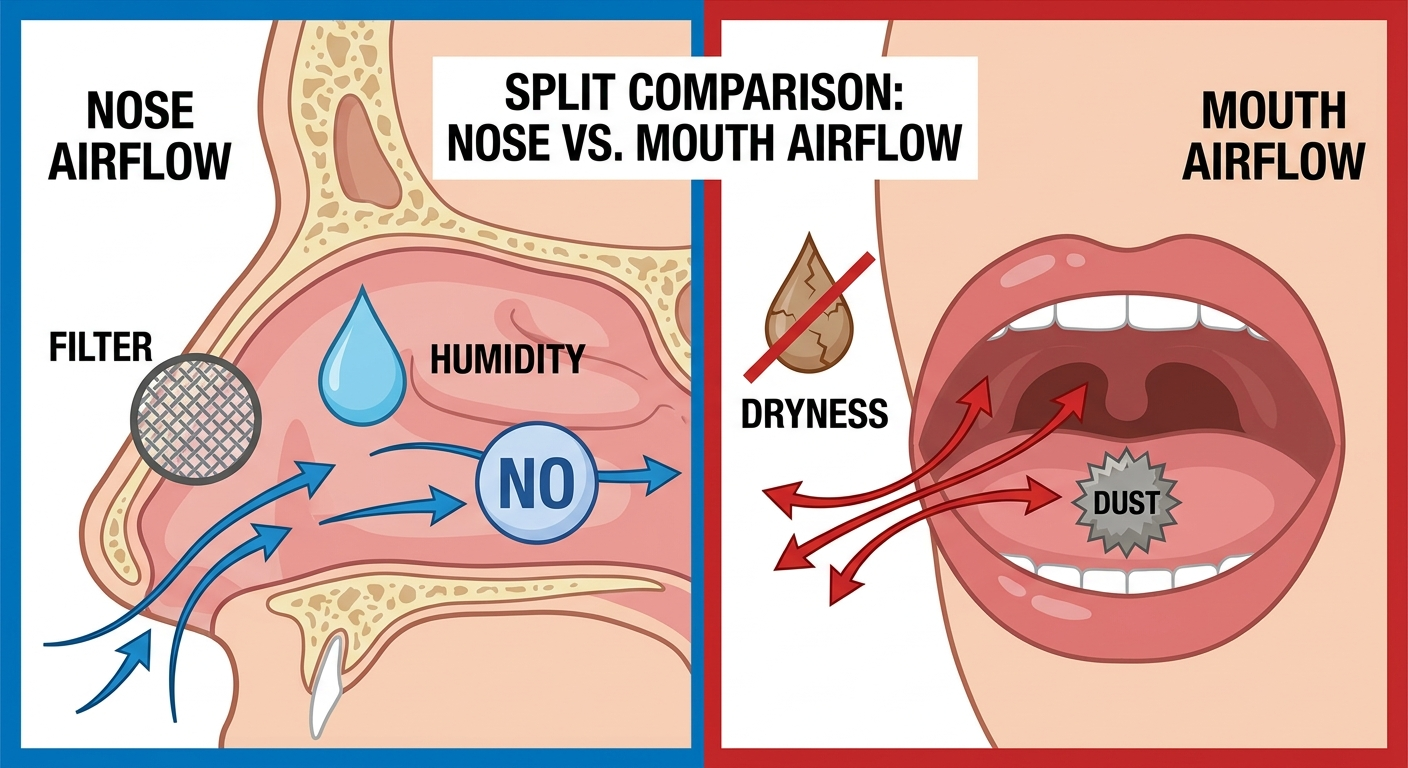
In a comparison of nasal breathing and mouth breathing, your nose has built-in advantages:
- Filters particles and irritants
- Warms and humidifies incoming air (helpful for the throat and lungs)
- Produces nasal nitric oxide, which is discussed in respiratory literature as playing a role in breathing efficiency
Mouth breathing bypasses many of these steps, often leading to drier, less comfortable breathing—especially at night. (Sources: Cleveland Clinic; general respiratory research summaries)
Common causes of chronic mouth breathing
The most common drivers are anything that makes nasal breathing feel difficult, including:
- Nasal obstruction, such as a deviated septum or enlarged turbinates
- Allergies and chronic inflammation/congestion
- Enlarged tonsils/adenoids (especially in children)
- Habit and sleep positioning (once mouth breathing feels “normal,” it can persist)
If you’re exploring whether anatomy is part of your symptoms, this overview may help: deviated septum symptoms, causes, and treatment options — https://www.clearpathnasal.com/blog/deviated-septum-explained-symptoms-causes-and-modern-treatment-options
Patient takeaway: If you can’t comfortably breathe through your nose, mouth breathing often becomes the default. (Source: Cleveland Clinic)
Long-Term Effect #1 — Changes in Facial Growth and Jaw Development (Especially in Kids)
One frequently discussed potential effect of chronic mouth breathing is how it may influence facial and dental arch development in children whose bones are still growing.
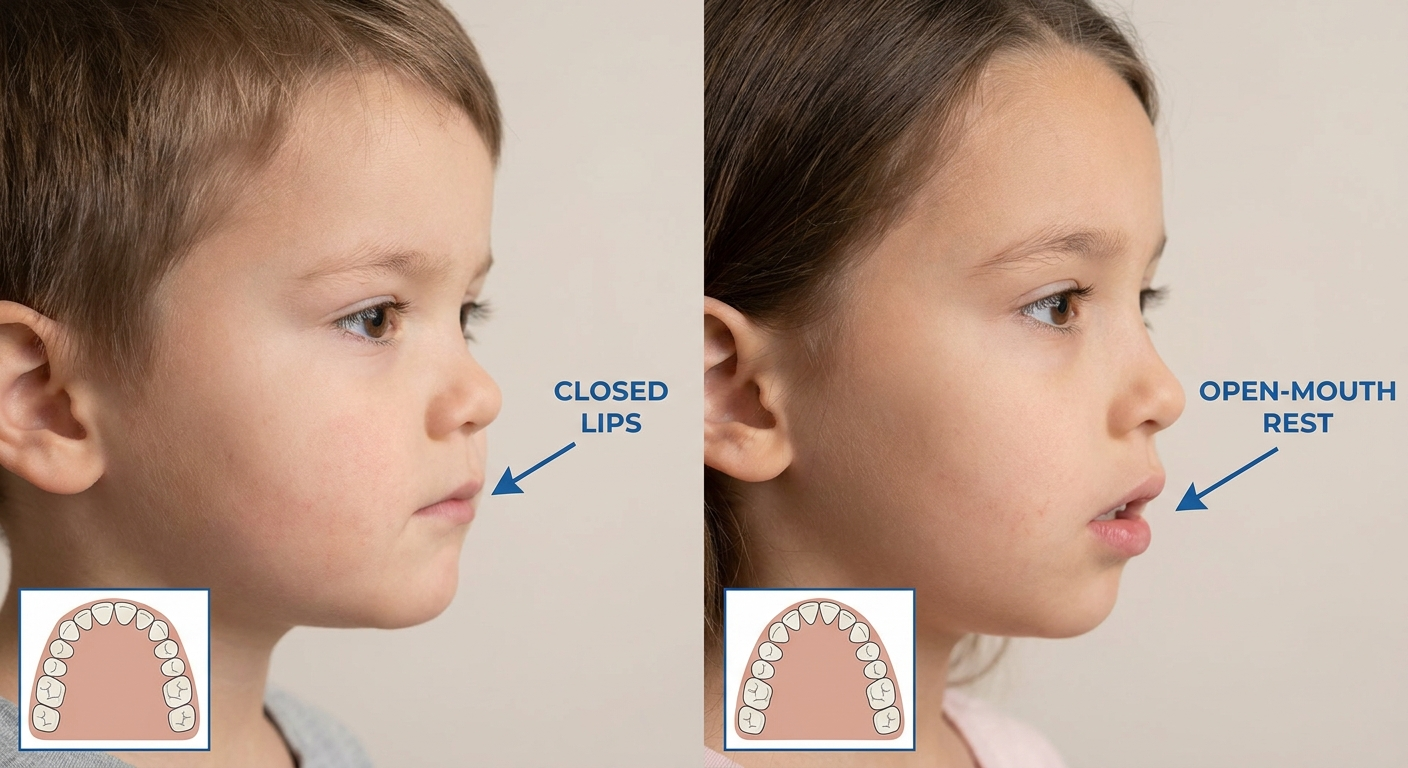
You may hear the term “adenoid facies,” which describes a facial pattern sometimes associated with long-standing mouth breathing in children. In plain language, it can include:
- A longer, narrower facial appearance
- Open-mouth resting posture
- Less-defined jaw development in some cases
Not every child who mouth breathes will develop these features, but persistent airway issues during growth years may increase the risk. (Sources: NIH/PMC 2023–2024)
How chronic mouth breathing can shape the palate and jaw
Research reviews describe associations between chronic mouth breathing and:
- A narrow upper jaw
- A high-arched palate
- Dental crowding and bite changes
Why this matters: a narrow palate can reduce space in the nasal cavity, which may make nasal breathing harder—creating a cycle of “blocked nose → mouth breathing → less favorable growth patterns.” (Sources: NIH/PMC: https://pmc.ncbi.nlm.nih.gov/articles/PMC11274061/ ; https://pmc.ncbi.nlm.nih.gov/articles/PMC11178300/)
When facial changes are most likely to happen
The greatest risk window is childhood and adolescence, when facial bones and dental arches are forming. Adults typically won’t have the same growth effects but can still experience posture-related issues (like open-mouth resting) and oral health changes that reinforce the habit.
In short: early evaluation of persistent mouth breathing in kids can help address airway issues during key growth years.
Long-Term Effect #2 — Oral Health Problems (Dry Mouth, Cavities, Bad Breath)
Consistently breathing through your mouth can dry out oral tissues. If you wake with your tongue “stuck” to the roof of your mouth, keep water on the nightstand, or notice a sore throat that fades as the day goes on, nighttime mouth breathing may be part of the picture.
Why mouth breathing dries your mouth
Mouth breathing increases airflow over oral tissues, which can contribute to dry mouth—especially overnight. Saliva helps protect teeth and gums by buffering acids and helping control bacteria. When saliva is reduced, tissues are more vulnerable. (Sources: Cleveland Clinic; dental perspective)
Increased risk of cavities (dental caries)
With less saliva:
- Acids are neutralized less effectively
- Food particles are cleared less efficiently
- The oral environment becomes more cavity-friendly
Over time, frequent cavities or “mysterious” dental issues can signal that nighttime breathing may be contributing—especially if brushing and flossing are already solid.
Bad breath (halitosis) and gum irritation
Dry tissues plus shifts in oral bacteria can contribute to:
- Persistent bad breath
- Gum irritation or sensitivity
- Sore throat on waking
Signs to watch for
Consider mouth breathing as a possibility if you regularly notice:
- Dry mouth or sore throat in the morning
- Cracked lips
- Frequent cavities despite good hygiene
- Ongoing bad breath
Bottom line: a persistently dry mouth—especially overnight—can be a clue that breathing route is affecting oral health.

Long-Term Effect #3 — Reduced Breathing Efficiency and Higher Sleep-Breathing Risk
If you’ve ever slept with a stuffy nose and woken up unrefreshed despite “enough hours,” you know airflow and sleep quality can be tightly linked.
Why the nose is well-suited for breathing
Nasal breathing provides gentle resistance that supports more controlled airflow, while filtering and conditioning air. Many people find that when nasal airflow improves, breathing feels quieter and steadier—especially during sleep. (Sources: Frontiers in Public Health; Cleveland Clinic)
The nitric oxide connection (and breathing efficiency)
Some breathing-method resources suggest nasal breathing may support more efficient breathing via exposure to nasal nitric oxide; however, the exact impact varies and evidence is mixed across studies.
Mouth breathing, snoring, and obstructive sleep apnea (OSA)
Mouth breathing and sleep apnea often appear together—not always as cause-and-effect, but as connected signals. Obstructive sleep apnea (OSA) involves repeated airflow reduction during sleep. Chronic mouth breathing, snoring, or waking up gasping can be red flags for evaluation—especially if daytime fatigue is common. (Sources: NIH/PMC sleep/respiratory reviews)
Related reading: deviated septum and sleep apnea — https://www.clearpathnasal.com/blog/deviated-septum-and-sleep-apnea-can-clearpath-improve-breathing-at-night
Daytime symptoms linked to poor sleep breathing
When sleep quality drops, common daytime effects include:
- Fatigue and low stamina
- Morning headaches
- Brain fog
- Irritability
Takeaway: if nasal blockage, snoring, and daytime fatigue cluster together, a sleep and airway evaluation may be helpful.

Long-Term Effect #4 — Cardiovascular Stress (Blood Pressure and Heart-Rate Variability)
Another area of interest is how breathing route and sleep disruption may relate to cardiovascular stress physiology over time.
How mouth breathing may relate to a “stress response”
Mouth breathing—especially when linked with poor sleep or airway obstruction—may be associated with increased sympathetic (fight-or-flight) activation. (Sources: NIH/PMC)
What research suggests over time
Some studies suggest possible associations with higher blood pressure and lower heart-rate variability (HRV, a marker often associated with rest and recovery), particularly when mouth breathing occurs alongside sleep-disordered breathing. These are associations rather than proof of direct causation. (References: NIH/PMC; overview sources)
In brief: when mouth breathing goes hand-in-hand with fragmented sleep, stress-related markers may trend in the wrong direction for some people.
How to Tell If You’re a Chronic Mouth Breather
Quick self-check (day + night clues)
Common clues include:
- Dry mouth on waking
- Drooling on the pillow
- Snoring
- Cracked lips
- Feeling like you can’t get enough air through your nose during exercise
- Needing to sleep with your mouth open to feel comfortable
(Source: Cleveland Clinic)
What to ask your dentist/ENT
Helpful questions include:
- “Do you see signs of dry mouth or airway issues?”
- “Could my nasal anatomy be limiting airflow?”
- “Do my symptoms suggest I should be evaluated for sleep-related breathing issues?”
If multiple clues point toward mouth breathing, discussing them with a clinician can help clarify next steps.
What Helps: Practical Steps to Address Mouth Breathing (Start With the Cause)
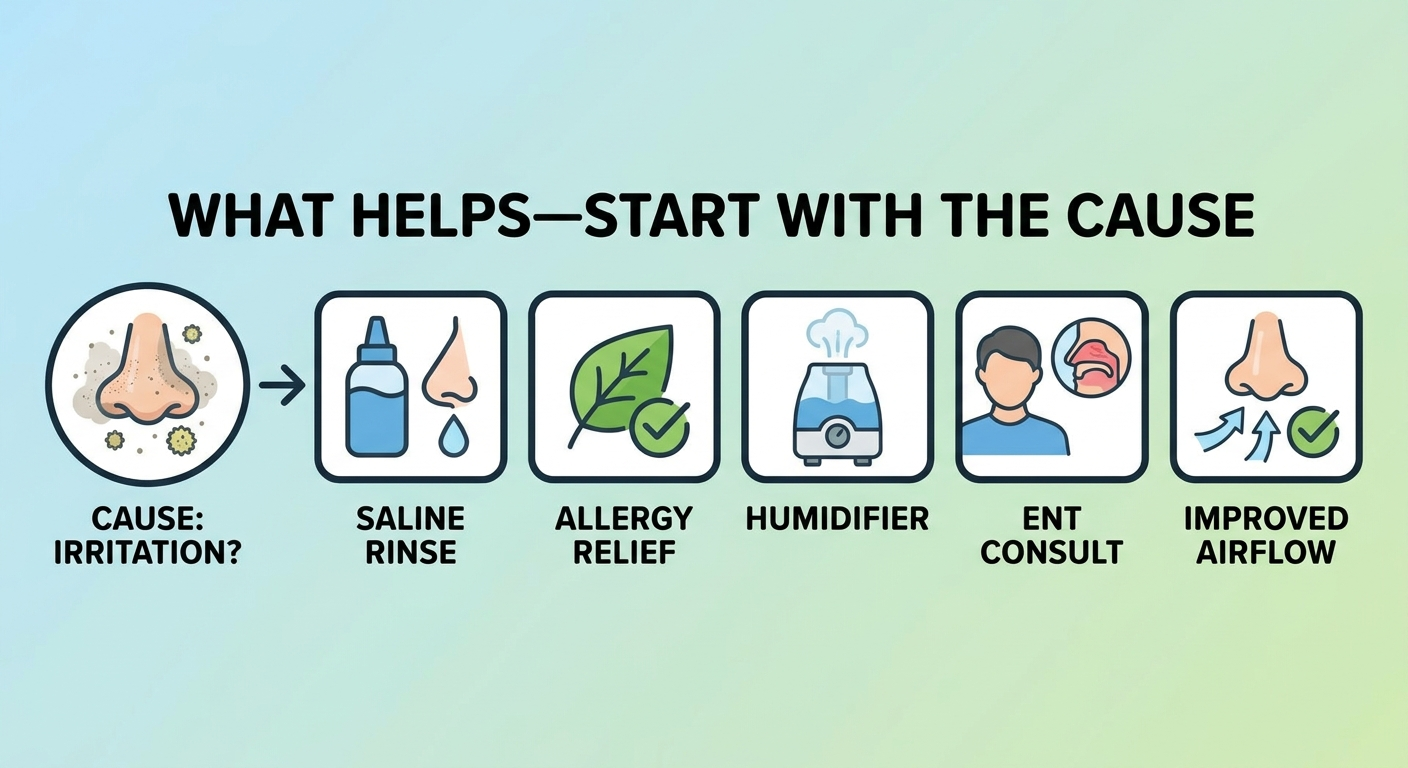
The most effective approach is to start with why mouth breathing is happening. Don’t treat mouth breathing as a willpower problem; for many people, it’s an airflow problem first—and a habit second.
Treat nasal congestion and inflammation
Depending on your situation and clinician guidance, strategies may include:
- Saline rinses
- Allergy management
- Improving bedroom humidity
- Hydration
- Sleep positioning that supports nasal breathing
If you’re unsure whether symptoms are more consistent with allergies or structure, this comparison may help: deviated septum vs. allergies (how to tell the difference) — https://www.clearpathnasal.com/blog/deviated-septum-vs-allergies-how-to-tell-the-difference
Airway-focused habits (gentle, safe options)
- Practice daytime nasal breathing during low-intensity activities (walking, light chores)
- Build awareness: when you catch yourself mouth breathing, pause and switch to nasal breathing if it’s comfortable
- If you’ve heard of mouth-taping trends: it’s not one-size-fits-all, and it’s best discussed with a clinician—especially if you suspect nasal obstruction or sleep apnea
When to see an ENT
Consider an evaluation by a qualified clinician if you have:
- Persistent blockage most days
- Recurrent sinus issues
- Chronic snoring or suspected sleep apnea
- Ongoing sleep disruption
- Exercise limitation due to nasal airflow
If the problem is structural (like a deviated septum)
Structural obstruction can keep mouth breathing “locked in,” even when allergies are well controlled. When anatomy is a major contributor, improving nasal airflow may help make nasal breathing feel natural again.
- More on options people often ask about: can you fix a deviated septum without surgery? — https://www.clearpathnasal.com/blog/can-you-fix-a-deviated-septum-without-surgery
- Next steps if long-term congestion persists: deviated septum and chronic nasal congestion—what to do next — https://www.clearpathnasal.com/blog/deviated-septum-and-chronic-nasal-congestion-what-to-do-next
Big picture: address the cause—medical, structural, or habit-related—to make nasal breathing easier and more sustainable.
Where ClearPath Fits In (Patient-Friendly, Evidence-Based Context)
For people whose mouth breathing is driven by long-term nasal obstruction, restoring nasal airflow may support a shift back toward comfortable nasal breathing—day and night. ClearPath is a device used by ENTs as part of cartilage needle-binding (CNB)-assisted septoplasty techniques in appropriately selected patients. The right option depends on your anatomy, symptoms, and a clinician’s evaluation.
Why restoring nasal airflow may help some patients return to nasal breathing
When the nose is consistently open enough to breathe through, people may notice improvements in:
- Sleep comfort
- Nighttime dryness and sore throat
- Exercise tolerance
- The ability to keep lips closed at rest
Evidence snapshot: CNB-assisted septoplasty outcomes (Dillard et al., 2026)
ClearPath is a device used in CNB-assisted septoplasty techniques. In one retrospective review of 107 consecutive cases:
- In the subset with pre/post CT imaging, objective symmetry improvements were reported: approximately 22% at the nasolacrimal duct (NLD) and 45% at the point of maximal deviation (PMD).
- In the subgroup completing symptom surveys, SNOT-22 (Sino-Nasal Outcome Test-22) scores improved from 58.7 to 44.8 at 1 month (about a 23.8% reduction), with notable improvements in congestion, facial pressure/headache, and sleep-related items.
- The report did not describe major complications in that cohort (no perforation, hematoma, infection, synechia, or conversion to traditional septoplasty).
- Among those with severe baseline deviation (>10 mm), 78% achieved at least 30% improvement in alignment.
As a single-center, retrospective study with subsets of patients analyzed, these findings are preliminary and should not be taken as proof of effectiveness for all patients. (Reference: Dillard J, Koudouovoh C, Lee V, et al. Rhinology Online. 2026;9:18–23. doi:10.4193/RHINOL/25.018)
Discuss the full range of evidence-based options with a qualified ENT to determine the most appropriate path for your situation.
FAQs About the Long-Term Effects of Mouth Breathing
Can mouth breathing change your face as an adult?
Adults are less likely to have growth-related changes, but chronic mouth breathing can still contribute to dry mouth, oral irritation, and open-mouth resting posture. In children and teens, the impact on facial and jaw development may be more significant. (Sources: NIH/PMC reviews)
Is mouth breathing always caused by a deviated septum?
No. Allergies, inflammation, enlarged tonsils/adenoids, and habit can all contribute. A deviated septum is a common structural cause, but not the only one. (Source: Cleveland Clinic)
Does nasal breathing really affect oxygen levels?
Nasal breathing supports air conditioning and exposure to nasal nitric oxide, which some experts associate with breathing efficiency. However, exact benefits vary, and evidence is mixed across studies.
Can improving nasal airflow help sleep quality?
Improving nasal airflow may reduce sleep disruption for some people, particularly if obstruction is contributing to mouth breathing and snoring. A proper evaluation helps match treatment to the cause. (Sources: NIH/PMC; Cleveland Clinic)
When should I get evaluated for sleep apnea?
If you have loud snoring, witnessed pauses in breathing, waking up gasping, or excessive daytime sleepiness—especially alongside chronic mouth breathing—ask a clinician about an evaluation. (Sources: NIH/PMC sleep reviews)
Key Takeaways
The potential long-term effects of mouth breathing may include:
- Changes in facial/jaw development during childhood
- Oral health issues like dry mouth, cavities, and bad breath
- Sleep and breathing risks, including snoring and associations with sleep apnea
- Possible associations with cardiovascular stress markers in some studies
If chronic congestion or nasal blockage is keeping you in a mouth-breathing pattern, consider an evaluation by a qualified ENT to discuss appropriate options based on your anatomy and symptoms.
Sources
- NIH/PMC (2023–2024): https://pmc.ncbi.nlm.nih.gov/articles/PMC11274061/ ; https://pmc.ncbi.nlm.nih.gov/articles/PMC11669592/ ; https://pmc.ncbi.nlm.nih.gov/articles/PMC11178300/
- Cleveland Clinic (patient education)
- Frontiers in Public Health (2024)
- Oxygen Advantage (breathing-method resource): https://oxygenadvantage.com/blogs/science/nose-breathing-vs-mouth-breathing
- Atlanta ENT Clinic overview (2024): https://www.atlantaent.com/blog/heart-health-month-how-nasal-breathing-impacts-cardiovascular-health
- Dental perspective (general education)
Medical disclaimer
This article is for educational purposes only and is not medical advice. Please consult a qualified healthcare provider for diagnosis and treatment.

Dr. David G. Dillard
Author
Share it with others!