
A Force-Directed, Minimally Invasive Approach to Septal Realignment
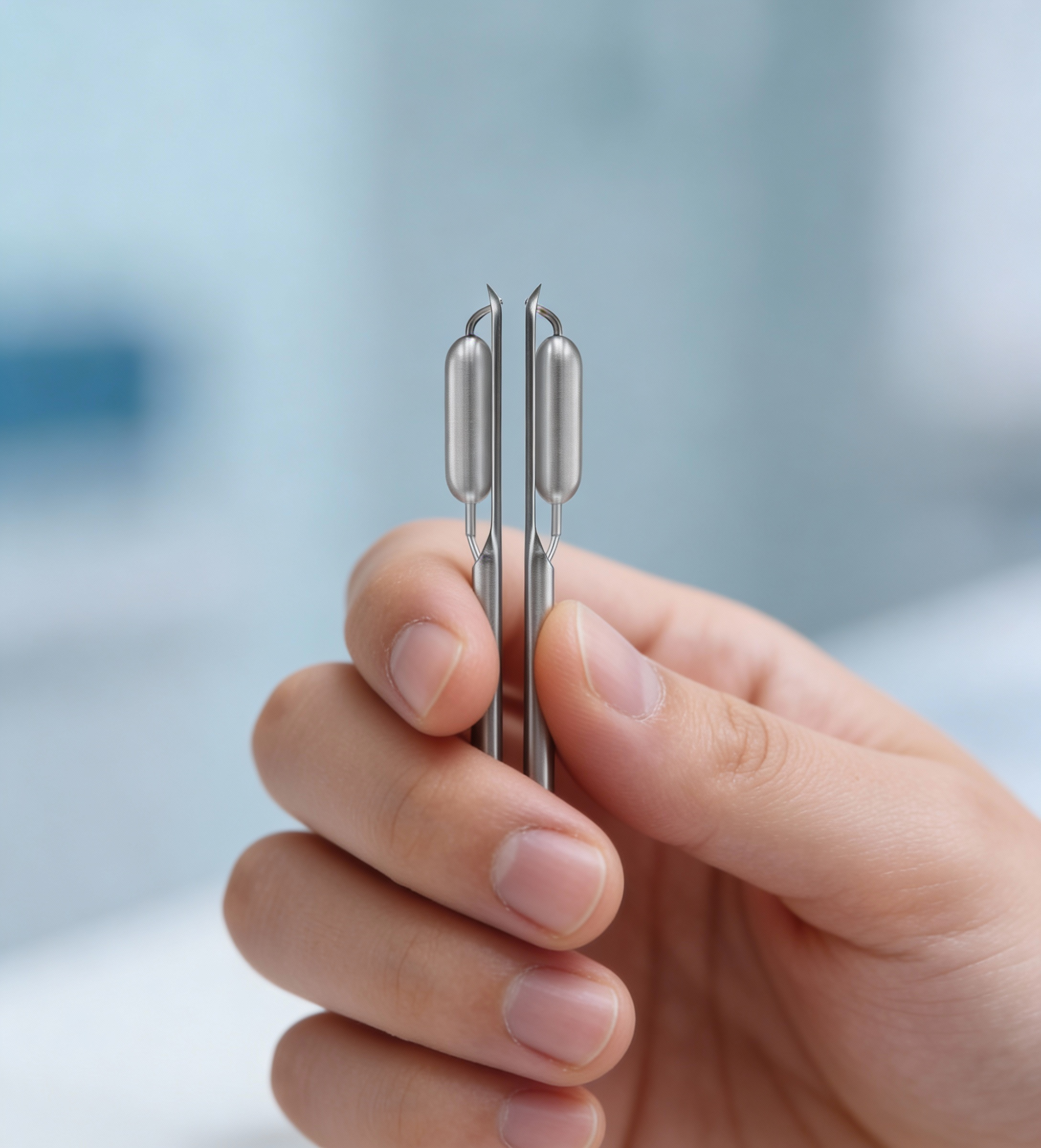
ClearPath™ Nasal Balloon (CNB) is an FDA-cleared, force-directed hydrostatic balloon system designed to increase intranasal space and assist with septal deviation correction—without mucosal flap elevation or cartilage excision.
Indicated for patients 17 years and older.
Request Clinical Materials


Procedure video
ClearPath™ CNB: Endoscopic Procedure Demonstration
See how controlled, directional dilation improves precision while protecting delicate anatomy.
For healthcare professionals only. Technique shown may vary based on anatomy and clinical judgment.
Endoscopic demonstration of force-directed balloon-assisted septal realignment using the ClearPath™ Nasal Balloon.

Device overview
Mechanism of Action
The ClearPath™ Nasal Balloon applies controlled, force-directional hydrostatic pressure to mobilize the lower nasal septum and inferior turbinate at defined anatomical landmarks. Key design features:

Non-compliant balloon rated up to 10 atmospheres

Curved stainless-steel guide spatula providing mechanical constraint

Sequential dilation from nasal floor toward nasopharynx

Designed to preserve mucosal vascular supply and chondrocyte viability
ClearPath™ does not require mucoperichondrial flap elevation, cartilage excision, suturing, or nasal packing.
Indications for Use (FDA-Cleared)
ClearPath™ is indicated to:
ClearPath™ is indicated to:
Increase intranasal space to facilitate endonasal and transnasal procedures
Temporarily relieve nasal obstruction by displacing the inferior turbinate and lower nasal septum
Regulatory classification:
ENT manual surgical instrument
21 CFR 874.4420
FDA 510(k) cleared — K181546
Indications for Use (FDA-Cleared)
Clinical applications

Septal deviation: Force-directed septal mobilization in select deviation patterns (e.g., Mladina V–VI)
Adjunct to FESS: Improved intranasal access and visualization
Chronic nasal obstruction: Inferior turbinate displacement without turbinectomy
Endoscopic skull base / transsphenoidal access: Septal remodeling to expand surgical corridor
01
02
03
04
01
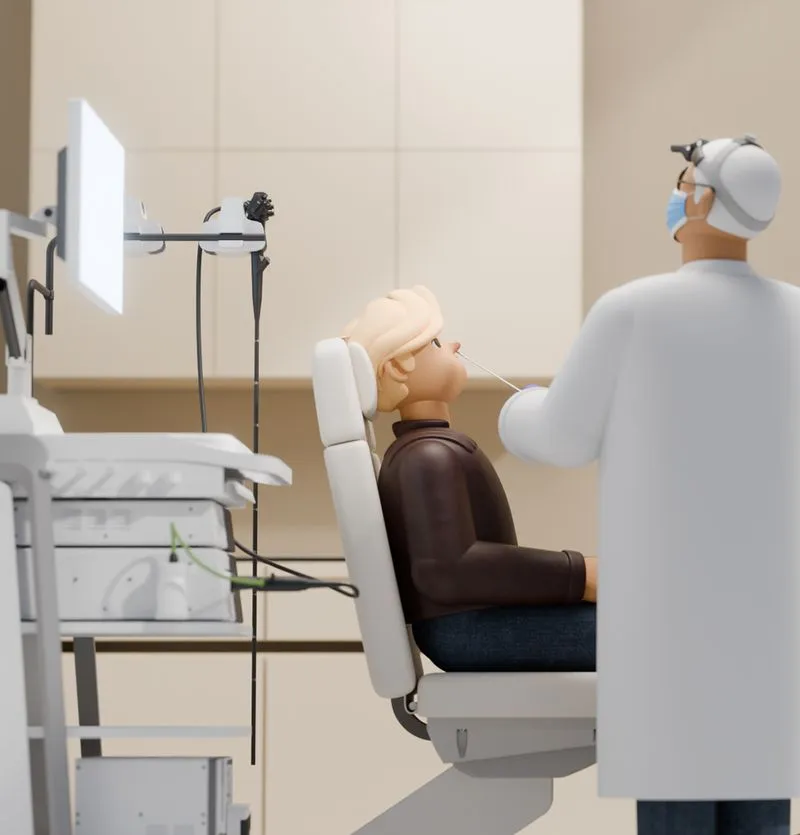
Endoscopic assessment of septal anatomy
02
CNB placement at point of maximal deviation
03
Controlled inflation (~1 atm/second) up to 10 atm
04
Sequential advancement as indicated
05
Endoscopic confirmation of realignment
Clinical Evidence
Retrospective Clinical Outcomes (ClearPath™ CNB)
Published study:
Force-Directed Balloon-Assisted Endoscopic Septoplasty: A Retrospective Study of 23 Cases Using a Novel Technique and Device
Force-Directed Balloon-Assisted Endoscopic Septoplasty: A Retrospective Study of 23 Cases Using a Novel Technique and Device
Key outcomes:
22% mean improvement at the nasolacrimal duct
45% mean improvement at the point of maximal deviation (PMD)
No major complications (no perforations, synechiae, CSF leaks, or orbital injury)
66% reduction in SNOT-22 scores at one-month follow-up
These findings support effective septal realignment with a favorable safety profile in appropriately selected patients.

Comparative evidence
Why Directional Control Matters
Published Experimental Study on Unguided Balloon Drift
Balloon Dilation in Septal Surgery: An Experimental Analysis of Unguided Balloon Motion. Dillard DJR, Witte C, Norred AC, Fortson JKMedi Clin Case Rep J, 2025
Study design:
High-pressure, non-compliant balloon inflated between angled, lubricated plates

Conditions designed to simulate asymmetric nasal anatomy
Key findings:
Unguided radial balloons consistently shifted during inflationMovement was driven by surface angle, spacing, and lubricity
Balloon drift occurred independent of user technique
Clinical implication:
In asymmetric anatomy, radial balloons may follow the path of least resistance, allowing force to transmit laterally toward critical structures such as the orbit and skull base.
ClearPath™ was designed specifically to address this limitation through mechanical constraint and force-directional control.
Safety and limitations

Severe caudal or dorsal septal deformities requiring reconstruction
ClearPath™ is not intended for:
Significant bony spurs requiring mucoperichondrial flap elevation
Congenital craniofacial abnormalities
Appropriate patient selection and surgeon judgment are essential.
Practice marketing & growth support
A supported procedure


A supported procedure
ClearPath™ includes practice-level marketing and education support to help physicians responsibly introduce the procedure to appropriate patients.
Support includes:
Patient-facing educational materials explaining nasal anatomy and treatment options
This allows practices to:
Improve patient understanding and acceptance
Have clearer treatment conversations with patients
Support procedural adoption without relying solely on OR-based surgery
We provide
Training & support
Endoscopic procedural videos
Anatomical review resources

Clinical onboarding and rep support
IFU, indications, and regulatory documentation
