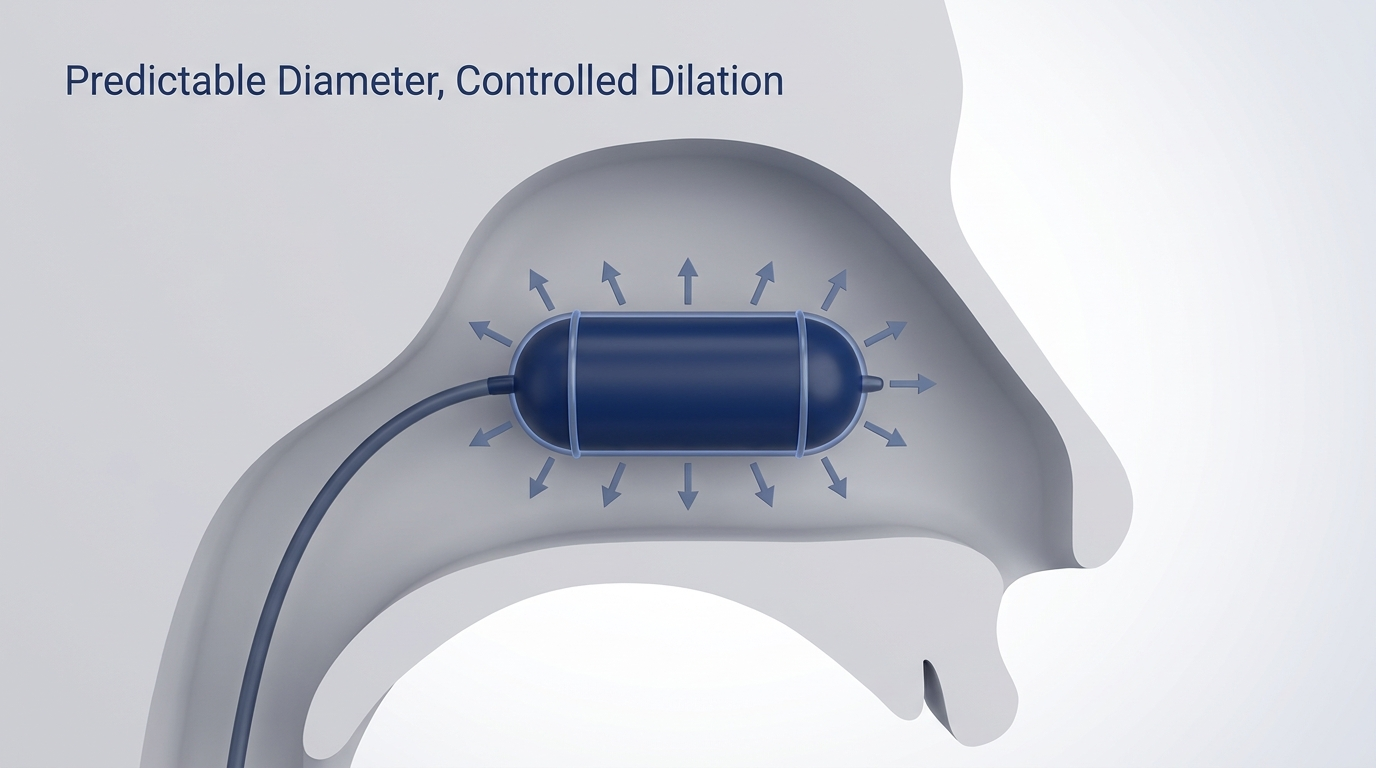
FDA Clearance: What It Means for ClearPath
If you’ve been researching nasal procedures and come across terms like FDA clearance, 510(k) clearance, or FDA‑cleared medical device, you’re not alone. The labels can sound technical—but the basic idea is straightforward: FDA clearance is one important checkpoint that helps define how a medical device (like the ClearPath device) can be marketed in the U.S.
Think of it as authorization to market in the U.S. for a specific intended use, following a formal FDA review process. It’s meaningful, but it’s not a guarantee that any one person will get a particular outcome.
Below is a plain-language guide to what FDA clearance means, what it doesn’t mean, and how to use that information when you’re considering a procedure involving the ClearPath nasal balloon.
Why FDA clearance matters (in plain language)
When a company says a device is “FDA-cleared,” they’re referring to a regulatory status that allows the device to be legally marketed in the United States for a specific intended use.
A helpful analogy: FDA clearance is closer to “this product meets the regulatory requirements to be sold and used according to its labeling and intended use” than “this product is perfect for every buyer.” It’s a baseline safety-and-use checkpoint for a defined purpose, not a personalized medical recommendation.
For patients, FDA clearance matters because it often signals that:
- The device has met baseline regulatory requirements for its category and intended use
- The device’s labeling is standardized, including what it’s for and how it’s used
- There are defined instructions, warnings, and boundaries (often captured in the Instructions for Use, or IFU), which support more consistent use
- Clinicians and healthcare systems may find a clearer regulatory pathway helpful when evaluating adoption
At the same time, it’s important to set expectations: FDA clearance is not a promise of results for every person. Outcomes still depend on your diagnosis, anatomy, symptom severity, and clinician technique—along with careful adherence to the device’s labeling and Instructions for Use (IFU).
Helpful resource: FDA’s overview of the 510(k) pathway and how clearances work: https://www.fda.gov/medical-devices/premarket-submissions/premarket-notification-510k
Conclusion: FDA clearance supports consistency and clarity—but it’s not a prediction of individual results.
FDA “clearance” vs FDA “approval” (the confusion most patients have)

What “FDA-cleared” typically means
Many medical devices become FDA-cleared through the FDA 510(k) pathway. In a 510(k), a company generally needs to show the FDA that a device is “substantially equivalent” to another legally marketed device—meaning it has a similar intended use and similar technological characteristics, or that any differences don’t raise new questions of safety and effectiveness.
That’s the core concept behind 510(k) clearance: the FDA evaluates whether the device fits into an existing, regulated device category for a specific intended use—and whether the evidence submitted supports that comparison.
You can explore publicly available clearance records in the FDA’s 510(k) database: https://www.accessdata.fda.gov/scripts/cdrh/cfdocs/cfpmn/pmn.cfm
What “FDA-approved” usually refers to
“FDA-approved” usually refers to different regulatory pathways commonly used for drugs and some higher-risk medical devices (often involving more extensive premarket review). In other words:
- Approval ≠ clearance
- They are used for different categories of products
- Neither term should be interpreted as “guaranteed outcome”
If you ever feel stuck on the terminology, a practical approach is to ask: “What is this device cleared or approved to do—exactly?”
What FDA clearance does not mean
Even if a device is FDA-cleared, it does not mean:
- “The FDA says this will work for everyone”
- “There are no risks”
- “This is the best option for every patient”
For nasal procedures, individual factors—like the shape and rigidity of the septum, prior nasal surgery, the presence of other nasal conditions, and the specifics of the planned technique—can change both results and risk profile. It also doesn’t mean every use you might see online is automatically “on-label.” That’s why the labeling and IFU matter.
Conclusion: Clearance defines allowed marketing and intended use; your clinician determines whether it fits your diagnosis.
The 510(k) process—what actually happens behind the scenes
“Substantial equivalence” (without the jargon)
Think of “substantial equivalence” like this: a company may introduce a new model within a familiar product category, and the FDA review focuses on whether it aligns with an already-established type of device in the ways that matter for safety and intended use.
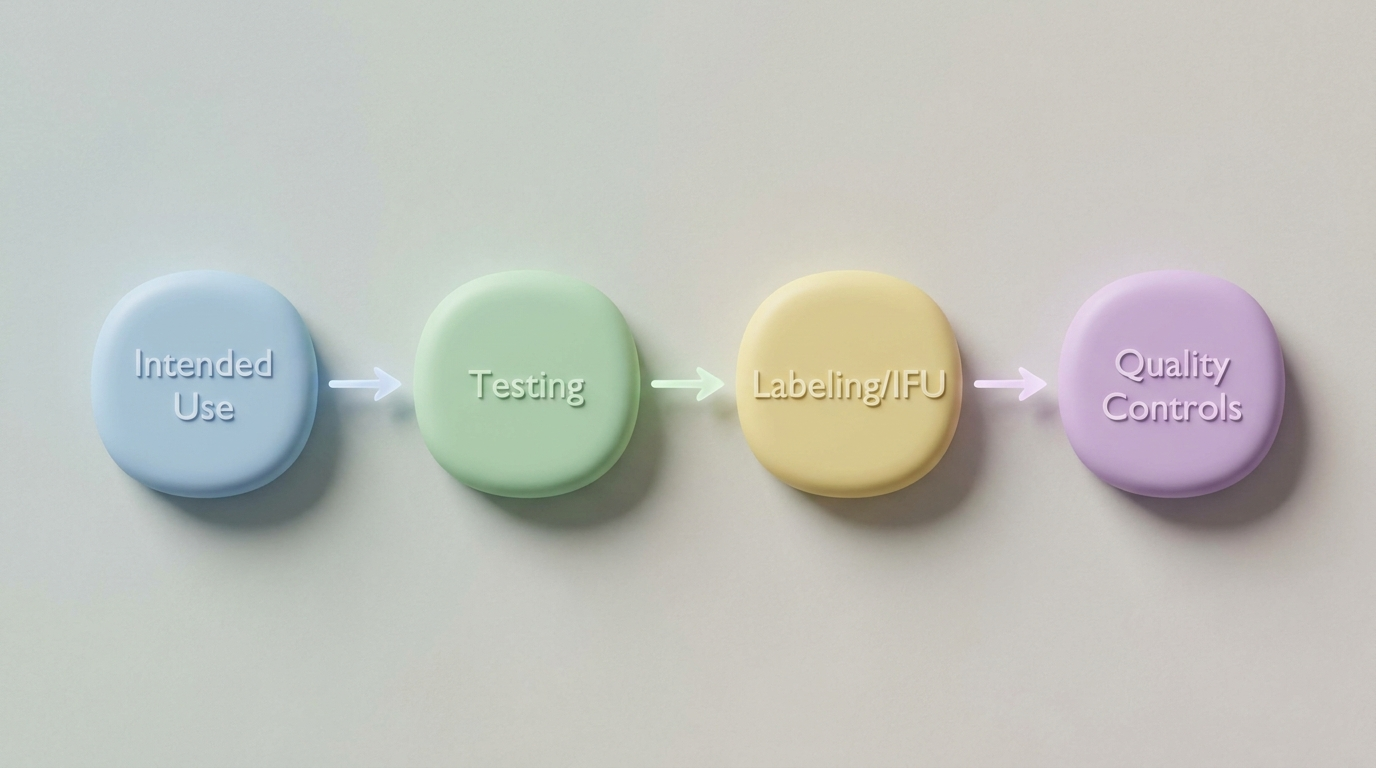
While the details vary by device type, a 510(k) submission commonly addresses items such as:
- Intended use (what the device is for—and what it’s not for)
- Device design and materials
- Bench and performance testing (as appropriate)
- Labeling, including warnings and Instructions for Use (IFU)
- Quality and manufacturing controls (as applicable)
For reference, see Instructions for Use (IFU): https://www.clearpathnasal.com/instructions-for-use
FDA overview of 510(k): https://www.fda.gov/medical-devices/premarket-submissions/premarket-notification-510k
Conclusion: The 510(k) process emphasizes intended use, safety considerations, and consistent labeling.
What FDA clearance can mean for “ClearPath” as a brand—and why labeling still matters

Names can be confusing in healthcare. Sometimes products in different areas of medicine may use similar-sounding names. For patients, the practical takeaway is simple:
- Focus on the specific device your clinician plans to use
- Confirm whether that device is FDA-cleared for that intended use
- Review the labeling and IFU, especially indications, contraindications, and warnings
For example, the FDA’s 510(k) database includes devices in other specialties with “ClearPath” in the name—such as the Ahmed ClearPath Glaucoma Drainage Device (510(k) K182518, cleared in January 2019). That product is unrelated to nasal procedures, but it illustrates why searching the FDA database by the exact device name can be useful. The same or similar names may appear in other healthcare products, so it’s important to confirm the exact device and intended use. K182518 record: https://www.accessdata.fda.gov/scripts/cdrh/cfdocs/cfpmn/pmn.cfm?ID=K182518
A useful question to bring to your visit is: “Is the device you plan to use FDA-cleared for my specific situation, and can you walk me through the IFU-related precautions?”
Conclusion: When in doubt, verify the exact device name, its intended use, and the IFU.
What FDA clearance means for patients considering ClearPath nasal procedures

It supports trust and consistency—but it’s not the whole story
If you’re considering a nasal procedure that may involve balloon technology—sometimes referred to as balloon septoplasty or balloon‑assisted septoplasty—it’s reasonable to care about:
- Overall safety profile
- Comfort and recovery expectations
- Real-world results in patients with similar anatomy
- The clinician’s experience and technique
- Whether the device’s use matches its labeling
To build your baseline understanding of the technique, you can read this plain‑language explainer on balloon-assisted septoplasty: https://www.clearpathnasal.com/blog/what-is-balloon-assisted-septoplasty
FDA clearance supports trust in the sense that it’s a regulated status tied to intended use, labeling, and performance expectations. But the best decisions typically involve a mix of:
1) Regulatory status (such as 510(k) clearance),
2) Clinical evidence and outcomes data, and
3) Your clinician’s evaluation and recommendations for your anatomy and goals.
In some practices, ClearPath may be considered among available options for some patients, depending on clinical evaluation and device labeling. Discuss with a qualified ENT specialist whether available options, including ClearPath, are appropriate for your diagnosis and anatomy.
Conclusion: Clearance helps set the framework; your evaluation and goals determine fit.
What to look for on a credible medical device website

When evaluating any FDA-cleared medical device information, look for:
- A clear description of intended use (what it’s meant to do)
- A straightforward list of risks, warnings, and contraindications
- Easy access to the Instructions for Use (IFU), when appropriate
- Summaries of supporting clinical evidence (with citations)
For a safety-focused discussion related to septoplasty decision-making, you can read how ClearPath is discussed in relation to septoplasty safety: https://www.clearpathnasal.com/blog/why-safety-matters-how-clearpath-reduces-risks-in-septoplasty
Conclusion: Credible sources explain intended use, risks, and evidence—and make the IFU easy to find.
FDA clearance vs. clinical evidence: where outcomes data fits in
Why outcomes studies matter (even when a device is FDA-cleared)
An FDA clearance is a regulatory milestone. Outcomes studies help answer the practical questions many patients care about, such as:
- What happens in real‑world practice?
- What symptom changes do patients report?
- What complication patterns are observed across a group of cases?
Regulatory status explains allowed marketing and intended use; outcomes research shows what has been observed in studied populations. These are complementary.
Example outcomes data for balloon‑assisted septoplasty (patient‑friendly highlights)
In one published retrospective analysis of 107 consecutive cases of balloon‑assisted endoscopic septoplasty using a force-directed technique and device approach:
- A subset of patients had imaging comparisons, and a subset completed symptom surveys.
- CT analysis showed improved septal symmetry of 22% at the nasolacrimal duct (NLD) level and 45% at the point of maximal deviation (PMD).
- The authors reported no major complications in that cohort (including no perforation, hematoma, infection, synechia, or conversion to traditional septoplasty).
- Patient-reported SNOT‑22 scores improved 23.8% at one month (58.7 → 44.8), with notable improvements in congestion, headache/facial pressure, and sleep.
- Patients with more severe baseline deviation showed proportional correction, with 78% achieving at least a 30% improvement in alignment in the severe group.
These findings apply to that study population only and may not reflect outcomes for all patients.
Reference: Dillard J, Koudouovoh C, Lee V, et al. Outcomes of force-directed balloon-assisted endoscopic septoplasty: a retrospective analysis with a new technique and device. Rhinology Online. 2026;9:18–23. doi:10.4193/RHINOL/25.018
Conclusion: Clearance sets regulatory context; outcomes data offers study‑specific insight—not a promise of individual results.
FAQ (quick answers)
What does “FDA‑cleared” mean in one sentence?
An FDA‑cleared device is legally allowed to be marketed in the U.S. for a specific intended use, typically through the 510(k) clearance process.
Is FDA clearance the same as FDA approval?
No—FDA clearance and FDA approval are different regulatory pathways used for different categories of products.
How can I verify whether a device is FDA‑cleared?
You can search the FDA’s public 510(k) database and look for the device’s listing and clearance information: https://www.accessdata.fda.gov/scripts/cdrh/cfdocs/cfpmn/pmn.cfm
Does FDA clearance mean a procedure is risk‑free?
No. FDA clearance does not eliminate risk. Individual risk depends on diagnosis, anatomy, and the specifics of the planned procedure—so it’s important to review risks and alternatives with a qualified clinician.
What should I ask my doctor before a septoplasty‑related procedure?
Consider asking:
- What are the alternatives for my specific diagnosis?
- What risks apply to my anatomy and medical history?
- What outcomes do you typically see in cases like mine?
- What device will you use, and what is it indicated for?
- Where can I review the Instructions for Use (IFU) and key warnings?
Next steps (clear, practical)
If you’re considering a procedure involving the ClearPath device, a good next step is to:
- Review the Instructions for Use (IFU): https://www.clearpathnasal.com/instructions-for-use
- Learn more about the procedure: https://www.clearpathnasal.com/blog/what-is-balloon-assisted-septoplasty
- Read more about how ClearPath is discussed in relation to septoplasty safety: https://www.clearpathnasal.com/blog/why-safety-matters-how-clearpath-reduces-risks-in-septoplasty
- Explore device details: ClearPath nasal balloon catheter (CNB): https://www.clearpathnasal.com/product/clearpath-nasal-balloon-catheter-cnb
Then bring it to your consultation: discuss with an ENT specialist whether available options, including ClearPath, align with your diagnosis, anatomy, and goals, and confirm that the planned use matches the device’s labeling.
Citations
- U.S. Food & Drug Administration (FDA). Premarket Notification 510(k). https://www.fda.gov/medical-devices/premarket-submissions/premarket-notification-510k
- U.S. Food & Drug Administration (FDA). 510(k) Premarket Notification database (search page). https://www.accessdata.fda.gov/scripts/cdrh/cfdocs/cfpmn/pmn.cfm
- U.S. Food & Drug Administration (FDA). 510(k) record: K182518. https://www.accessdata.fda.gov/scripts/cdrh/cfdocs/cfpmn/pmn.cfm?ID=K182518
- Dillard J, Koudouovoh C, Lee V, et al. Outcomes of force-directed balloon-assisted endoscopic septoplasty: a retrospective analysis with a new technique and device. Rhinology Online. 2026;9:18–23. doi:10.4193/RHINOL/25.018
This article is for educational purposes only and is not medical advice. Please consult a qualified healthcare provider for diagnosis and treatment.

Dr. David G. Dillard
Author
Share it with others!