

The Evolution of Nasal Surgery: From 1600 BC to ClearPath
If you’ve ever dealt with chronic nasal blockage, poor sleep, or that “always congested” feeling, it’s easy to assume it’s just allergies or a lingering cold. For many people, the cause is structural—meaning the physical shape inside the nose limits airflow. Understanding how nasal surgery evolved helps explain the path from early trauma care to today’s more precise, tissue-preserving options, including modern minimally invasive approaches that may be considered in selected patients, such as the ClearPath Nasal Balloon System.
Why Nasal Surgery Matters (Then and Now)

The nose does more than you think
Your nose isn’t just about appearance. It plays a major role in:
- Breathing efficiency (day and night)
- Sleep quality (nasal blockage may contribute to snoring and restless sleep)
- Supporting sinus ventilation and drainage (poor airflow and narrowing may contribute to facial pressure or a congested sensation)
- Sense of smell
- Exercise tolerance (breathing comfort during activity)
A helpful way to think about it: your nose is a built-in air-conditioning and filtration system. When the internal “channels” are narrowed, breathing can become noisy, effortful, or inconsistent—especially at night when you’re lying down.
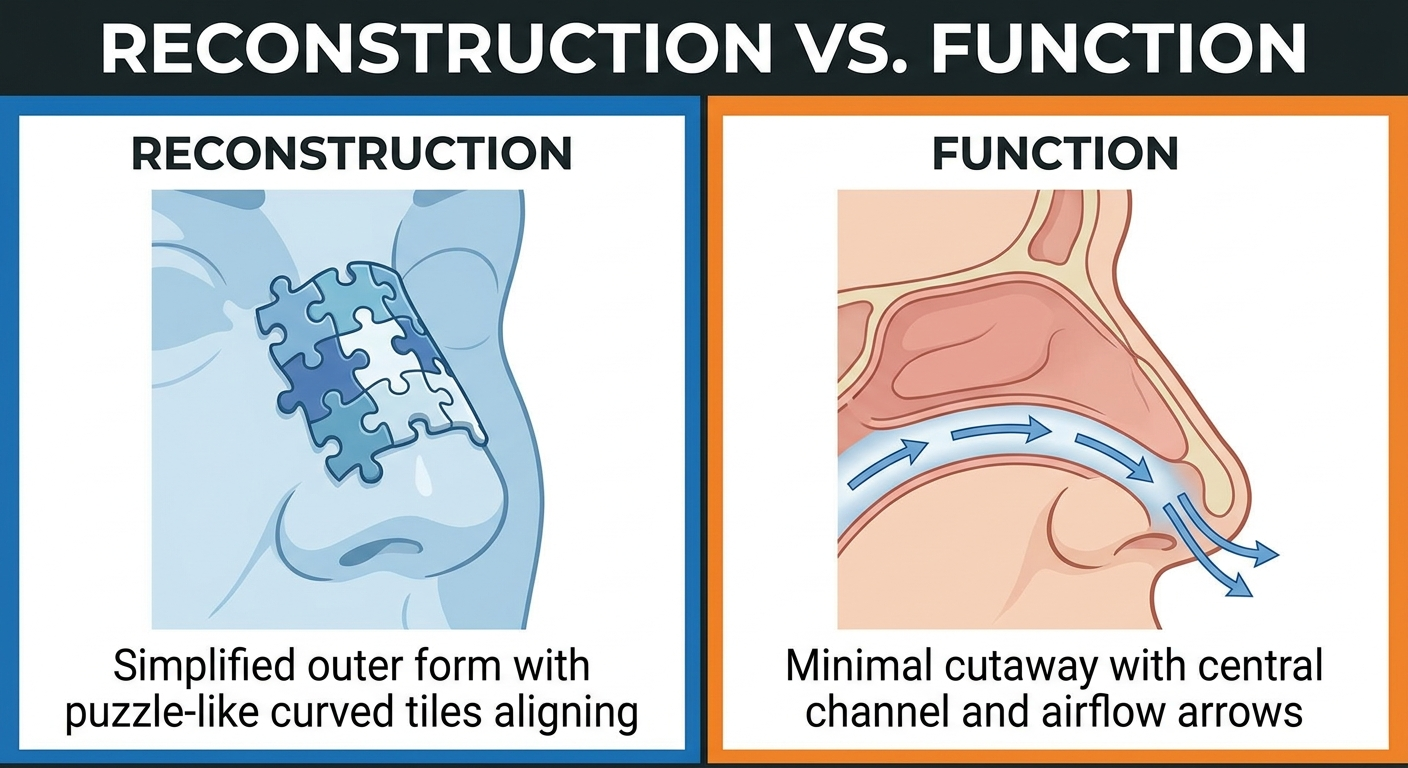
Two big goals in nasal surgery
Across centuries, nasal surgery generally falls into two categories:
1) Reconstruction: restoring appearance or structure after injury, disease, or tissue loss
2) Function: improving airflow and relieving symptoms like chronic nasal obstruction and facial pressure
These two goals appear repeatedly throughout history, from ancient reconstruction methods to today’s functional, symptom-focused techniques. In modern practice, clinicians often try to protect both—because altering structure can affect function, and restoring function sometimes requires reshaping structure.
Source: The history of nasal reconstruction (2021) https://pmc.ncbi.nlm.nih.gov/articles/PMC8270507/
Bottom line: healthy structure and comfortable function usually go hand in hand.
1600 BC — Ancient Egypt and the First Recorded Nasal Procedures
The Edwin Smith Papyrus: earliest known surgical record
One of the earliest windows into surgical thinking comes from Ancient Egypt: the Edwin Smith Papyrus (traditionally dated to around 1600 BC). It is often cited as the oldest known surgical text and documents approaches to trauma care—an important step toward recording anatomy and hands-on treatment.
While it wasn’t a “how-to manual” for modern nasal surgery, it signaled a shift from superstition toward structured observation and practical care. It also helped normalize the idea that injuries could be assessed, categorized, and treated in repeatable ways.
Background summary source: https://medium.com/flamma-saga/the-amazing-surgical-skills-of-ancient-egypt-how-they-repaired-noses-removed-cataracts-and-beb2ba2448bb
What nasal “surgery” likely looked like at the time
In this era, nasal interventions were likely focused on injury management:
- Stabilizing facial trauma
- Attempting basic alignment or support
- Managing wounds using the tools and techniques of the time
Compared with today’s standards, these methods were rudimentary—but documenting anatomy and trauma care laid the groundwork for later advances in reconstruction and, eventually, breathing-focused procedures.
Early documentation of trauma care set the stage for everything that followed.
600 BC — Ancient India and the Birth of Reconstructive Rhinoplasty
Sushruta Samhita and early reconstructive breakthroughs
Around 600 BC, Ancient Indian medical texts, traditionally associated with the Sushruta Samhita, described early reconstructive techniques, including forehead and cheek flaps to rebuild missing nasal tissue. Rather than only repositioning what remained, these approaches introduced a key concept: replacing missing tissue with living tissue that maintains blood supply.
Source: The history of nasal reconstruction (2021) https://pmc.ncbi.nlm.nih.gov/articles/PMC8270507/
How these innovations shaped modern reconstruction
Many principles that still guide nasal reconstruction today were foreshadowed here:
- Careful planning before cutting
- Preserving tissue health
- Rebuilding structure in layers (skin/lining/support)
This phase of the story was less about airflow and more about restoring form after trauma or historically documented punishment-related nasal amputation. It also reinforced a lasting lesson: preserving healthy tissue generally supports better healing and more durable outcomes.
Tissue preservation became a cornerstone principle of nasal surgery.
From Reconstruction to Function: The Shift Toward Breathing and Chronic Symptoms
When the problem isn’t “missing tissue,” but blocked airflow
As medical understanding advanced, the focus widened. Many people have noses that look normal on the outside but still struggle to breathe due to internal anatomy, such as:
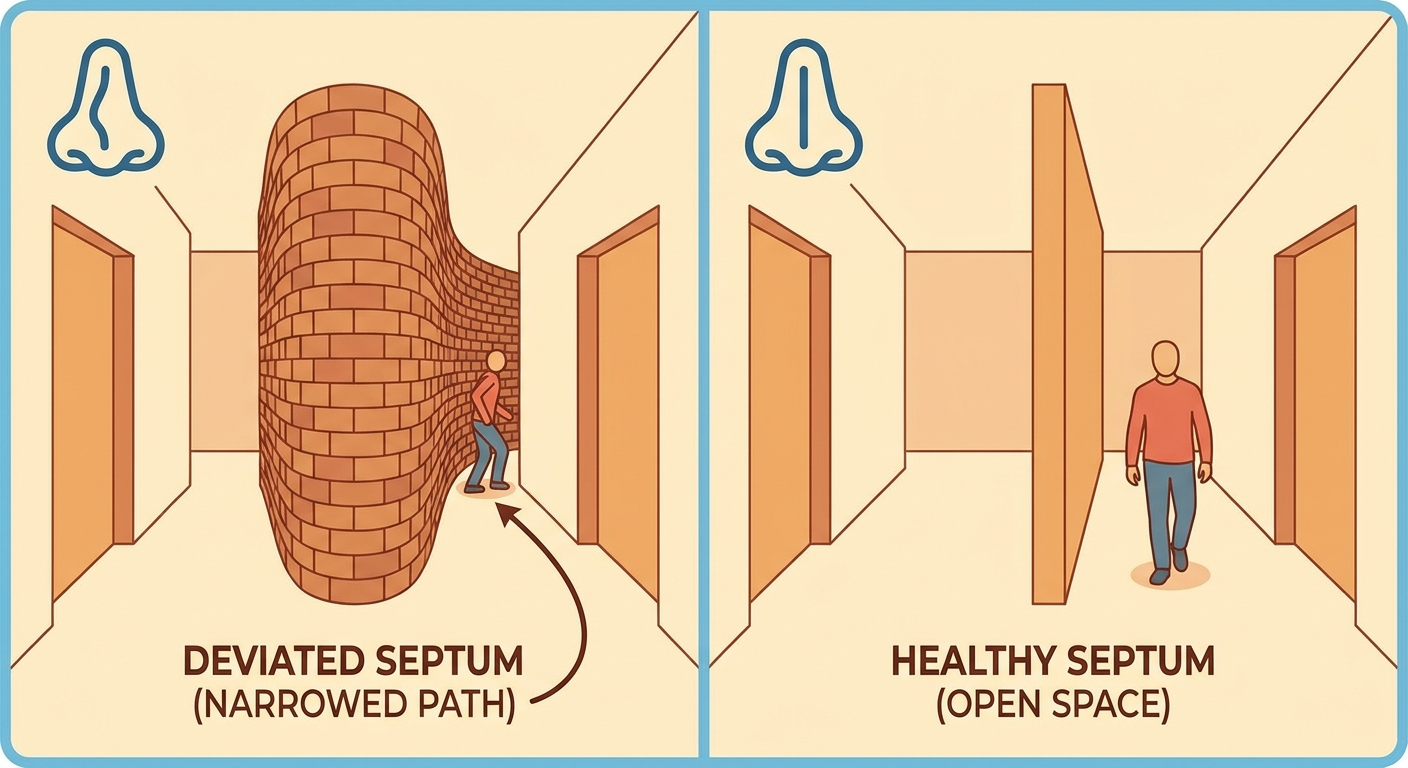
- Deviated septum (the septum is the wall between the nostrils)
- Turbinate enlargement
- Other contributors to chronic nasal obstruction
A simple analogy: if the septum is the “center wall” of a hallway, a deviation is like that wall bowing into the path—so one side feels tighter even when nothing is “stuck.” For a straightforward overview of structural blockage, see deviated septum symptoms, causes, and treatment options: https://www.clearpathnasal.com/blog/deviated-septum-explained-symptoms-causes-and-modern-treatment-options
Functional nasal surgery enters the picture
This is where septoplasty becomes relevant. Septoplasty is a surgical procedure to correct a deviated septum and improve airflow. Over time, visualization tools (including endoscopic approaches) helped clinicians see internal structures more clearly and perform more targeted work. From a patient perspective, better visualization generally supports more accurate diagnosis (what’s actually blocking airflow) and more focused correction (addressing the specific area rather than broadly disrupting tissue).
Overview reference: https://pmc.ncbi.nlm.nih.gov/articles/PMC4656168/
The modern trend: do more with less disruption
A clear theme over the last several decades is moving toward:
- Smaller access points
- Less tissue disruption
- More precision
- Recovery goals that may be faster in some patients
Modern functional care aims to match the size of the intervention to the size of the problem.
The Minimally Invasive Era — Enter Balloon-Based Septal Correction
Why “minimally invasive” matters to patients
When people hear “surgery,” they often worry about pain, bleeding, downtime, and packing. Minimally invasive approaches may reduce these concerns in some patients by focusing on:
- Less cutting and less disruption (when appropriate)
- Less swelling and bleeding risk (in general terms)
- A quicker return to normal routines for some patients, depending on individual factors
What makes balloon technology different
Balloon-based approaches are designed to apply controlled force and may help mobilize or realign structures in appropriate candidates. One way to picture it: instead of carving away material to widen a passage, a balloon-based technique aims to apply a measured, evenly distributed pressure—like gently re-centering a bent divider rather than removing large portions of it.
If you’re new to the concept, a good place to start is what is balloon-assisted septoplasty?: https://www.clearpathnasal.com/blog/what-is-balloon-assisted-septoplasty
For selected patients, less disruption can still deliver meaningful functional change.
Today’s Breakthrough — The ClearPath Nasal Balloon System (Hydrostatic Force)

What ClearPath is (plain-English explanation)
The ClearPath Nasal Balloon System is a medical device intended for use in selected patients to apply controlled hydrostatic pressure during septal correction. In other words, it uses fluid-based pressure within a balloon to deliver a precise, even force that a clinician may use to help address certain septal deviations. It is presented as a potential alternative approach in appropriate candidates—not a replacement for every traditional procedure. The right option depends on your specific anatomy, exam findings, and goals discussed with an ENT.
How hydrostatic pressure may help
Hydrostatic pressure can deliver consistent, controlled dilation. In the context of septal work, this controlled force may help:
- Mobilize a deviated portion of the septum
- Improve alignment with targeted correction in some cases
For a patient-friendly look at the mechanism, see how hydrostatic pressure works in nasal surgery: https://www.clearpathnasal.com/blog/the-science-of-hydrostatic-pressure-in-nasal-surgery
Why this represents a shift in the evolution of nasal care
ClearPath aligns with the broader move toward minimally invasive, tissue-preserving strategies by aiming to:
- Reduce procedural complexity compared with more extensive traditional techniques in selected patients
- Support a recovery experience that may be less disruptive for some individuals
Precision with preservation is the guiding theme of today’s minimally invasive options.
What the Clinical Evidence Shows (ClearPath Outcomes, Patient-Friendly Summary)

Study size and how outcomes were measured
- 107 consecutive cases were reviewed
- 23 patients had pre- and post-op CT scans to measure septal alignment at objective landmarks
- 43 patients completed the Sinonasal Outcome Test-22 (SNOT-22), a validated symptom questionnaire used in sinonasal care
- CT alignment was measured at the nasolacrimal duct (NLD) level and at the point of maximal deviation (PMD)
Septal alignment improved on CT in the scanned subgroup
Among patients with CT scans:
- Mean symmetry improved 22% at the NLD level
- Mean symmetry improved 45% at the PMD
Symptoms improved at one month in the survey subgroup
Among patients who completed SNOT-22:
- Scores improved from 58.7 to 44.8 (a 23.8% reduction) at one month
- The biggest gains were reported in nasal congestion, headache/facial pressure, and sleep quality
Safety signals (what complications were not seen in this study)
In this retrospective series, no major complications were reported (including septal perforation, hematoma, mucosal injury, infection, synechia, or conversion to traditional septoplasty); however, results from a single study may not apply to all patients.
Who appeared to benefit most within this dataset
In this study, the severe deviation group (>10 mm) showed the largest proportional correction, and 78% (18/23) achieved at least 30% alignment improvement on CT.
For a reader-friendly summary tied to results, see real patient outcomes after balloon septoplasty: https://www.clearpathnasal.com/blog/real-patient-outcomes-how-balloon-septoplasty-improves-breathing
Citation: Dillard J, Koudouovoh C, Lee V, et al. Outcomes of force-directed balloon-assisted endoscopic septoplasty: a retrospective analysis with a new technique and device. Rhinology Online. 2026;9:18–23. doi:10.4193/RHINOL/25.018
Individual outcomes vary; evidence from one retrospective study should be interpreted with clinical judgment.
What This Means for Patients Considering Septum Treatment
Signs your nasal blockage may be structural
If you suspect more than allergies or a temporary illness, these clues may point to a structural issue:
- One-sided blockage that’s persistent
- Mouth breathing, especially at night
- Poor sleep or waking up unrefreshed
- Recurrent congestion that doesn’t respond well to sprays or typical medical therapy
- A history of nasal trauma (even years ago)
A practical resource if you’re exploring causes and options is deviated septum symptoms, causes, and treatment options: https://www.clearpathnasal.com/blog/deviated-septum-explained-symptoms-causes-and-modern-treatment-options
Questions to ask an ENT
A productive consultation often includes:
- What is causing my obstruction—septum, turbinates, or nasal valves?
- What are my options (medical therapy vs procedure)?
- What is the expected recovery timeline for the approach you recommend?
- Am I a candidate for a minimally invasive approach that may use a device like the ClearPath Nasal Balloon System?
If your clinician recommends a traditional procedure, you can still ask about alternatives and how their recommendation fits your anatomy and goals. For a comparison-oriented read, see ClearPath vs traditional septoplasty: https://www.clearpathnasal.com/blog/clearpath-vs-traditional-septoplasty-recovery-safety-results
Setting realistic expectations
It’s helpful to separate two goals:
- Breathing improvement (functional change): what septum-focused treatment targets
- Cosmetic change (appearance): may require different planning and is not the same objective
A clear diagnosis and goal-focused plan help align expectations with outcomes.
Conclusion — A 3,600-Year Trend Toward Precision and Preservation
Over millennia, the story of nasal surgery has steadily moved toward precision and preservation:
- Early trauma-focused care and anatomical observation (Ancient Egypt)
- Reconstructive breakthroughs with vascularized flaps (Ancient India)
- Functional correction for chronic obstruction (the evolution of septoplasty)
- Modern minimally invasive septal correction that may use hydrostatic realignment in selected patients (e.g., the ClearPath Nasal Balloon System)
If nasal blockage is affecting your sleep, energy, or daily comfort, consider speaking with an ENT. The most important first step is identifying whether your symptoms are driven by inflammation, anatomy, or both—so you can choose an option that fits your diagnosis and goals.
From ancient records to modern devices, the direction of progress is clear: protect tissue, target the problem, and personalize the plan.
FAQ
What is the oldest recorded nasal surgery?
Early nasal-related trauma care is documented in Ancient Egypt, including historical references to the Edwin Smith Papyrus (traditionally dated to around 1600 BC).
Who pioneered early reconstructive rhinoplasty?
Ancient Indian medical texts, traditionally associated with the Sushruta Samhita (~600 BC), describe reconstructive techniques using forehead and cheek flaps.
What is the difference between septoplasty and balloon septoplasty?
Septoplasty refers to surgical correction of a deviated septum to improve airflow. Balloon-assisted septoplasty is a variation that uses a balloon-based technique designed to apply controlled force and may help mobilize or realign septal structures in appropriate candidates.
Is minimally invasive septal correction safe?
Safety depends on individual anatomy and the technique used. In one retrospective series using a balloon-assisted endoscopic approach with a newer device, no major complications were reported; however, findings from a single study may not apply to all patients.
References
- The history of nasal reconstruction (2021). https://pmc.ncbi.nlm.nih.gov/articles/PMC8270507/
- Overview of septoplasty/endoscopic approaches in modern rhinology literature. https://pmc.ncbi.nlm.nih.gov/articles/PMC4656168/
- Edwin Smith Papyrus background summary. https://medium.com/flamma-saga/the-amazing-surgical-skills-of-ancient-egypt-how-they-repaired-noses-removed-cataracts-and-beb2ba2448bb
- ClearPath Nasal Balloon System. https://www.clearpathnasal.com/
- Dillard J, Koudouovoh C, Lee V, et al. Rhinology Online. 2026;9:18–23. doi:10.4193/RHINOL/25.018
Medical disclaimer
This article is for general educational purposes only and is not medical advice. Diagnosis and treatment choices depend on your symptoms, anatomy, and medical history—please consult a qualified clinician (such as an ENT) for personalized guidance.

Dr. David G. Dillard
Author
Share it with others!


