Why Traditional Medications May Not Resolve Structural Nasal Obstruction
If you’ve tried “everything”—steroid sprays, allergy pills, saline rinses, even occasional decongestants—yet you still feel blocked, you’re not alone. Traditional medications may be less effective when nasal obstruction is primarily structural. Medications can calm irritated tissue, but they don’t reshape the underlying anatomy that airflow has to pass through.
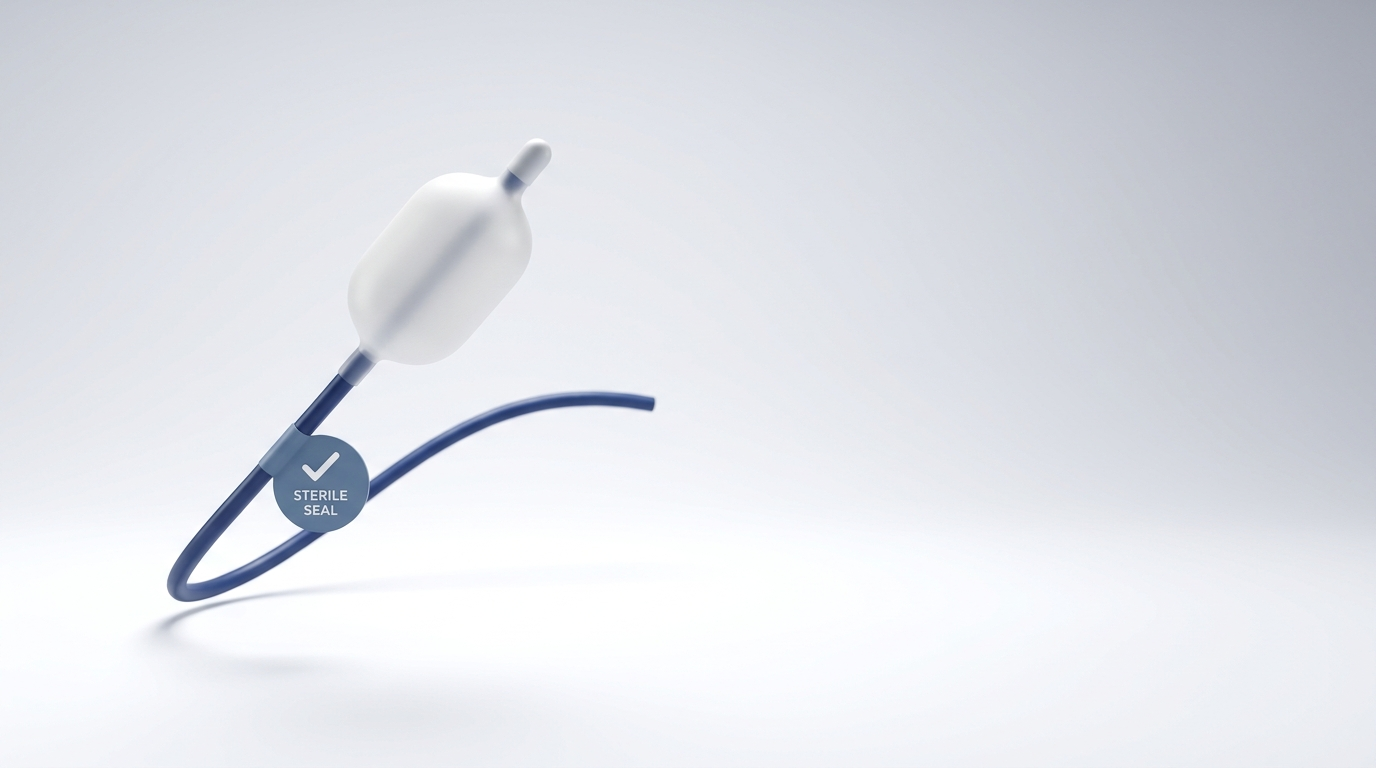
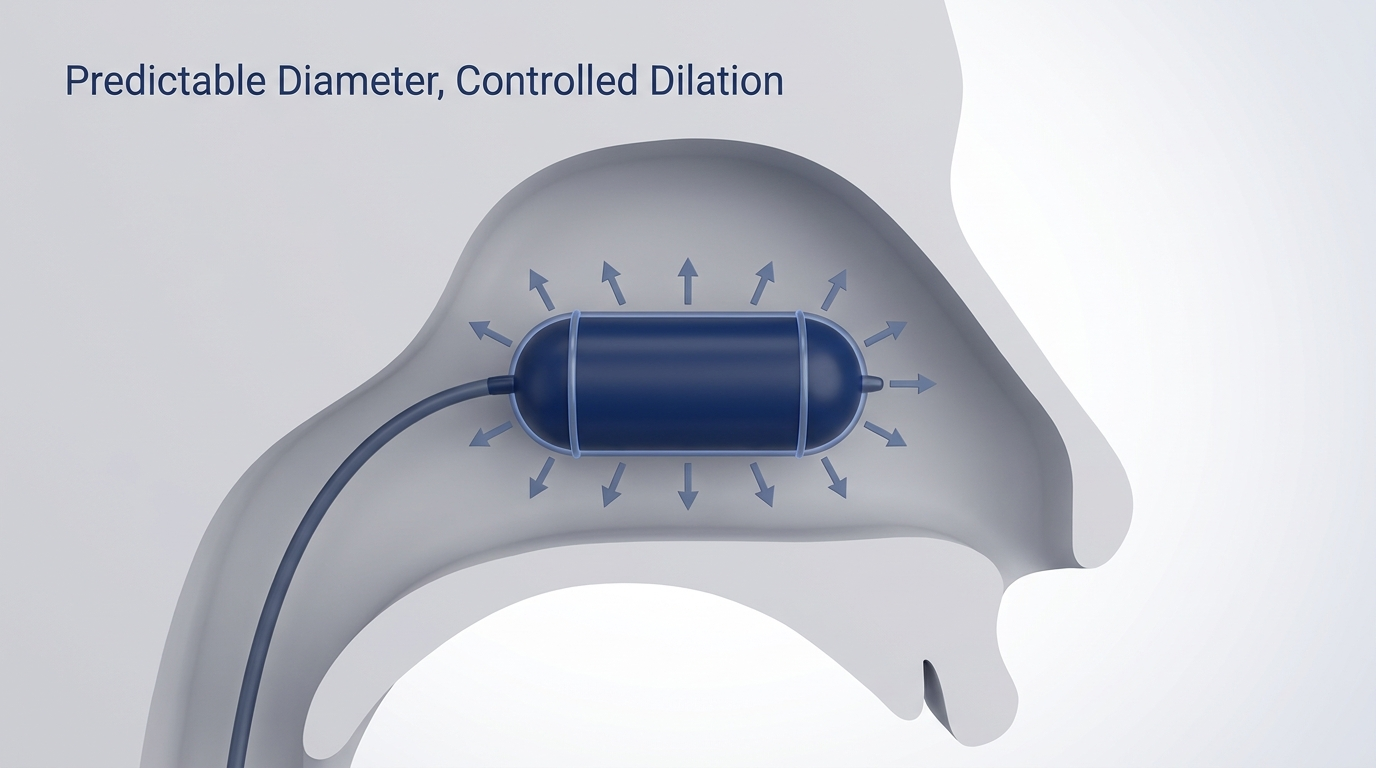
This article explains what medications can (and can’t) do, the three most common structural causes of nasal obstruction, and when an ENT evaluation may point toward procedures like septoplasty, turbinate reduction, or nasal valve repair—including how ClearPath (a device used in some septoplasty procedures) may fit into that conversation.
The frustrating truth: medications can help symptoms—but not anatomy
What “traditional nasal medications” actually do
Common treatments for congestion include:
• Steroid nasal sprays (reduce inflammation in the nasal lining)
• Antihistamines (reduce allergy-driven symptoms)
• Decongestants (temporarily reduce swelling of nasal tissue)
• Saline rinses (wash out irritants and mucus)
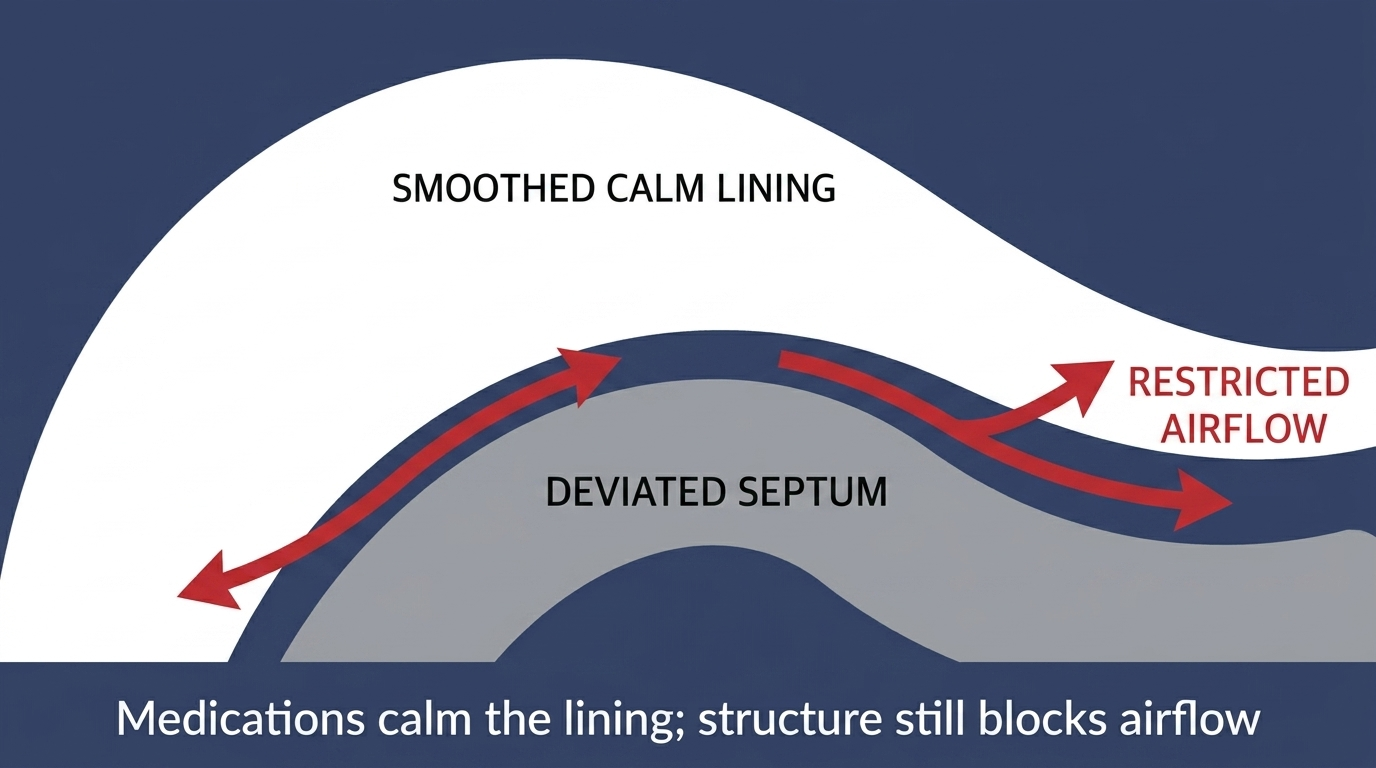
In plain terms, these options primarily target mucosal inflammation and swelling—the “lining” of the nose. They can absolutely help when swelling is the main issue, like during allergy season or after a cold. But when the main problem is structural narrowing, reduced swelling may not create enough space for comfortable airflow. A helpful way to think about it: reduced swelling can improve airflow only if the structure is already adequate. Sinuplasty—Nasal Obstructions, 2023: https://www.sinuplasty.com/nasal-obstructions
The difference between inflammation vs. structural obstruction (simple analogy)
• Inflammation is like carpet that’s gotten puffy—it takes up more space than usual.
• A structural issue is like a crooked wall, a weak doorway, or oversized shelves that permanently narrow the hallway.
If the hallway is narrow because the carpet is puffy, medication can help. If the hallway is narrow because the wall is crooked, medication can’t straighten the wall—so the blockage tends to persist. Another example: reducing swelling in your foot might help a little with a tight shoe, but it won’t change the size or shape of the shoe.
Bottom line: medications optimize the lining; they don’t rebuild the framework.

3 structural nasal problems medications cannot correct
Deviated septum (crooked cartilage/bone divider)
The septum is the wall of cartilage and bone that divides your nose into left and right sides. A deviated septum means that wall is off-center, sometimes narrowing one side (or creating turbulence on both sides) and contributing to nasal airway obstruction.
Why sprays don’t solve it: sprays may reduce swelling around the septum, but they can’t straighten cartilage or bone. Some people with a deviated septum describe persistent one-sided blockage—especially noticeable at night, during exercise, or when lying on one side. When symptoms continue despite appropriate medical therapy, ENTs may evaluate whether septoplasty is appropriate. ENTnet—Clinical Indicators for Septoplasty, 2021: https://www.entnet.org/resource/clinical-indicators-septoplasty
Related read: non-surgical options for a deviated septum—fix a deviated septum without surgery https://www.clearpathnasal.com/blog/can-you-fix-a-deviated-septum-without-surgery
Nasal valve collapse (the narrowest part of the nasal airway)
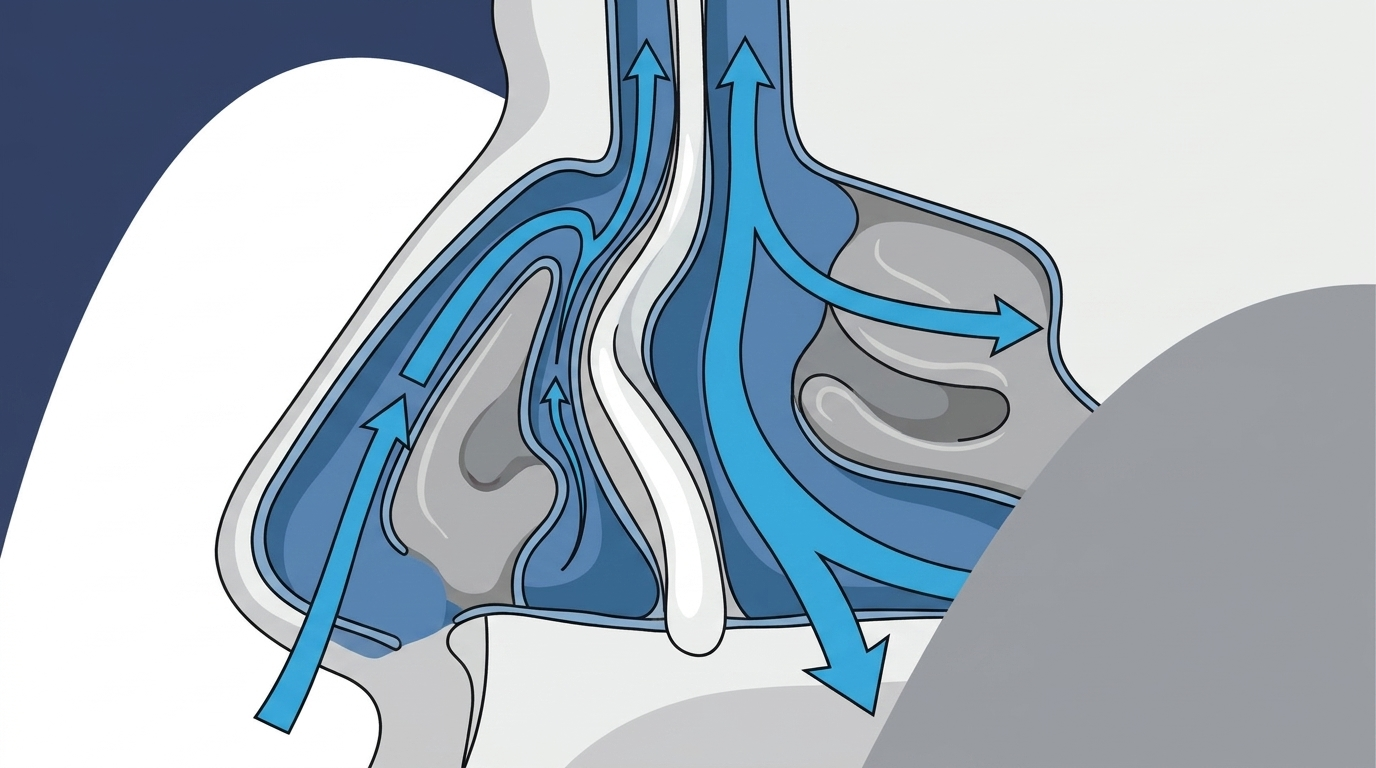
The nasal valve area is often described as the main “pinch point” of nasal breathing—the narrowest section of the nasal airway. With nasal valve collapse, the sidewall can narrow too much during inhalation, especially with deeper breaths.
Common clues include:
• Breathing feels worse with exercise, deep inhalation, or while sleeping
• A sense that the side of the nose “gives way”
• Breathing may improve with cheek traction, which can suggest nasal valve involvement (a screening clue, not a diagnosis)
Why medication doesn’t fix it: even if swelling improves, medication doesn’t provide the structural support needed to prevent collapse. Cleveland Clinic—Nasal Valve Collapse, 2022: https://my.clevelandclinic.org/health/diseases/24977-nasal-valve-collapse; PMC—Nasal Valve Obstruction Management, 2004: https://pmc.ncbi.nlm.nih.gov/articles/PMC11983596/

Enlarged turbinates (turbinate hypertrophy)
Turbinates are structures inside the nose that help warm, humidify, and filter air. When they become chronically enlarged—often called turbinate hypertrophy—they can physically narrow the airway and contribute to ongoing nasal obstruction.
Why meds may not be enough: medications can shrink turbinates when enlargement is mostly from swelling (for example, allergy-triggered inflammation). But in many patients, turbinate tissue remains bulky, and airflow stays limited. In these cases, a turbinate reduction procedure may be discussed. Sinuplasty—Nasal Obstructions, 2023: https://www.sinuplasty.com/nasal-obstructions

Key idea: when anatomy is the bottleneck, medications can offer partial or inconsistent relief, but they don’t change the structure.
Why you can still feel blocked even after “doing everything right” medically
The obstruction returns when the medicine wears off
Many medications work while you’re using them consistently—or for a short window after dosing. If a structural narrowing is present, the pattern is familiar: some relief, then the blocked feeling returns. This isn’t a failure on your part; it’s a mismatch between treatment and cause.
Mixed causes are common (inflammation + structure)
A lot of people have more than one contributor:
• Allergies (inflammation) and
• A deviated septum, valve issue, and/or turbinate hypertrophy (structure)
Medical therapy can reduce the inflammatory piece but only partially improves airflow if a structural restriction remains. For a practical comparison, see deviated septum vs allergies—how to tell the difference: https://www.clearpathnasal.com/blog/deviated-septum-vs-allergies-how-to-tell-the-difference
If you’re wondering about next steps when symptoms persist, this guide can help: chronic nasal congestion—what to do next https://www.clearpathnasal.com/blog/deviated-septum-and-chronic-nasal-congestion-what-to-do-next
If symptoms persist despite consistent medical therapy, it’s reasonable to consider whether structure is playing a major role.
When medical therapy isn’t enough, surgery may be the most effective option
What guidelines and clinical practice reflect
ENT guidance recognizes that many cases of nasal airway obstruction are not fully responsive to medical therapy—particularly when structural problems drive symptoms. If blockage is persistent and affects sleep, exercise, or daily quality of life, an ENT will often evaluate the nasal framework and discuss structural options. ENTnet—Clinical Indicators for Septoplasty, 2021: https://www.entnet.org/resource/clinical-indicators-septoplasty
In clinic terms, that evaluation aims to answer one key question: Is the main limiter swelling, structure, or both?
Procedures that address the root cause (not just swelling)
Depending on what’s found, treatment may include:
• Septoplasty: straightens a deviated septum to improve airflow
• Turbinate reduction: reduces turbinate bulk when enlargement is persistent
• Nasal valve repair: supports the valve area when collapse or narrowing is present
Learn more about expectations and comparisons here: ClearPath vs traditional septoplasty—recovery and safety compared https://www.clearpathnasal.com/blog/clearpath-vs-traditional-septoplasty-recovery-safety-results
Cleveland Clinic—Nasal Valve Collapse, 2022: https://my.clevelandclinic.org/health/diseases/24977-nasal-valve-collapse; Sinuplasty—Nasal Obstructions, 2023: https://www.sinuplasty.com/nasal-obstructions; PMC—Nasal Valve Obstruction Management, 2004: https://pmc.ncbi.nlm.nih.gov/articles/PMC11983596/
When structural obstruction is confirmed, a procedure may provide more consistent airflow than medication alone.

What the research and real-world experience suggest
For appropriately selected patients with structural nasal obstruction, procedural treatment can provide greater symptom relief than medication alone. This reflects how each option targets a different problem: medication optimizes the lining, while procedures reshape or support the framework.
A real-world example: symptom improvement after septal correction (ClearPath study note)
In one clinical review of ClearPath-assisted septoplasty, symptom scores improved after surgery; in that cohort, no major complications were reported. As with any single study, results may not generalize to all patients, and your surgeon’s recommendations will depend on your anatomy and goals.
Evidence and clinical experience point in the same direction: when structure is the driver, addressing structure often helps most.
Signs your blockage may be structural (and not something sprays can solve)
Common patient clues
• One nostril consistently worse than the other
• Blockage without heavy mucus
• Symptoms worse with exercise or deep breathing (possible valve involvement)
• Temporary improvement with decongestants, but obstruction returns
• Mouth breathing, snoring, or poor sleep despite allergy treatment
Another pattern people report: airflow seems noisy or turbulent on one side even when you’re not sick. These experiences don’t diagnose a structural issue by themselves—but they’re often part of the story that prompts a closer look.
What an ENT evaluation may include
• A focused nasal exam (and sometimes nasal endoscopy)
• Review of symptom history and medication trials
• Imaging (like CT) in select cases
ENTnet—Clinical Indicators for Septoplasty, 2021: https://www.entnet.org/resource/clinical-indicators-septoplasty; Cleveland Clinic—Nasal Valve Collapse, 2022: https://my.clevelandclinic.org/health/diseases/24977-nasal-valve-collapse
For more on overlap between allergies and anatomy, see deviated septum vs allergies—how to tell the difference: https://www.clearpathnasal.com/blog/deviated-septum-vs-allergies-how-to-tell-the-difference
If your symptoms fit several of these clues, it’s worth asking an ENT to assess the structural side of the airway.
Patient-friendly FAQ (quick answers)
“Can a deviated septum be fixed without surgery?”
Medications may reduce swelling around a deviated septum, but they do not correct the deviation. If symptoms persist and the deviation is a major contributor, structural correction (like septoplasty) is typically considered. ENTnet—Clinical Indicators for Septoplasty, 2021: https://www.entnet.org/resource/clinical-indicators-septoplasty Related read: fix a deviated septum without surgery https://www.clearpathnasal.com/blog/can-you-fix-a-deviated-septum-without-surgery
“Will surgery help if I also have allergies?”
Often, yes. Treating structure can improve the physical airway while you continue medical therapy to control inflammation from allergies. Many people ultimately do best with medical therapy and surgery used together when indicated.
“How do I know if I have nasal valve collapse?”
Common clues include worsening obstruction with deep inhalation or exercise and improvement when gently pulling the cheek outward. A clinician confirms the diagnosis through an exam of the valve area. Cleveland Clinic, 2022: https://my.clevelandclinic.org/health/diseases/24977-nasal-valve-collapse
Conclusion: Match the treatment to the cause
When people feel frustrated, it’s often because they assume more medication should eventually solve the problem. But when obstruction is driven by anatomy, medications may offer only partial or temporary relief.
Practical next steps
• If meds help partially, continue appropriate medical care, but consider a structural evaluation.
• If obstruction persists despite reasonable medication trials, ask an ENT about septoplasty, turbinate reduction, and/or nasal valve repair.
• If septoplasty is being discussed, ask whether ClearPath is an option for you. It’s a septoplasty-assisting device that some surgeons use based on your anatomy and goals.
This article is for educational purposes only and is not medical advice. Please consult a qualified healthcare provider for diagnosis and treatment.

Dr. David G. Dillard
Author
Share it with others!