Understanding "Septal Displacement"
If you’ve seen the term septal displacement on an imaging report or in a visit note, it’s normal to feel unsure—because the phrase may be used differently depending on whether the report is referring to the heart or the nose.
In cardiology, it often describes unusual motion of the wall between the heart’s ventricles (the interventricular septum) and may be called paradoxical septal motion or a septal bounce.
In ENT (ear, nose, and throat) care, it commonly refers to a deviated nasal septum, meaning the divider inside your nose is shifted off-center.
By the end of this guide, you’ll know how to tell which meaning applies to you, what it can suggest, what symptoms matter, and what next steps are typical. (Clancy et al., 2018; Radiopaedia, 2025; Cleveland Clinic, 2025; AAO-HNS/ENT Health, 2018)
What does “septal displacement” mean? (Why the term can be confusing)
Two septa, two different body systems. Septum simply means “wall” or “divider.” You have more than one. In both places, the septum functions like the wall between two rooms—if that wall is shifted (nose) or moves in an unusual way (heart), it can change how well the “rooms” work.
Heart septum (interventricular septum): the muscular wall between the right and left ventricles. Nasal septum: cartilage and bone dividing the left and right nasal passages.
Quick clue—where did you see the term? If it was in an echocardiogram (echo), cardiac MRI, chest CT, or a cardiology note, it often points to septal bounce/paradoxical septal motion. If it was in a sinus CT, nasal endoscopy report, or ENT visit summary, it usually means a deviated nasal septum.
Tip: If your report says septal displacement but doesn’t specify heart or nose, ask, “Which septum does this refer to?” It’s a reasonable, common question—and it often clears up the whole issue in one sentence. (Clancy et al., 2018; Cleveland Clinic, 2025)
In short: the phrase is used differently across specialties, so the report’s context is the fastest way to know which septum is meant.

Septal displacement in cardiology (abnormal septal motion)
In cardiology, “septal displacement” usually refers to paradoxical septal motion—an imaging pattern rather than a diagnosis.
What is paradoxical septal motion/“septal bounce”?
The heart’s septum moves in an unusual pattern as the heart beats. Common descriptions include an early-diastolic “bounce” (a quick movement early in filling) and respiratory septal shift (the septum changes position as you inhale/exhale). Clinicians pay attention because this can reflect ventricular interdependence or abnormal pressures around the heart. It is a clue, not a standalone diagnosis. (Clancy et al., 2018; Agstam, 2020; Radiopaedia, 2025)

Common causes (what clinicians consider)
Seeing heart-related septal displacement may fit several possibilities: constrictive pericarditis; cardiac tamponade; right ventricular pressure or volume overload; left bundle-branch block (LBBB); post-cardiac surgery; acute increases in right-ventricular afterload. Example: an echo for unexplained shortness of breath notes a “septal bounce.” That narrows the differential but doesn’t identify the cause by itself. (Clancy et al., 2018; Radiopaedia, 2025; Agstam, 2020)
How imaging patterns can hint at the underlying problem
More systolic flattening (during pumping) can suggest right-ventricular pressure overload. More diastolic bowing or early-diastolic posterior motion (during filling) can suggest right-ventricular volume overload or ventricular interdependence, often discussed in constrictive physiology. This is why a report may recommend follow-up testing even if you feel okay. (Clancy et al., 2018; Agstam, 2020)
The constrictive pericarditis connection (a key reason this sign is watched)
Constrictive pericarditis classically shows an early-diastolic bounce and respiratory variation in septal position. On cardiac MRI, a septal excursion greater than 12% with respiration has been reported as highly specific for constrictive pericarditis in that setting. Think of the heart filling within a “fixed box”: when one side fills more with breathing, the septum shifts to accommodate. (Agstam, 2020)
Symptoms that might go along with heart-related septal motion (and when to seek urgent care)
Possible symptoms: shortness of breath (with activity or lying flat), swelling in legs/abdomen, fatigue or reduced exercise tolerance, chest pressure/discomfort, lightheadedness. Seek urgent care for severe or rapidly worsening shortness of breath, fainting, chest pain/pressure, bluish lips, or quickly increasing swelling—especially if tamponade or constrictive pericarditis is mentioned. (Clancy et al., 2018; Radiopaedia, 2025)
What tests are typically used next?
Typical next steps include echocardiogram (often first to show septal bounce), cardiac MRI (to evaluate motion and respiratory effects), and chest CT and/or hemodynamic evaluation depending on the suspected diagnosis. The goal is to confirm the cause and determine if and how urgently treatment is needed. (Clancy et al., 2018; Agstam, 2020; Radiopaedia, 2025)

Septal displacement in ENT (deviated nasal septum)
A deviated nasal septum means the divider inside the nose is shifted off-center, narrowing one passage more than the other. Many people have some deviation without symptoms. For more background, see deviated septum explained (symptoms, causes, and treatment options): https://www.clearpathnasal.com/blog/deviated-septum-explained-symptoms-causes-and-modern-treatment-options (Cleveland Clinic, 2025; AAO-HNS/ENT Health, 2018)

Symptoms a deviated septum can cause
Symptoms can include nasal obstruction (often worse on one side), frequent congestion, nosebleeds, recurrent sinus infections or pressure, headaches/facial pressure, and snoring or sleep-disordered breathing for some. A common pattern: “blocked on the left” most days, both sides worse during allergy season—because structure (septum) and inflammation (allergies, irritants, infections) both matter. (Cleveland Clinic, 2025; AAO-HNS/ENT Health, 2018)
How ENT clinicians evaluate “nasal septal displacement”
Evaluation often includes a symptom history, nasal exam, nasal endoscopy, and CT imaging when sinus disease is suspected or anatomy needs clarification. The goal is to confirm whether the septum is the main driver of symptoms or whether other factors (turbinate hypertrophy, chronic inflammation) contribute. (Cleveland Clinic, 2025; AAO-HNS/ENT Health, 2018)
Treatment options (from least to most invasive)
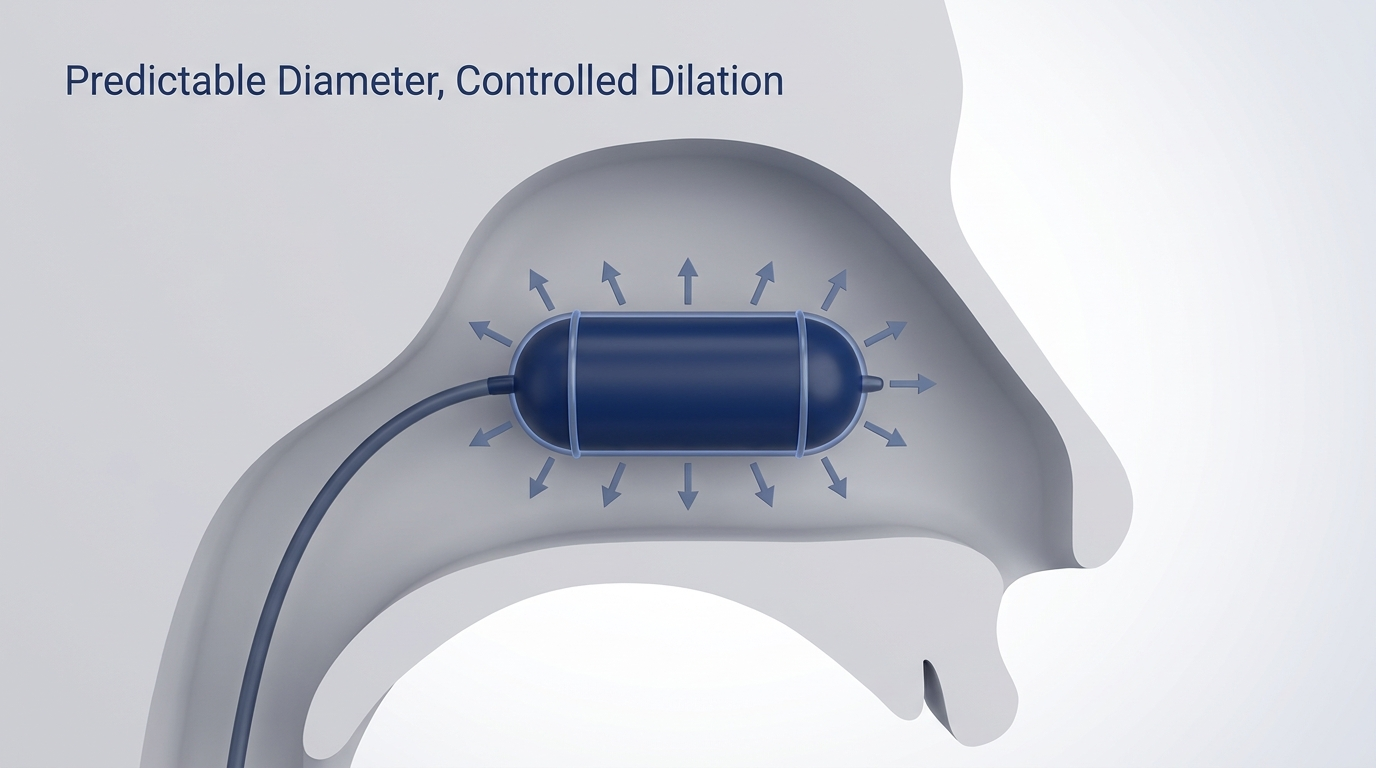
Stepwise approach. 1) Medical symptom control: saline rinses, allergy management, and nasal sprays can improve airflow when inflammation contributes. More on non-surgical options: https://www.clearpathnasal.com/blog/deviated-septum-treatment-without-surgery-what-are-the-options 2) Procedural/surgical correction (septoplasty): if symptoms persist, septoplasty can improve airflow. Minimally invasive options such as balloon-assisted endoscopic septoplasty may fit selected patients; learn more: https://www.clearpathnasal.com/blog/what-is-balloon-septoplasty-a-minimally-invasive-option-for-deviated-septum

What does the research say about symptom improvement after septal correction? (Patient-centered outcomes)
One retrospective evidence snapshot (balloon-assisted endoscopic septoplasty with ClearPath) does not establish superiority over traditional septoplasty but reports the following:
107 consecutive cases; 23 had pre/post CT for objective measurement; 43 completed SNOT-22 symptom surveys. CT-measured alignment improved by 22% at the nasolacrimal duct and 45% at the point of maximal deviation. SNOT-22 scores improved from 58.7 to 44.8 at 1 month (23.8% reduction), with largest gains in congestion, headache/facial pressure, and sleep quality. No major complications were reported in this cohort. Patients with severe deviations improved the most: 78% (18/23) achieved at least 30% alignment improvement. (Dillard et al., 2026)
Takeaway: early retrospective data suggest meaningful symptom and alignment improvements with balloon-assisted techniques for selected patients, but comparative, higher-quality studies are needed.
How to tell which “septal displacement” applies to you (a simple checklist)
If your report mentions the heart: look for words like echocardiogram, cardiac MRI, septal bounce, paradoxical septal motion, pericardium, constriction, tamponade, right ventricular overload.
If your report mentions the nose: look for words like deviated septum, nasal obstruction, turbinate hypertrophy, septoplasty, endoscopy, sinus CT.
Questions to ask your clinician: Which septum does this refer to? What symptoms should I watch for? What’s the next test (if any), and what decision will it change?
If you’re comparing treatments, you may find this helpful: ClearPath vs traditional septoplasty (recovery, safety, results): https://www.clearpathnasal.com/blog/clearpath-vs-traditional-septoplasty-recovery-safety-results
Quick rule: match the wording and the type of test to the body system—cardiac imaging and terms point to the heart; ENT evaluations and sinus/nasal terms point to the nose.
When to seek care (and which specialist to see)
See cardiology urgently if you have worsening shortness of breath, chest pain/pressure, fainting, new swelling, or your report mentions cardiac tamponade or constrictive pericarditis.
See an ENT if you have persistent nasal blockage, recurrent nosebleeds, recurrent sinus infections, or sleep-related breathing complaints that may relate to nasal airflow.
If you’re unsure where to start, primary care can often triage quickly by matching symptoms with the wording and context of the report. If in doubt, start with primary care—they can direct you to the right specialist.
FAQs about septal displacement
Is septal displacement always dangerous? Not always. A deviated nasal septum is very common and often harmless. Heart-related septal displacement (like a septal bounce) may be an important clue depending on the cause, which is why follow-up evaluation is sometimes recommended. (Cleveland Clinic, 2025; Clancy et al., 2018)
Can a deviated septum cause headaches or sleep problems? Yes, in some people. Headaches/facial pressure and sleep disruption can occur when anatomy and inflammation combine to reduce airflow. (Cleveland Clinic, 2025; AAO-HNS/ENT Health, 2018)
If my CT says “septal deviation,” do I automatically need surgery? No. Treatment is based on symptom severity and whether symptoms persist despite conservative measures. (Cleveland Clinic, 2025; AAO-HNS/ENT Health, 2018)
What is “septal bounce” on an echo? It’s an imaging pattern of the heart’s septum that can support certain diagnoses (such as constrictive physiology) and usually prompts more targeted evaluation rather than serving as a standalone diagnosis. (Radiopaedia, 2025; Clancy et al., 2018)
Conclusion: The key takeaway + next step
Septal displacement can describe either an abnormal motion pattern of the heart’s septum or a shifted nasal septum. The fastest way to clarify is to look at where the term appeared (cardiac imaging vs ENT evaluation) and match it with your symptoms.
If your report suggests a deviated nasal septum and you have ongoing symptoms, discuss next steps with an ENT, including whether medical therapy, traditional septoplasty, or a minimally invasive option such as balloon-assisted endoscopic septoplasty could fit your goals. For a side-by-side look at approaches, see ClearPath vs traditional septoplasty (recovery, safety, results): https://www.clearpathnasal.com/blog/clearpath-vs-traditional-septoplasty-recovery-safety-results
The context of your report and your symptoms usually reveal which “septal displacement” applies and what to do next.
Medical disclaimer
This article is for general education and is not medical advice. Always follow up with your clinician for diagnosis and treatment tailored to you.
References
Clancy K, et al. Paradoxical septal motion: A diagnostic approach and clinical relevance. (2018). https://pmc.ncbi.nlm.nih.gov/articles/PMC8409894/
Radiopaedia. Septal bounce. (2025). https://radiopaedia.org/articles/septal-bounce?lang=us
Agstam S. Septal Bounce or Ventricular Interdependence in Constrictive Pericarditis. (2020). https://pmc.ncbi.nlm.nih.gov/articles/PMC7321752/
Cleveland Clinic. Deviated Septum. (2025). https://my.clevelandclinic.org/health/diseases/16924-deviated-septum
AAO-HNS / ENT Health. Deviated Septum. (2018). https://www.enthealth.org/conditions/deviated-septum/
Dillard J, Koudouovoh C, Lee V, et al. Outcomes of force-directed balloon-assisted endoscopic septoplasty… Rhinology Online. 2026;9:18–23. doi:10.4193/RHINOL/25.018
This article is for educational purposes only and is not medical advice. Please consult a qualified healthcare provider for diagnosis and treatment.

Dr. David G. Dillard
Author
Share it with others!