The SNOT-22 Score: Measuring Your Sinus Health
If you’ve ever wished there were a simple way to “put a number” on how much your sinus and nasal symptoms are affecting your life, that’s exactly what the SNOT-22 score is designed to do. It’s widely used in ENT care to measure both symptoms and day-to-day impact—so you and your clinician can track progress over time and make clearer treatment decisions.
Think of it like a “sinus symptom odometer.” It won’t diagnose the cause of your symptoms by itself, but it does help quantify how you’re doing—and whether a treatment might be making a meaningful difference.
Below, we’ll break down what the SNOT-22 is, how scoring works, what a healthy-population reference score looks like, and how to interpret change (including the key concept of the minimal clinically important difference, or MCID).
What Is the SNOT-22 Score?
A simple questionnaire that measures sinus symptom burden
SNOT-22 stands for Sino-Nasal Outcome Test (22 items). It’s a validated, patient-reported sinus health questionnaire most commonly used for chronic rhinosinusitis (CRS)—but it can also help quantify sinonasal symptom burden across a range of nasal and sinus conditions. The goal is straightforward: measure how much your symptoms affect you.
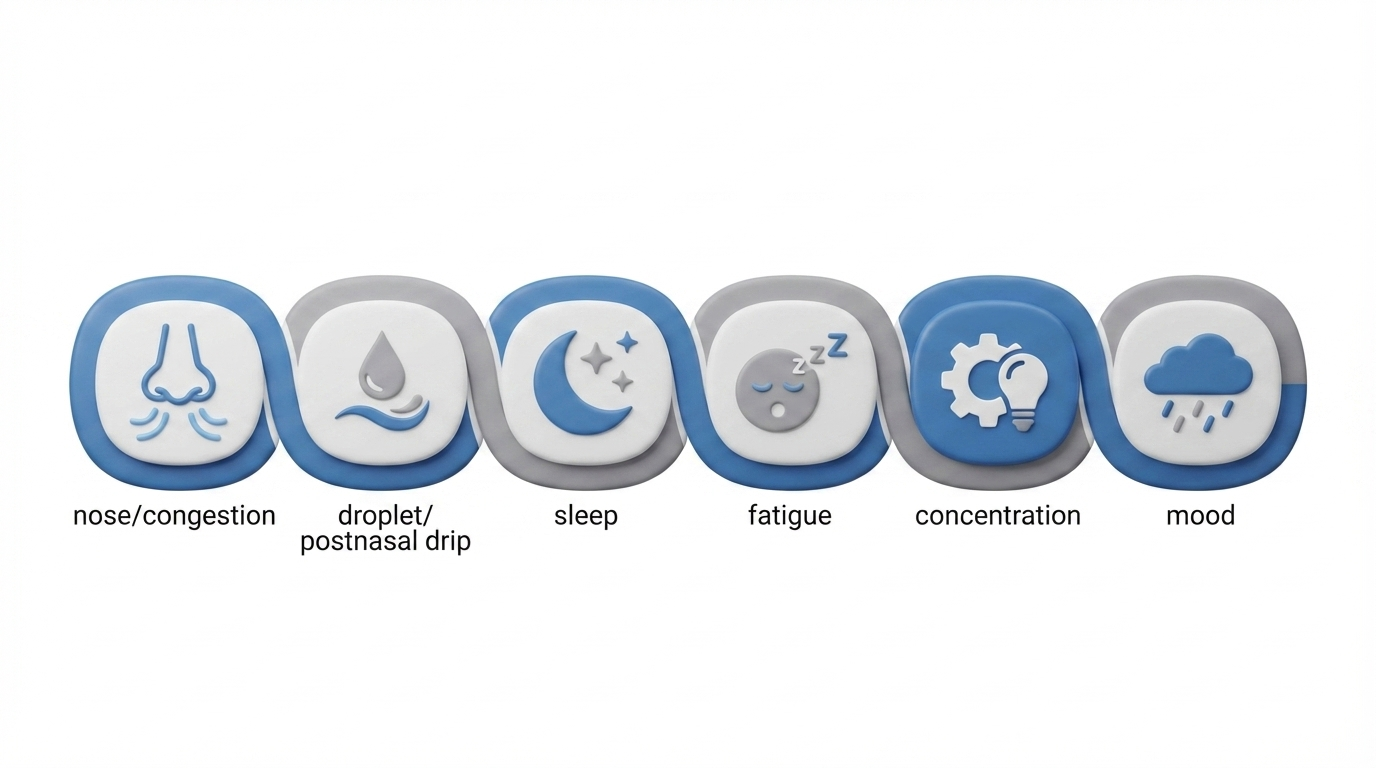
Importantly, it doesn’t only ask about nasal blockage. It also captures how symptoms affect sleep, energy, concentration, and mood, which are often part of the real-world burden of sinusitis and chronic nasal problems. That broader view is what makes the SNOT-22 score useful for tracking the quality-of-life impact of sinusitis—not just one symptom. [1]
Who uses it—and when you might see it
- During ENT clinic visits for ongoing nasal/sinus symptoms
- Before and after treatments (medications, allergy care, procedures, surgery)
- Over time to track recovery and outcomes in a consistent way
In practice, it becomes a shared language. As one clinician might put it: “We can talk about symptoms all day—but the score helps us see change.” When your symptoms fluctuate, having a consistent measurement can make follow-ups more productive.
Bottom line: SNOT-22 is a patient-reported tool that captures both symptoms and their impact on daily life, supporting clearer, trend-based conversations with your clinician.
How SNOT-22 Scoring Works (0–110)
The total score range—and what higher scores mean
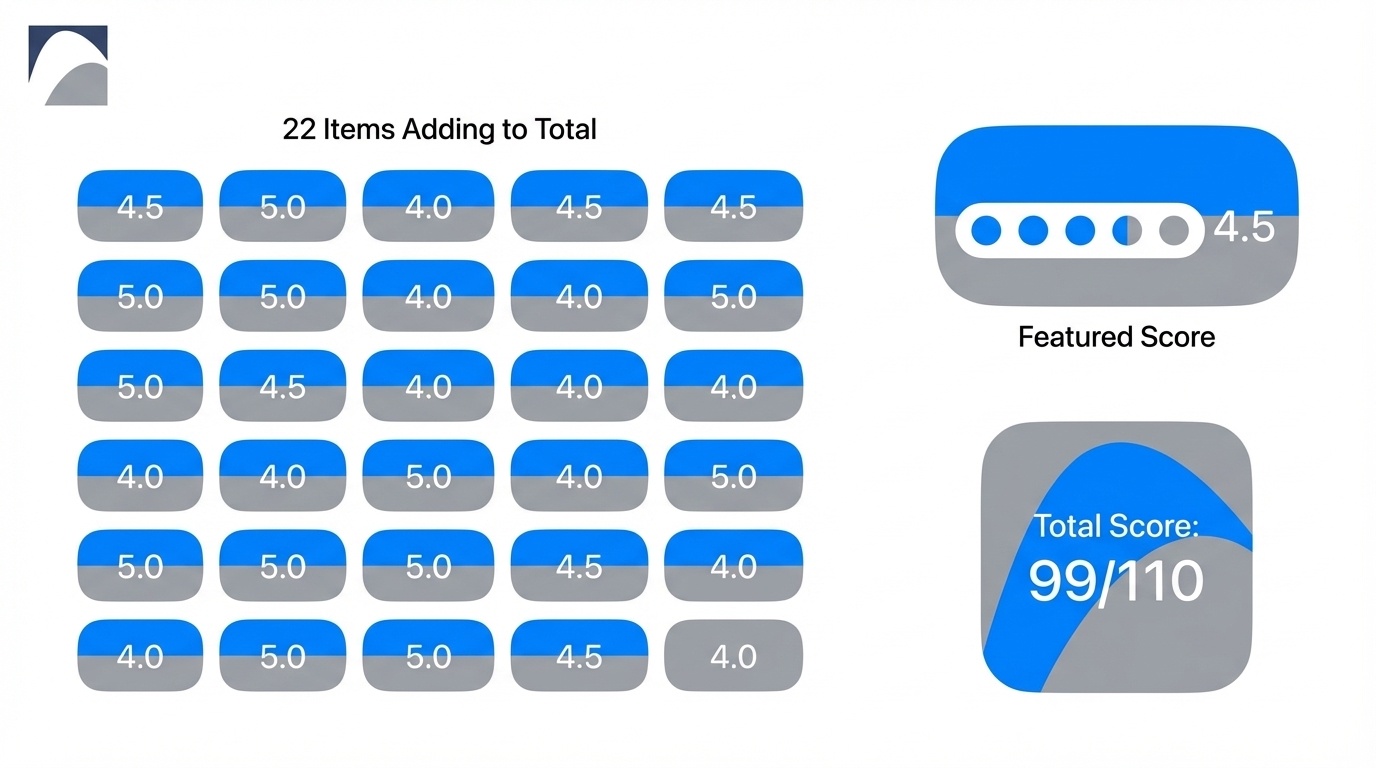
The total SNOT-22 score ranges from 0 to 110. Each question is rated from 0 (no problem) to 5 (problem as bad as it can be), and the 22 responses are added up.
- Higher score = worse sinonasal health / more symptom burden
- Lower score = fewer symptoms / less day-to-day impact [1]
A quick example: if you answered “2” on 10 questions (20 points total) and “0” on the remaining 12 questions, your SNOT-22 would be 20.
If you’re comparing scores over time, try to complete the questionnaire in a similar way each time (for example, at a similar time of day and with the same timeframe in mind) so comparisons are fair.
A small tip that can improve consistency
Because the SNOT-22 is about your experience, consistency matters more than perfection. Many patients find it helpful to:
- Think about the same recent window each time (for example, “the past 2 weeks”)
- Avoid scoring based only on a single “best day” or “worst day”
- Jot down major confounders (a cold, travel, a bad allergy week)
That way, if your score jumps, you’ll have context.
What the questions cover (symptoms + life impact)
SNOT-22 covers issues patients often recognize immediately, such as:
- Nasal congestion/obstruction
- Runny nose or postnasal drip
- Facial pressure or fullness
- Reduced sense of smell/taste
- Sleep quality and fatigue
- Difficulty concentrating
- Emotional impact (frustration, sadness, irritability)
If you’re surprised to see sleep or mood questions, that’s intentional: ongoing nasal obstruction and sinus symptoms can affect rest and well-being. Sleep-related symptoms are also commonly considered when evaluating nasal obstruction and treatment options; see more on the connection between nasal airflow and rest in this overview of nasal breathing and sleep quality: https://www.clearpathnasal.com/blog/septoplasty-for-better-sleep-and-breathing-quality
Bottom line: SNOT-22 sums up 22 items across symptoms and daily function—higher totals reflect more burden, and consistent self-scoring makes trends easier to interpret.
What Is a “Normal” SNOT-22 Score? (2023 Reference Data)
Healthy-population average from one large study
Many people assume a “normal” score must be near zero. However, a large 2023 multicenter study provided reference data showing that, in a healthy population, the average SNOT-22 score was 20.2 ± 19.4. This is best used as a reference point from one study rather than a diagnostic cutoff. [3]
Scores can vary widely even among people without a diagnosed sinus condition. Occasional congestion, seasonal symptoms, mild sleep issues, or intermittent fatigue are common in the general population.
How to use “normal” scores the right way
A healthy-population mean is most helpful as a reference, not a rule. Clinicians interpret SNOT-22 alongside:
- How long symptoms have lasted (for CRS, often 12+ weeks)
- Physical exam findings
- Nasal endoscopy and/or CT imaging when appropriate
- Response to medical therapy
For additional context on why the same score can mean different things depending on the cause, see this comparison of deviated septum vs allergies—how to tell the difference: https://www.clearpathnasal.com/blog/deviated-septum-vs-allergies-how-to-tell-the-difference
A practical tip: focus more on trends than a single number. One score is a snapshot; repeated scores show a story—especially when you note what changed between scores (for example, a new spray, an allergy plan, or a procedure).
Bottom line: treat the 2023 healthy-population mean as a reference point; meaningful interpretation requires your history, exam, and—when indicated—endoscopy or imaging.
What Counts as a Meaningful Improvement? (MCID Explained)
MCID: the minimum change people actually feel
MCID stands for minimal clinically important difference. In plain language: it’s the smallest improvement that patients typically notice as real and meaningful.
For the total score, a drop of about 9 points is often considered clinically meaningful in many studies. [2] So if your total score decreases by roughly 9 points or more after a treatment, that change is often interpreted as a noticeable improvement rather than random variation.
Domain-level changes can matter too
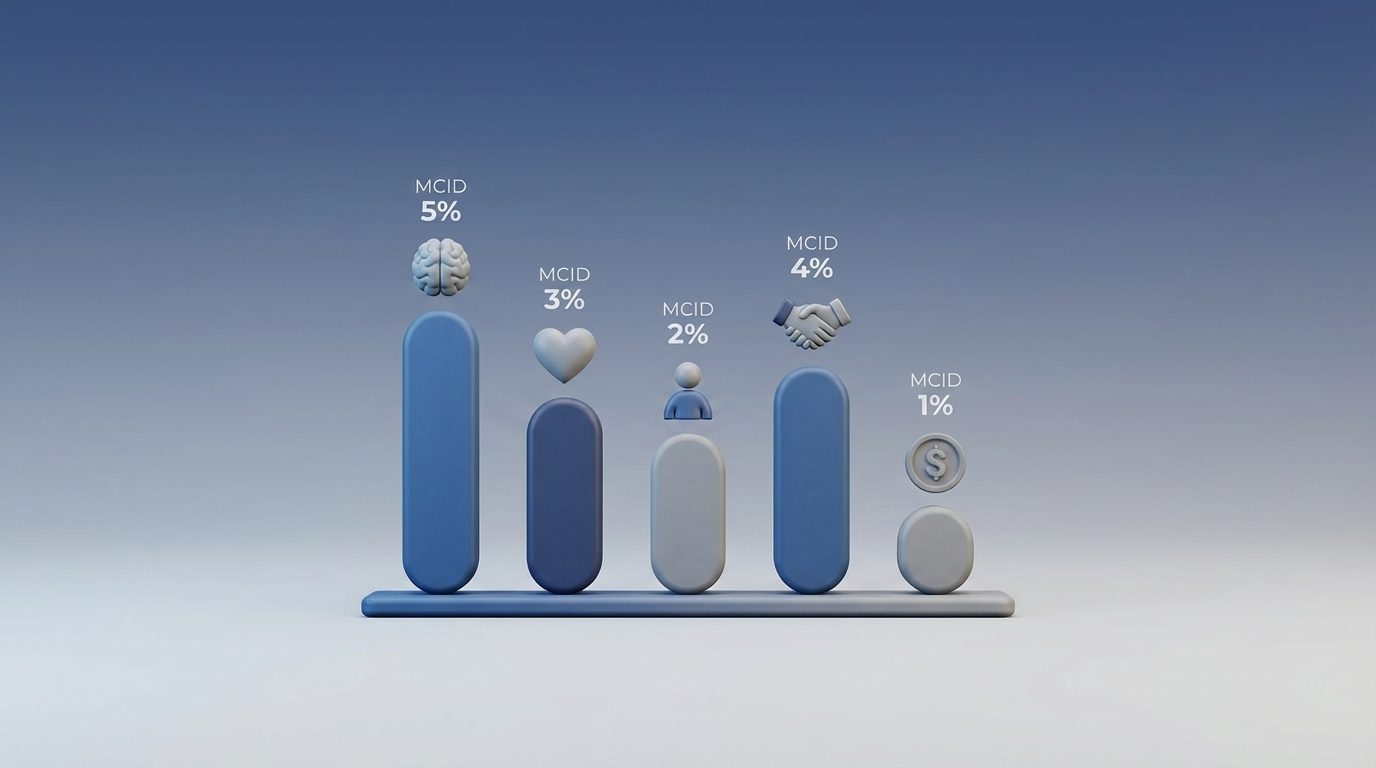
SNOT-22 items can be grouped into symptom domains. This helps because some treatments may improve sleep more than drainage, or congestion more than facial pressure. In one study of surgically managed chronic rhinosinusitis, approximate domain MCIDs were: [2]
- Rhinologic: ~3.8
- Extra-nasal rhinologic: ~2.4
- Ear/facial: ~3.2
- Psychological: ~3.9
- Sleep: ~2.9
In other words, even if the total score doesn’t shift dramatically, a targeted improvement in the domain that bothers you most can still be a meaningful win.
Bottom line: for total SNOT-22, about a 9-point drop is often considered meaningful in studies, and domain-level gains can represent important, patient-centered progress.
How Clinicians Use SNOT-22 in Treatment Planning
Before-and-after comparisons (meds, procedures, surgery)
ENTs often use the SNOT-22 score to quantify outcomes—before and after:
- Nasal sprays or other medications
- Allergy management plans
- In-office procedures
- Surgery (including endoscopic sinus surgery when indicated)
A key anchor is the same: for the total score, an improvement of around 9 points is commonly considered clinically meaningful in many studies. [1,2]
SNOT-22 can also help document how much nasal obstruction is affecting daily life. If a structural issue is suspected—like a deviated septum contributing to persistent congestion—your clinician may discuss options that aim to improve airflow. For additional background on structural contributors to ongoing symptoms, see deviated septum and chronic nasal congestion: https://www.clearpathnasal.com/blog/deviated-septum-and-chronic-nasal-congestion-what-to-do-next
Some practices may offer minimally invasive options for selected patients with septal deviation, but appropriateness depends on individual anatomy and a clinician’s evaluation.
Communicating expectations: “what benefit should I expect?”
Numbers can make goals clearer. Instead of guessing, you and your clinician might set a shared target such as:
- “Let’s aim for at least a ~9-point drop in total score,” or
- “Let’s prioritize sleep and fatigue and track those domains.”
Bottom line: clinicians use SNOT-22 to quantify change over time and align expectations, recognizing that appropriate next steps depend on your evaluation and response to care.
Example: How to Interpret a SNOT-22 Score (Patient-Friendly Scenarios)
Note: Illustrative examples only—not medical advice.
Scenario A: Mild but annoying symptoms
- Score: ~20 (near the healthy-population mean), but sleep-related items are high
- What it can mean: Overall burden may be similar to many healthy people, yet a specific area (sleep) is taking a toll.
- Common next steps: Review allergy triggers, consider evaluation for nasal obstruction, and address sleep habits and nighttime congestion patterns.
Practical takeaway: even “not that high” totals can hide a few items that are truly disruptive. Domain-level thinking helps target what matters most.
Scenario B: High symptom burden affecting daily life
- Score: 55–70 with high congestion + facial pressure + fatigue
- What it can mean: This suggests significant quality-of-life impact and a higher overall symptom burden.
- Common next steps: A structured evaluation to sort out possibilities like CRS, allergies, or structural obstruction (such as a deviated septum).
For more on what to do next when congestion persists, see deviated septum and chronic nasal congestion: https://www.clearpathnasal.com/blog/deviated-septum-and-chronic-nasal-congestion-what-to-do-next
Scenario C: After treatment—did it work?
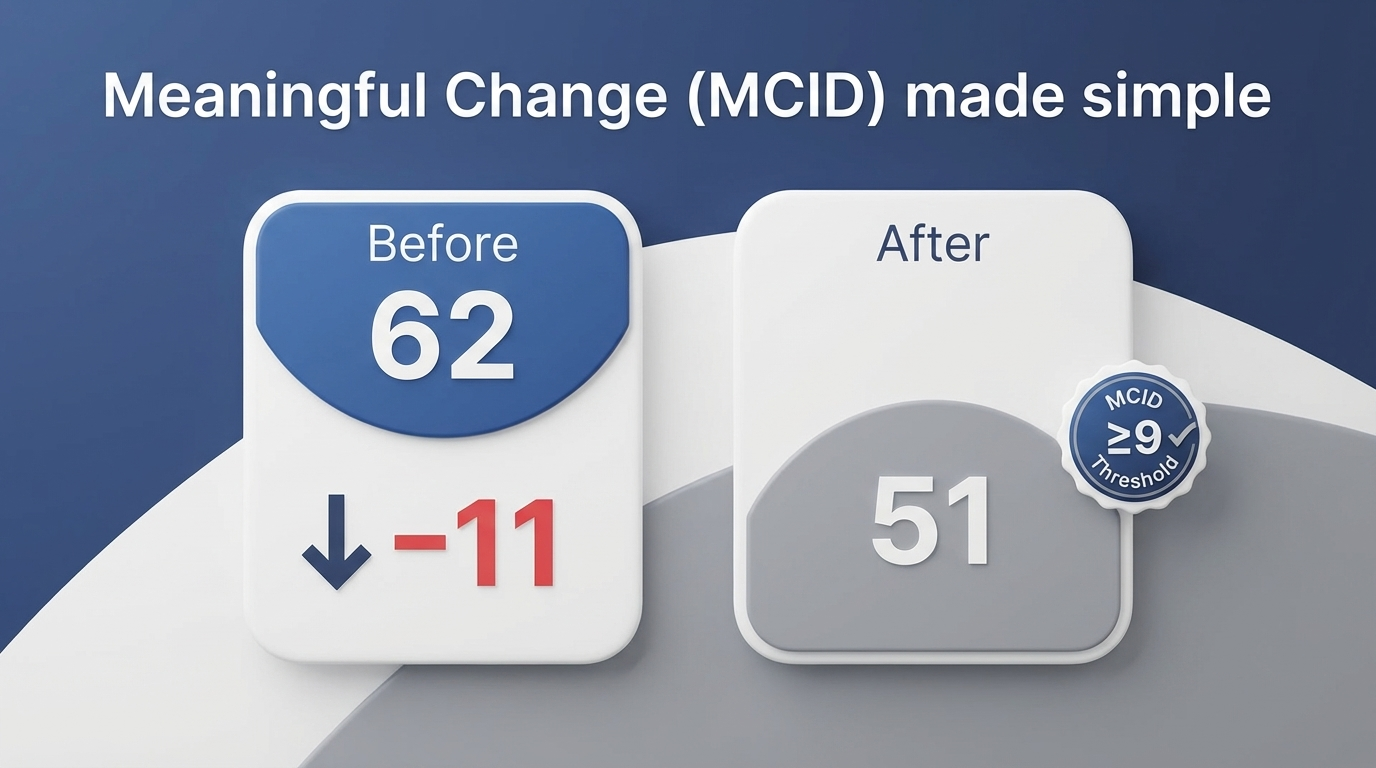
- Before: 62
- After: 51
- Change: 11-point drop
Because the total-score drop is around 9 points or more, this often meets the SNOT-22 MCID in studies, suggesting an improvement patients typically notice. [2] Remember: improvement can be domain-specific (for example, sleep improves even if drainage lingers).
Bottom line: single scores are snapshots, but trends—especially with context—clarify whether changes are likely meaningful.
When to Talk to an ENT (and What to Bring to Your Appointment)
Signs it may be time for evaluation
Consider an ENT evaluation if you have:
- Symptoms lasting 12+ weeks
- Recurrent “sinus infections” or frequent flares
- Persistent congestion, facial pressure, reduced smell, or sleep disruption
- Ongoing symptoms despite appropriate OTC/medication trials (as advised by a clinician)
What helps your clinician help you
Bring:
- Your baseline SNOT-22 results
- Repeat scores over time (weekly or monthly can be useful)
- Notes on triggers, allergy history, and medication trials
- Prior imaging (if you have it)
For context on where septoplasty can fit into care plans when structural issues are present, see the role of septoplasty in treating chronic sinusitis: https://www.clearpathnasal.com/blog/the-role-of-septoplasty-in-treating-chronic-sinusitis
Many clinicians reassess SNOT-22 after a treatment interval, often around 2–6 weeks, depending on the plan.
Bottom line: if symptoms persist, bring your SNOT-22 trend and history to your visit—this helps move from describing symptoms to making informed, individualized decisions.
FAQs About the SNOT-22 Score
Is SNOT-22 only for chronic rhinosinusitis?
It’s most commonly used for CRS, but it’s also a useful way to quantify sinonasal symptom burden across different nasal and sinus concerns. [1]
Can my score be near the healthy-population mean and I still feel miserable?
Yes. You might have a total score near the healthy mean, but a few severe items (sleep disruption, facial pain, or fatigue) can feel overwhelming. Domain-level interpretation can add helpful nuance. [2,3]
How often should I repeat the SNOT-22?
Many people do:
- One baseline score
- Another score 2–6 weeks after starting a treatment plan
- Additional scores at follow-ups after procedures/surgery (as directed)
The most helpful pattern is consistent timing so changes are easier to interpret.
What score means I need surgery?
No single SNOT-22 score automatically means surgery. Clinicians use it as one data point alongside history, exam, endoscopy/CT when appropriate, and response to medical therapy.
Key Takeaways: Using the SNOT-22 to Track Your Sinus Health
- The SNOT-22 score measures sinonasal symptom burden on a 0–110 scale; higher is worse. [1]
- A 2023 study reported a healthy-population mean of 20.2 ± 19.4; use this as a reference point, not a diagnostic cutoff. [3]
- Meaningful improvement in the total score often starts around 9 points in many studies (the SNOT-22 MCID). [2]
- Domain changes can reveal targeted improvements in sleep, facial/ear symptoms, and rhinologic symptoms. [2]
This article is for educational purposes only and is not medical advice. Please consult a qualified healthcare provider for diagnosis and treatment.
References
1. Washington University in St. Louis. Sino-Nasal Outcome Test (SNOT) – Scoring System. https://sinonasaltest.wustl.edu/sino-nasal-outcome-test-snot/scoring-system/
2. Investigating the Minimal Clinically Important Difference for SNOT-22 Symptom Domains in Surgically Managed Chronic Rhinosinusitis (2017). https://pmc.ncbi.nlm.nih.gov/articles/PMC5716928/
3. Normative data for interpreting the SNOT-22 (2023). https://pmc.ncbi.nlm.nih.gov/articles/PMC10773542/

Dr. David G. Dillard
Author
Share it with others!