The Point of Maximal Deviation: What It Means for Your Airflow
If you’ve been told you have a deviated septum—or you’ve been dealing with stubborn one-sided stuffiness—you may hear a clinician mention the point of maximal deviation. It’s more than a technical phrase: it often describes the tightest bottleneck in your nasal passage and can help explain why breathing feels harder on one side.
Featured snippet definition
The point of maximal deviation is the spot where the nasal septum bends the farthest into one side of the nose, narrowing that airway the most. Because airflow has to pass through this tight point, it can increase nasal airflow resistance and contribute to symptoms like nasal obstruction, uneven breathing, and congestion.
What Is the “Point of Maximal Deviation” (and Why Should You Care)?
Your nasal septum is the wall that separates the left and right nasal passages. When it’s crooked, there’s usually one location where it “bows” the most into one side. That spot is the point of maximal deviation—think of it as the narrowest part of the septum’s bend.
A helpful way to picture this is a drinking straw with a kink: the whole straw still exists, but the kink is where flow becomes hardest. In the nose, that “kink” can make the same breath feel effortless on one side and restricted on the other.
Why it matters: when a nasal passage becomes narrow at a specific point, air has less room to move through comfortably. That can contribute to a “blocked” sensation and higher resistance when you inhale—especially during sleep, exercise, or allergy season when the nasal lining may swell.
If you want a helpful foundation before getting into airflow details, see our overview: what a deviated septum is (https://www.clearpathnasal.com/blog/deviated-septum-explained-symptoms-causes-and-modern-treatment-options).
“Maximal deviation” can mean different things in different fields
Most of the time in ENT care, “maximal deviation” refers to anatomy: the most crooked point of the septum, measured clinically or on a CT scan.
But if you’ve searched online, you may also see “maximum deviation” used in airflow-sensor engineering. In that context, it can describe flow non-linearity—the maximum amount a sensor’s output departs from a straight-line response. Note: In airflow sensor engineering, “maximum deviation” has a different meaning related to flow measurement error (see Honeywell Technical Note TN-008212-3).
In short, the maximal deviation is simply the tightest spot created by a crooked septum—and it often explains one‑sided blockage.

How a Deviated Septum Changes Airflow in the Nose
Why deviation can create “uneven breathing” between sides
With deviated septum airflow, it’s common to feel like one side breathes well while the other feels tight or blocked. This can happen because the septum narrows one nasal passage and changes how air streams through both sides—often creating more asymmetric airflow patterns than in a straighter nose.
Research using airflow models shows that a deviated septum can change how air moves inside your nose and increase the speed of airflow in some areas—especially near the side where the septum bends. (International Forum of Allergy & Rhinology; Scientific Reports)
In real life, patients often describe it like this:
- “My left nostril feels open, but the right never really does.”
- “I can breathe fine sitting up, but as soon as I lie down, one side plugs.”
Those experiences fit with the idea that anatomy (the narrowed segment) plus changing congestion (the nasal lining) can create noticeable day-to-day swings.
Faster airflow doesn’t always mean easier breathing
It sounds counterintuitive, but faster air through a smaller space does not automatically mean better breathing.
A useful concept here is nasal airflow resistance. When an airway narrows, resistance increases—so your body may need to work harder to pull air in, even if the air that does pass through moves faster like a jet through a constricted opening.
An analogy: pinching a garden hose can make the water stream shoot out faster at the pinch point, but it doesn’t mean the hose is delivering water more easily overall. In the nose, a narrow area can increase local velocity while also increasing the “work” of breathing.
Some septal deviation types have been associated with both higher maximal airflow velocity and higher total nasal resistance, which helps explain why symptoms can feel intense even when airflow “speeds up” in a small area. (Scientific Reports; PubMed; IFAR/Sage)
Bottom line: a narrow point can speed air locally yet raise total resistance, making breathing feel harder.

Where Is Airflow Fastest in a “Normal” Nose?
The isthmus nasi: a natural high-speed zone
Even in healthy nasal cavities, airflow isn’t uniform. One area often associated with higher airflow speed is the isthmus nasi, a naturally narrower region where air tends to accelerate.
Interestingly, research also shows this same region can have the largest variability in airflow among healthy people (larger standard deviations). In other words, there’s a range of “normal,” and two people can have different airflow patterns and still be healthy. (Scientific Reports)
Why this matters when symptoms don’t match a single number
This variability is reassuring: nasal breathing isn’t determined by one measurement alone. Day to day, symptoms can shift due to swelling, allergies, irritants, dryness, or inflammation—even if your anatomy stays the same. Structure matters, but so does the lining of the nose.
That’s also why two people with the “same” looking deviation on paper can feel very different. One might barely notice it; another might feel congested constantly—especially if swelling, turbinate size, or nasal valve function adds additional resistance.
Even healthy noses have faster-flow zones, and normal variability means symptoms don’t hinge on a single number.

Septal Deviation Type and Location Can Predict How Much Airflow Is Affected
Not all deviated septums behave the same
A deviated septum isn’t one single shape. The shape, location, and severity of the bend influence where narrowing happens and how airflow behaves.
A deviation near the front of the nose may feel very noticeable because it affects airflow early—like a pinch right at the entrance. A bend farther back might affect airflow differently, and may be noticed most during higher-demand breathing (like exercise) or when lying down to sleep.
For a deeper dive into deviation patterns, you can read: septal deviation types (Mladina classification) (https://www.clearpathnasal.com/blog/septoplasty-outcomes-by-deviation-type-mladina-classification).
Deviation types linked to higher velocity and resistance
Computational and clinical research has found that type 4 and type 7 septal deviations are associated with markedly higher maximal airflow velocity and increased total nasal airflow resistance. Patient takeaway: certain deviation shapes are more likely to create troublesome airflow changes and symptoms. (PubMed; IFAR/Sage)
If your clinician tells you your deviation is more complex (not just a small “bump”), this is part of what they’re getting at: the pattern can matter as much as the presence of deviation itself.

The “plus factors” that can worsen blockage
The septum is only part of the airflow story. Turbinate hypertrophy (enlarged turbinates) can compound narrowing and resistance.
Turbinates are normal structures that help warm, humidify, and filter the air you breathe. When they become chronically swollen—often from allergies or inflammation—they can take up extra space and worsen nasal obstruction, especially if a septal deviation is already reducing the available airway.
A common clinician explanation is essentially: “The septum sets the baseline space, and the turbinates can change that space day to day.”
Not all deviations are equal—their shape and location strongly influence symptoms and airflow.

How Clinicians Measure the Point of Maximal Deviation
Common ways the deviation is evaluated
- Nasal endoscopy: a small camera is used to view internal nasal anatomy and pinpoint where the septum and turbinates narrow airflow.
- CT imaging: often done when sinus concerns are involved; it can help visualize the septum’s shape and the location of the tightest bend.
- Symptom scoring and questionnaires: patient-reported outcomes help connect anatomy to real-life function (sleep, exercise tolerance, congestion, facial pressure).
Why the “max point” is useful for tracking improvement
Because the point of maximal deviation is the most narrowed spot, it’s a practical reference point for “before vs. after” comparisons—whether you’re tracking symptoms, endoscopy findings, or imaging measurements.
It can also help you ask more targeted questions, such as whether your tightest point is close to the front (where you might feel it more immediately) or deeper in the nasal passage (where it might interact differently with swelling and airflow patterns).
Knowing where the tightest point sits helps connect anatomy with symptoms and track change over time.
What the Research Says About Improving the Point of Maximal Deviation (ClearPath Nasal Balloon Example)
This section is educational and meant to help you understand one minimally invasive approach that may be discussed during ENT evaluation.
Balloon-assisted endoscopic septoplasty as a minimally invasive option
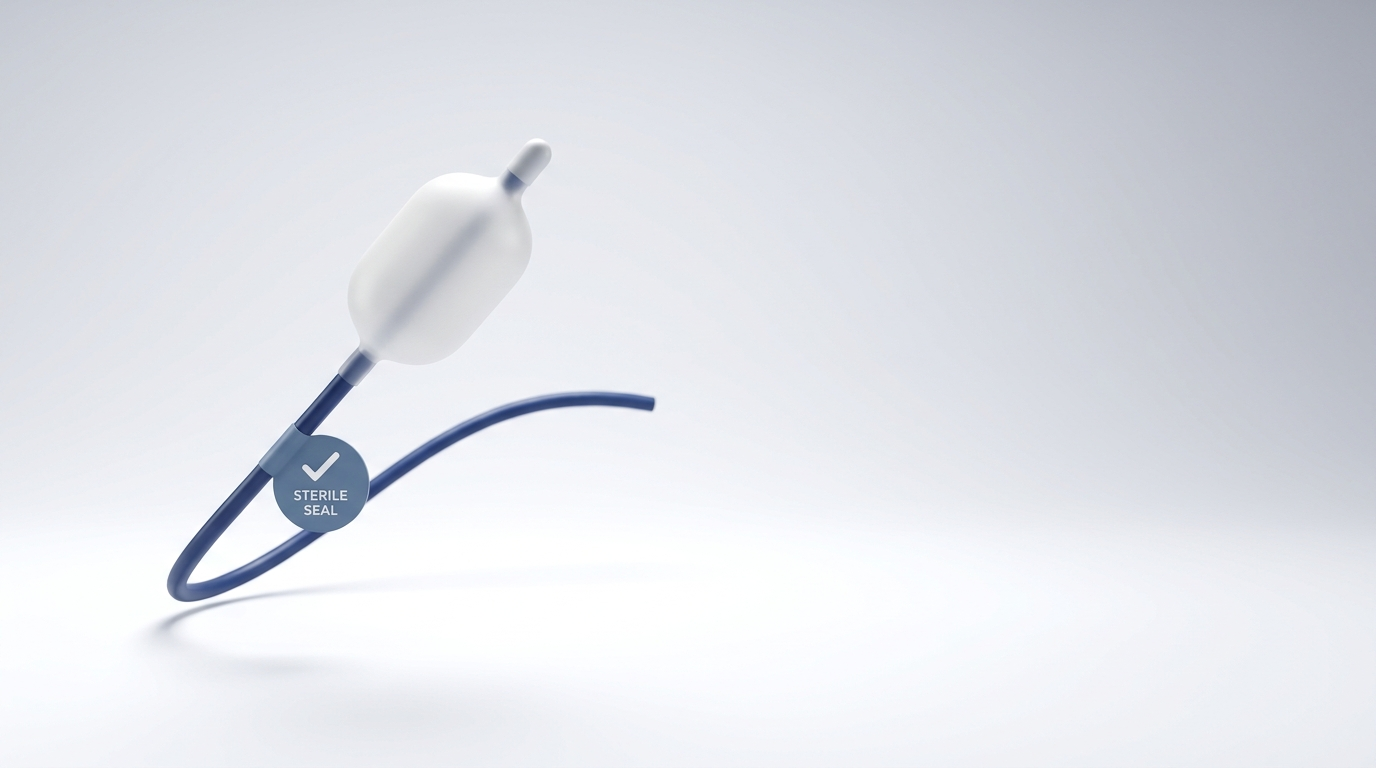
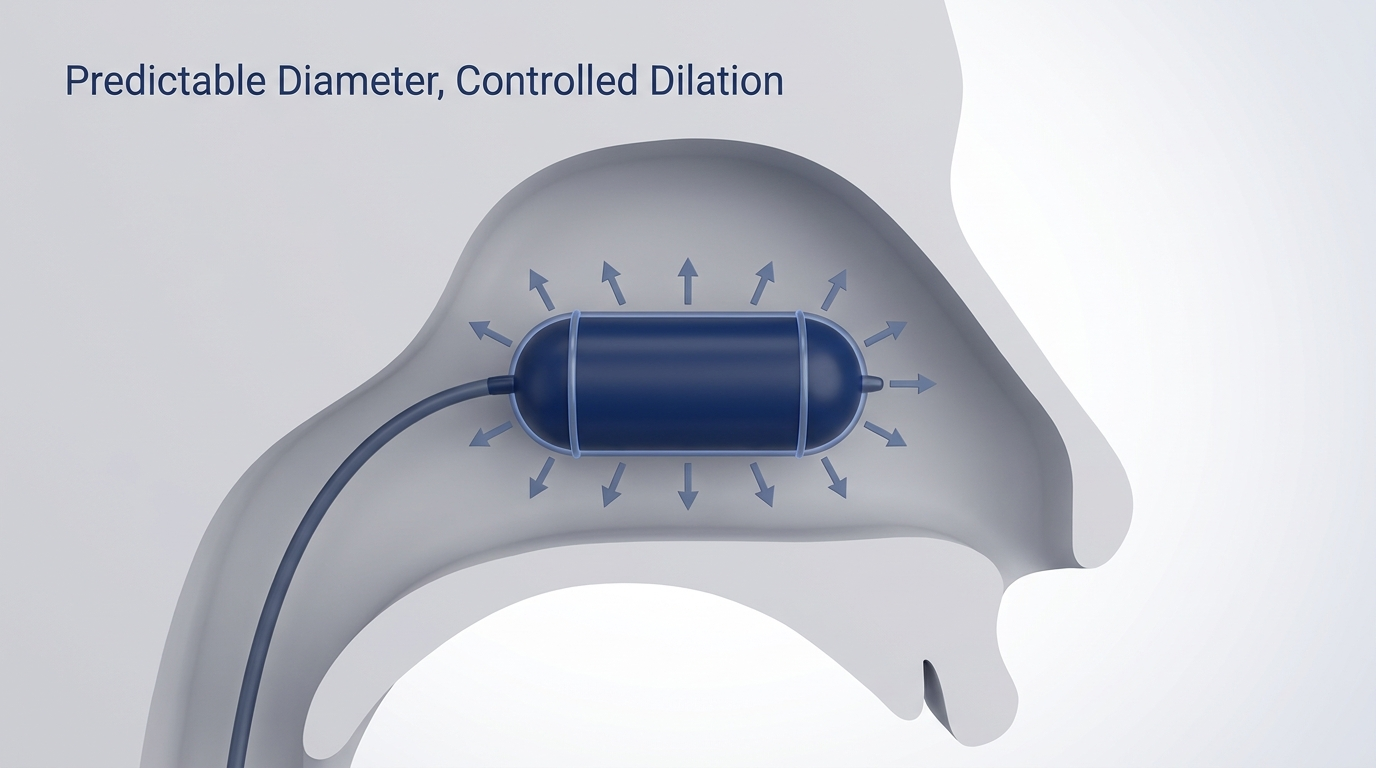
Balloon-assisted endoscopic septoplasty is a technique that uses controlled pressure under endoscopic guidance to help reposition deviated cartilage and/or bone. One example is the ClearPath Nasal Balloon, which is a device designed for balloon-assisted septoplasty approaches.
For some patients, this may be discussed as an alternative to more traditional septoplasty techniques—especially when the clinical goal is to improve alignment at a specific narrowing point while potentially minimizing tissue disruption.
If you’d like a step-by-step educational overview, see: how the ClearPath Nasal Balloon works (https://www.clearpathnasal.com/blog/how-the-clearpath-nasal-balloon-works-a-step-by-step-guide).
Outcomes reported with the ClearPath Nasal Balloon (CNB) approach
- Safety: In a series of 107 cases, there were no major complications reported (including no septal perforation, hematoma, mucosal injury, or synechia observed). (Dillard et al., 2026)
- Alignment improvement on CT: In 23 patients with pre- and post-procedure CT scans, septal alignment improved by about 45% at the point of maximal deviation and about 22% at the nasolacrimal duct (both p = 0.005). (Dillard et al., 2026)
- Symptoms improved: The average SNOT-22 score decreased ~24%, with notable improvements in congestion, facial pressure/headache, and sleep quality at around 1 month. (Dillard et al., 2026)
- Efficiency considerations: The authors noted that less tissue disruption may reduce steps like extensive flap elevation, suturing, or packing in some cases—potentially shortening procedure time. (Dillard et al., 2026)
Important note: Not every nasal anatomy or symptom pattern is a fit for every technique. A full evaluation considers septal shape, turbinates, nasal valve function, inflammation, and your goals.
Early reports suggest balloon-assisted techniques can improve alignment at the tightest point with a favorable safety profile, but patient selection remains key.
Signs Your “Maximal Deviation Point” Might Be Affecting Your Daily Life
Common symptoms patients notice
- One-sided blockage or the feeling that one nostril “never opens”
- Alternating congestion (often influenced by swelling and the normal nasal cycle)
- Mouth breathing and dry mouth
- Reduced exercise tolerance
- Sleep disruption or snoring (learn more: deviated septum and snoring (https://www.clearpathnasal.com/blog/deviated-septum-and-snoring-why-a-balloon-procedure-may-help))
A practical example: you might feel “fine” during the day but notice more obstruction at night. That doesn’t mean it’s “all in your head”—it can reflect how position, swelling, and resistance interact with your narrowest anatomic point.
When to talk to an ENT
Consider an evaluation if symptoms last more than several weeks, or if you have recurrent sinus infections, sleep issues, frequent nosebleeds, or persistent one-sided obstruction—especially if it’s getting worse.
If one side never seems to open—or gets worse at night—your tightest point may be part of the story.
What Are Your Next Steps If You Have a Deviated Septum?
Start with diagnosis and contributing factors
Many people benefit from identifying and treating contributors like allergies, irritant exposure, or chronic inflammation. A clinician may recommend saline rinses and nasal sprays (as directed), and will often evaluate turbinate size and other anatomy that affects resistance.
Treatment options overview (from conservative to procedural)
- Monitoring if symptoms are mild
- Medical management to reduce swelling and inflammation
- Septoplasty approaches, including traditional techniques or minimally invasive options such as balloon-assisted endoscopic septoplasty using the ClearPath Nasal Balloon device, when appropriate
Questions to ask at your consultation
- “Where is my point of maximal deviation?”
- “Do my turbinates contribute to my blockage?”
- “What outcomes do you measure—symptoms, endoscopy, CT?”
- “What is recovery like for the approach you recommend?”
CTA: If you’re exploring procedural options, discuss with your local ENT whether minimally invasive balloon-assisted techniques—including ClearPath—are appropriate for you, and how they would measure improvement at your point of maximal deviation.
Start with causes you can treat, then match any procedure to your anatomy, goals, and daily symptoms.
FAQ (SEO-Friendly)
Is the point of maximal deviation always the spot that feels most blocked?
Not always. Sensation is influenced by airflow patterns, mucosal swelling, and the nasal cycle. The tightest anatomic point can be important, but day-to-day symptoms may shift depending on inflammation and congestion. (Scientific Reports)
Can a deviated septum increase airflow velocity but still make breathing harder?
Yes. Narrowing can increase maximal airflow velocity locally while also increasing overall nasal airflow resistance, which can make breathing feel more laborious. (Scientific Reports; PubMed)
Can the deviation come back after septoplasty?
Septal tissues can change over time, and healing varies by person and technique. Your ENT can explain what stability typically looks like for your anatomy and what follow-up is recommended.
Does everyone with a deviated septum need surgery?
No. Many people have some deviation with minimal symptoms. Treatment is usually based on how much nasal obstruction and quality-of-life impact you have, plus whether medical management controls swelling and congestion.
References
- Honeywell. Airflow Sensor Glossary of Terms (Technical Note TN-008212-3). https://prod-edam.honeywell.com/content/dam/honeywell-edam/sps/siot/ja/products/sensors/airflow-sensors/common/documents/sps-siot-airflow-sensor-glossary-of-terms-tn-008212-3-en-ciid-43823.pdf
- International Forum of Allergy & Rhinology (PubMed). https://pubmed.ncbi.nlm.nih.gov/22201479/
- International Forum of Allergy & Rhinology (Sage Journals). https://journals.sagepub.com/doi/10.1177/0145561319872745
- Scientific Reports (Nature). https://www.nature.com/articles/s41598-020-60755-3
- PubMed. https://pubmed.ncbi.nlm.nih.gov/31569977/
- Dillard JD, Koudouovoh C, Lee V, et al. Outcomes of force-directed balloon-assisted endoscopic septoplasty: a retrospective analysis with a new technique and device. Rhinology Online. 2026;9:18–23. http://doi.org/10.4193/RHINOL/25.018
Medical disclaimer
Medical disclaimer: This article is for educational purposes only and is not medical advice. If you have persistent nasal obstruction, sleep disruption, or one-sided congestion, seek evaluation from a qualified clinician (such as an ENT) who can assess your anatomy, symptoms, and treatment options.
This article is for educational purposes only and is not medical advice. Please consult a qualified healthcare provider for diagnosis and treatment.

Dr. David G. Dillard
Author
Share it with others!