The Connection Between Allergies and Septal Deviation
Nasal congestion can feel deceptively simple—until it becomes constant, one-sided, or suddenly worse during certain seasons. If you’ve ever wondered about the connection between allergies and septal deviation, you’re not alone. Many people have both a structural narrowing (a deviated septum) and inflammatory swelling (allergies), and the combination can make breathing feel significantly harder than either issue alone.
A useful way to picture it: a deviated septum is like a hallway that was built a bit narrower on one side. Allergies are like temporary “puffiness” in the walls and carpet. Either one can make the walkway tighter—but together, they can make it feel almost impassable.
For a broader overview of septal deviation, see this helpful explainer: Deviated septum explained: symptoms, causes, and modern treatment options — https://www.clearpathnasal.com/blog/deviated-septum-explained-symptoms-causes-and-modern-treatment-options
Quick takeaway: allergies don’t cause a deviated septum—but they can make it feel much worse
Here’s the simplest way to understand the connection between allergies and septal deviation:
- Septal deviation is structural (bone and cartilage). It’s a physical shift of the “divider” inside the nose.
- Allergies are inflammatory (swelling of the nasal lining). They narrow the air passage by puffing up the tissue.
That’s why some people feel “fine” most of the year, then feel suddenly blocked when allergy season hits. In clinic, a common story sounds like: “I can breathe okay in winter, but every spring one nostril just shuts down.” Often, that’s a two-part problem—baseline tight anatomy plus seasonal swelling.
In many cases, many people may experience better symptom control when both anatomy and inflammation are addressed. (Mayo Clinic Staff, 2025)
- In short: structural narrowing and allergic swelling are separate issues that can stack to make breathing harder. -

What is a deviated septum (and what causes it)?
The septum is “the wall” between the nostrils
Your nasal septum is the thin structure made of cartilage and bone that separates the left and right sides of your nose. When it’s deviated, it sits off-center, which can narrow one side and change airflow.
If you’ve ever tried breathing through a straw that’s slightly pinched, you already understand the concept: a small narrowing can have an outsized effect—especially during exercise, sleep, or allergy flares.
Causes are usually present from birth or from injury
- Congenital (present from birth), or
- Acquired after trauma (a hit to the nose, a fall, sports injury, etc.)
Importantly, allergies do not physically bend the septum. Allergies can swell tissue, but they don’t reshape cartilage or bone. (Mayo Clinic Staff, 2025)
Common symptoms people notice
Symptoms vary widely. Some people barely notice a deviation; others feel blocked daily. Common complaints include:
- Nasal obstruction, often worse on one side
- Trouble breathing through the nose (especially with exercise or at night)
- Snoring or mouth breathing
- Dryness or nosebleeds (from turbulent airflow and dryness)
A key point in the connection between allergies and septal deviation is that a mild deviation may not feel like a big deal—until inflammation flares. The structure sets the “starting width” of your nasal passage; allergies can temporarily narrow it further. (Mayo Clinic Staff, 2025)
- Bottom line: the septum sets your baseline airway, and small structural changes can matter most when your nose is already inflamed. -

What allergies do to your nose (and why they can “expose” a deviation)
Allergic rhinitis = swelling, extra mucus, and sensitive nasal tissue
Allergic rhinitis happens when your immune system reacts to triggers like pollen, dust mites, or pet dander. The lining of the nose becomes irritated and swollen, often producing extra mucus. This swelling is why nasal congestion caused by allergic rhinitis can feel so intense, even when there’s no infection.
People often describe it as feeling “stuffed up” rather than “sick”—with symptoms that may come and go depending on location, weather, or exposure.

Why symptoms can spike when you have both allergies + deviation
If one side of your nose is already narrower from a deviation, even “normal” allergy swelling can reduce that airway dramatically. In other words: when you combine a narrow passage with inflammation, airflow may drop fast—making congestion feel sudden, severe, or stubborn.
This is a major reason the connection between allergies and septal deviation matters clinically: the same level of allergy inflammation can feel much worse in a nose that’s already structurally tight. It’s also why you might feel “lopsided” congestion—like one side keeps losing the battle. (Mayo Clinic Staff, 2025; Allergy & ENT Associates, 2024)

Signs your blockage is more allergy-driven vs more structural
These patterns can help you and your clinician sort out whether symptoms are primarily inflammatory, structural, or both:
More allergy-driven (inflammation-leaning):
- Itching, sneezing, watery runny nose
- Seasonal pattern or clear trigger exposures
- Improves noticeably with allergy medication strategies (as advised)
More structural (deviation-leaning):
- Persistent one-sided blockage year-round
- Feels worse when lying on one side
- Minimal improvement despite consistent allergy care
If you want a deeper comparison, see: How to tell the difference between a deviated septum and allergies — https://www.clearpathnasal.com/blog/deviated-septum-vs-allergies-how-to-tell-the-difference
- In short: allergy symptoms tend to fluctuate with triggers, while structural blockage is often steady and side-dominant. -
Can a deviated septum cause sinus infections or chronic sinusitis? What the research says
The evidence is mixed—not everyone with a deviation gets chronic sinus problems
It’s easy to assume a deviated septum automatically leads to sinus infections. In reality, many people with a deviation never develop frequent infections or chronic symptoms. Research results vary partly because “chronic sinusitis” (chronic rhinosinusitis) can be defined and measured differently across studies. A deviated septum may contribute to symptoms in some people, but it is not a guaranteed cause of chronic disease.
What a 2025 systematic review found
A 2025 systematic review examining the relationship between septal deviation and rhinosinusitis found that study methods and diagnostic criteria were inconsistent. Because of this heterogeneity, the overall relationship between septal deviation and chronic disease remains inconclusive. (Shulkin et al., 2025)
Why this matters for patients
Because the relationship isn’t clear-cut, many clinicians focus first on what’s most reversible: inflammation (including allergies). That stepwise approach fits with major guideline frameworks for nasal and sinus disease—start with medical management, then reassess. (Shulkin et al., 2025; EPOS 2020)
- Takeaway: treat what’s reversible first, then re-evaluate whether structure is still contributing. -

Step-by-step care plan: what most clinicians recommend first
A practical way to manage the connection between allergies and septal deviation is to treat the reversible part first, then reassess what’s left.
Step 1 — Treat allergic inflammation (the reversible piece)
Common, clinician-guided strategies may include:
- Trigger reduction (when feasible)
- Saline irrigation/rinses
- Antihistamines and/or intranasal steroid sprays (as advised by your clinician)
The goal is to calm swelling so you can more accurately “see” how much obstruction is truly structural versus inflammatory. If congestion improves a lot with allergy control, that’s useful information—regardless of whether a deviation exists. (Mayo Clinic Staff, 2025; EPOS 2020)
Step 2 — Recheck symptoms once allergies are controlled
After a consistent trial (often a few weeks), reassess:
- Nighttime breathing and mouth breathing
- Exercise tolerance
- How often you feel “one side blocked”
- Sleep quality and snoring patterns
This is where simple tracking can help. For example, jot down a quick daily note: “Right side blocked most of the day” or “Much better after rinse/spray.” Patterns over time are often more revealing than a single bad day.
For more on how to approach persistent congestion, see: Deviated septum and chronic nasal congestion — what to do next — https://www.clearpathnasal.com/blog/deviated-septum-and-chronic-nasal-congestion-what-to-do-next
Step 3 — Consider structural treatment if obstruction persists
If you’ve optimized allergy care and still feel significantly obstructed—especially if one side remains consistently tight—structural narrowing may still be contributing. That’s often the point where clinicians discuss septoplasty after allergy treatment and whether a procedure is aligned with your anatomy and goals. Other structural contributors, such as enlarged turbinates or nasal valve issues, may also be assessed. (Mayo Clinic Staff, 2025; Shulkin et al., 2025; EPOS 2020)
- Practical summary: dial down inflammation first, then decide if a structural fix is still needed. -
When septoplasty enters the conversation (and why combining approaches can help)
What septoplasty is trying to fix
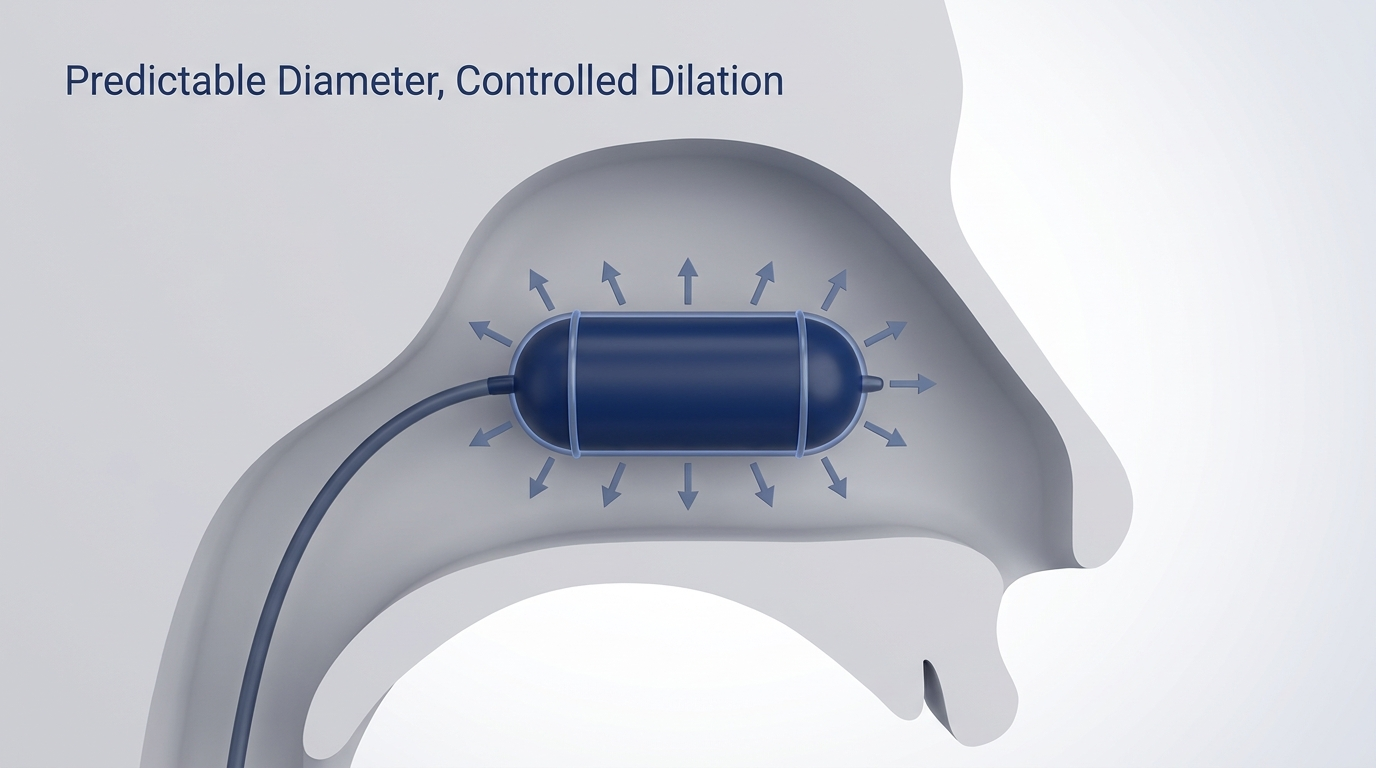
Septoplasty aims to improve airflow by correcting physical narrowing inside the nose. The purpose isn’t to treat allergies—it’s to create more space so you can breathe better even when mild swelling occurs. Many ENTs frame it like this: if your baseline airway is larger, you may have more “buffer” during allergy season.
Why treating both problems can improve long-term control
- Structure sets your baseline airflow
- Allergies drive flare-ups
Improving structure can raise your baseline. Managing allergies can reduce the intensity and frequency of flare-ups. Many people get better symptom control when both are addressed—typically with medical therapy first, then procedural options if needed. (Mayo Clinic Staff, 2025; EPOS 2020)
Minimally invasive “balloon” approaches (what patients should know)
Depending on your anatomy and clinician assessment, minimally invasive options may be available in selected cases. You may see the term “balloon septoplasty,” which refers to the use of balloon-based instruments to assist septal correction; terminology varies by center and this is distinct from balloon sinuplasty (used for sinus openings). Traditional septoplasty remains the standard approach; balloon-assisted techniques may be considered in selected patients.
If you’re exploring that path, this overview explains how it works and who may be a fit: What is balloon septoplasty? — https://www.clearpathnasal.com/blog/what-is-balloon-septoplasty-a-minimally-invasive-option-for-deviated-septum
ClearPath is a device used in some minimally invasive septoplasty approaches. In one retrospective cohort of 107 consecutive cases, authors reported:
- CT-measured alignment improvements in a subgroup with pre/post imaging (22% at the nasolacrimal duct and 45% at the point of maximal deviation)
- No major complications reported in that cohort (including no perforation, hematoma, mucosal injury, infection, or conversion)
- Patient-reported symptom improvement in a subgroup, with SNOT-22 scores improving from 58.7 to 44.8 at one month (23.8% reduction), including gains in congestion, facial pressure/headache, and sleep quality (Dillard et al., 2026)
These findings come from a retrospective study and may not generalize to all patients or settings; prospective comparative data are limited. Discuss risks, benefits, and alternatives with your clinician to determine what is appropriate for your specific anatomy and symptoms.
- Key idea: septoplasty addresses structure; allergy management addresses inflammation—together they can complement each other. -
Getting diagnosed: what to expect at an ENT visit
History + symptom patterns (seasonal vs constant)
A typical visit often starts with questions about:
- Seasonality and triggers
- Medication response (what helped, what didn’t)
- Sleep disruption, snoring, mouth breathing
- Prior sinus infections or facial pressure
Bringing a short list of your top symptoms (and what you’ve already tried) can make the visit more efficient.
Nose exam (and sometimes nasal endoscopy)
The clinician examines:
- Septal shape and narrow points
- Turbinate swelling (common in allergies)
- Signs of drainage, polyps, or irritation
This is often where the “two-part problem” becomes clear: you might have a visible deviation and inflamed tissue that changes from week to week.
When imaging is considered
CT imaging is usually reserved for situations where sinus disease is suspected, symptoms are complex, or surgical planning is being considered—not for routine congestion alone. (EPOS 2020; Shulkin et al., 2025)
- Expect a stepwise evaluation: history, exam, targeted testing, and imaging only when it is likely to change management. -
FAQs
Can allergies cause a deviated septum?
No. Allergies inflame and swell nasal tissue, but they don’t bend cartilage or bone. (Mayo Clinic Staff, 2025)
Why is one nostril always more clogged during allergy season?
Your body naturally alternates congestion between sides (the nasal cycle). Allergy swelling can intensify that cycle, and a deviation can amplify the one-sided feeling. (Mayo Clinic Staff, 2025; Allergy & ENT Associates, 2024)
If I treat allergies, will my deviated septum go away?
Treating allergies can reduce swelling and improve airflow, but it won’t change the underlying structure. (Mayo Clinic Staff, 2025)
Will septoplasty cure my allergies?
No. Septoplasty addresses anatomy. It may improve airflow, but allergies usually still need ongoing management. (Mayo Clinic Staff, 2025; EPOS 2020)
How do I know if I need septoplasty?
Persistent obstruction despite optimized medical therapy is a common reason to discuss options with an ENT. The decision is individualized based on symptoms, exam findings, and goals. (Mayo Clinic Staff, 2025; EPOS 2020; Shulkin et al., 2025)
When to seek urgent care
- Trouble breathing
- Severe or recurrent nosebleeds
- Facial swelling, high fever with severe facial pain
- Vision changes
If you’re unsure, it’s safer to get checked rather than self-diagnose.
Conclusion: a practical way to think about the “connection”
The most useful summary of the connection between allergies and septal deviation is: structure sets the baseline; allergies drive flares. When both are present, many people get better symptom control when both are addressed—starting with allergy control and moving to structural correction when indicated.
Call to action
If congestion keeps returning, consider:
- Tracking symptoms across seasons
- Reviewing allergy control options with a clinician
- Seeing an ENT if one-sided or persistent blockage continues despite consistent treatment—and asking whether traditional septoplasty or selected minimally invasive options (such as balloon-based techniques) might be appropriate for you
Medical disclaimer
Medical disclaimer: This article is for general educational purposes only and is not a substitute for professional medical advice, diagnosis, or treatment.
This article is for educational purposes only and is not medical advice. Please consult a qualified healthcare provider for diagnosis and treatment.
References
- Mayo Clinic Staff. Deviated septum. Mayo Clinic. 2025. https://www.mayoclinic.org/diseases-conditions/deviated-septum/symptoms-causes/syc-20351710
- Allergy & ENT Associates. Deviated Septums & Allergies: What’s the Connection? 2024. https://www.aentassociates.com/deviated-septums-allergies-whats-the-connection/
- Shulkin et al. The Relationship Between Nasal Septal Deviation and Rhinosinusitis: A Systematic Review. 2025. https://pmc.ncbi.nlm.nih.gov/articles/PMC12644427/
- Fokkens WJ, et al. EPOS 2020: European Position Paper on Rhinosinusitis and Nasal Polyps. 2020.
- Dillard J, Koudouovoh C, Lee V, et al. Rhinology Online. 2026;9:18–23. doi:10.4193/RHINOL/25.018

Dr. David G. Dillard
Author
Share it with others!