

Reducing Surgical Trauma with Balloon Technology
Featured snippet: Balloon technology may reduce surgical trauma by allowing doctors to treat specific areas from inside the body, sometimes reducing the need for larger incisions.
When people hear “surgery,” they often think the main issue is the cut. But a big part of what makes surgery feel tough—before, during, and after—is the overall tissue impact: pulling tissue aside to reach a target, removing structures that didn’t truly need removal, and the inflammation that follows.
That’s why reducing surgical trauma with balloon technology is used in several modern procedures. In many cases, balloons can apply controlled pressure exactly where it’s needed, often through smaller access points. The goal is simple: do the necessary work while disturbing less healthy tissue.
Educational note: This article is general information, not medical advice. Your best option depends on your diagnosis, anatomy, and medical history.
What “surgical trauma” means—and why less can be more
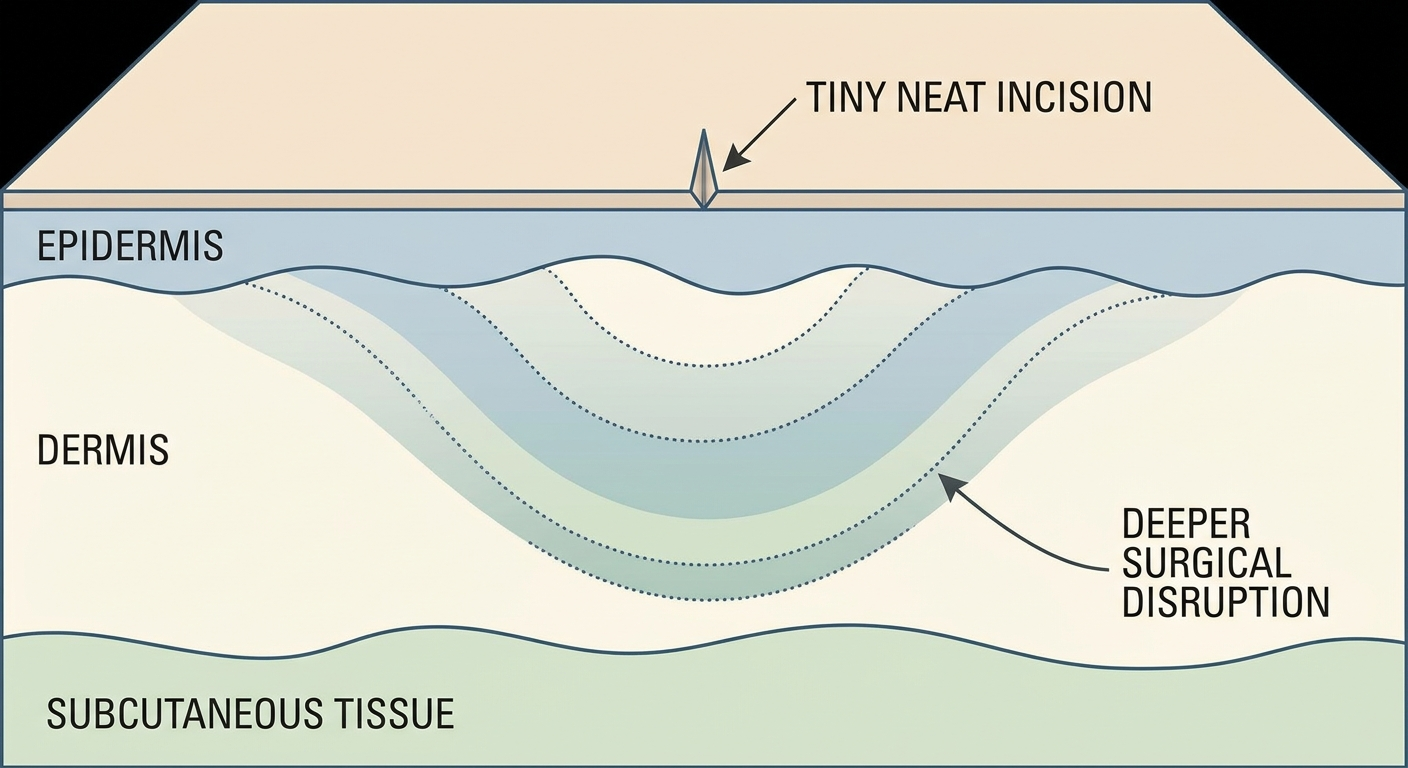
Surgical trauma isn’t just the incision
“Surgical trauma” includes more than the skin opening. It can also include:
- Tissue disruption under the surface
- Bleeding and bruising
- Swelling and inflammation
- Postoperative pain
- Recovery time and temporary limits on daily activities
In other words, even a “small” incision can be paired with a lot of internal disturbance—and that disturbance often drives soreness, congestion, stiffness, fatigue, and downtime. For many patients, the most meaningful win isn’t cosmetic. It’s getting back to normal life sooner.
The minimally invasive idea: targeted treatment, less collateral damage
A minimally invasive approach aims to treat a specific problem area without broadly disturbing nearby structures. In a minimally invasive balloon procedure, the balloon’s role is straightforward: deliver carefully controlled force from the inside—sometimes reducing the need for wide exposure, extensive cutting, or tissue removal.
A useful analogy: instead of opening the wall to fix a pipe, balloons try to reach the pipe through an access point and adjust the blockage directly. That doesn’t fit every scenario, but when it does, it can change the recovery experience.
For a simple overview of treatment intensity choices, see minimally invasive vs. invasive: https://www.clearpathnasal.com/blog/minimally-invasive-vs-invasive-where-clearpath-fits
How balloon technology may reduce surgical trauma (in simple terms)
Balloons deliver controlled mechanical force from inside the body
Think of a balloon as a precision pressure tool. Instead of pulling tissue apart to reach a target, clinicians can often guide a balloon catheter to the area and inflate it to a known size or pressure.
A helpful way to picture it is: expand here, not everywhere. When the force is focused where it matters, nearby tissue may be spared unnecessary stretching, scraping, or cutting—one reason balloon-based approaches are associated with reduced tissue disruption in selected cases.
Common goals balloons can help achieve
Depending on where they’re used, balloon-based approaches may help to:
- Temporarily control bleeding (by interrupting flow in a vessel)
- Re-expand or restore structure (supporting anatomy that has collapsed or shifted)
- Widen narrowed passages through balloon dilation
- Preserve anatomy by repositioning rather than removing tissue when appropriate
Cross-specialty use has been described in trauma, spine, and gastrointestinal or ear–nose–throat care (Source: REBOA review, 2024, PMC11002364).
Conclusion: In the right setting, balloons can focus force where it’s needed and limit broader tissue disturbance.
Example 1 — Stopping life-threatening bleeding with REBOA (trauma care)
What is REBOA?
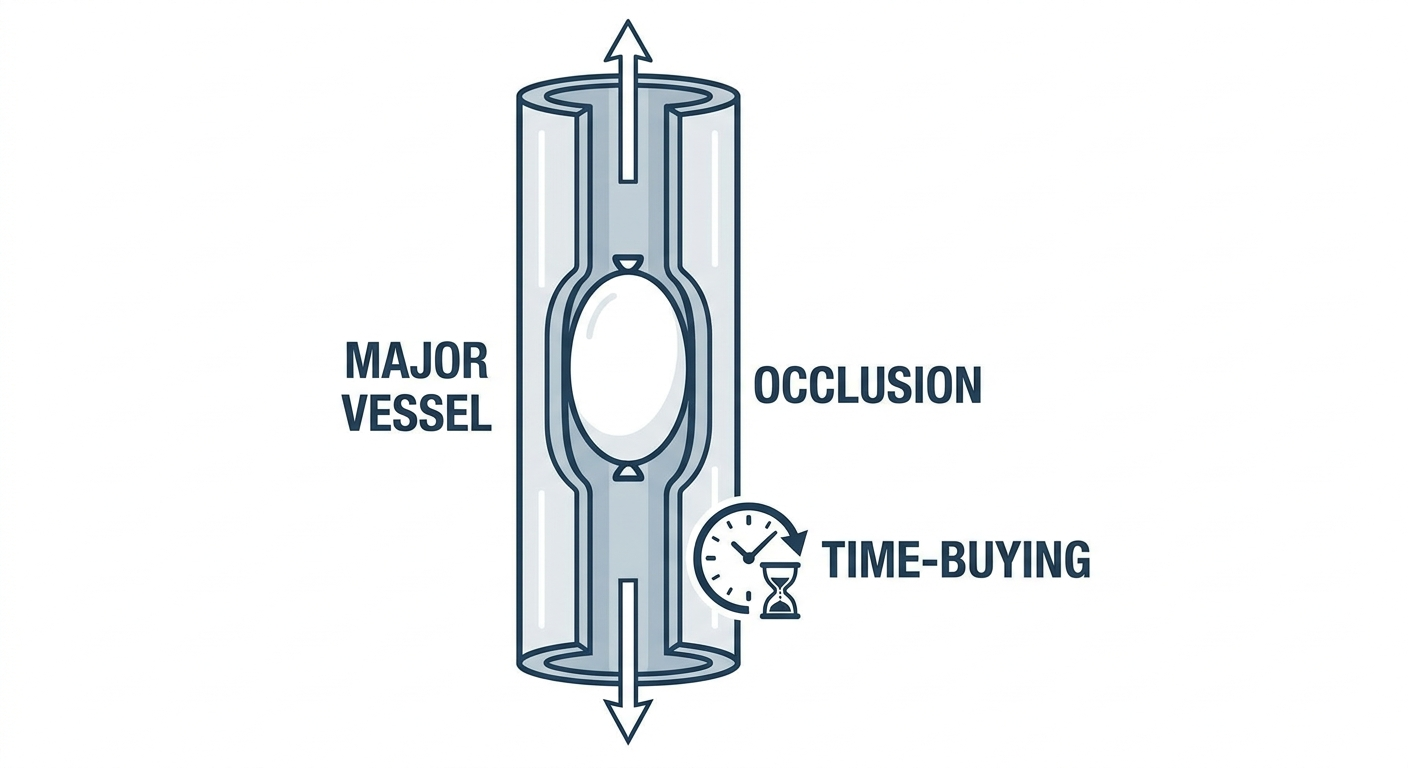
REBOA stands for resuscitative endovascular balloon occlusion of the aorta. In plain terms, it uses an endovascular balloon placed inside a major blood vessel to temporarily reduce bleeding below the balloon while the patient is stabilized (Source: REBOA review, 2024, PMC11002364). In emergencies, “temporary” is the key word: REBOA is a bridge, not a definitive repair.
Why it can reduce trauma compared with more invasive emergency options
In selected situations, REBOA may reduce the need for more invasive emergency exposure by buying time while definitive bleeding control is arranged (Sources: PMC11002364; Maiga et al., 2022, PMC9791466).
Potential benefits when used appropriately
- Faster stabilization in severe hemorrhage scenarios
- A more targeted approach to hemorrhage control
- In selected cases, a reduced need for larger open procedures (Source: PMC11002364)
Important risks and why experience matters
Because REBOA involves vascular access and temporary interruption of blood flow, risks can include access-related injury and ischemia. Outcomes depend on patient selection, timing, and protocol (Source: BMJ TSACO, 2023, e001267).
Conclusion: REBOA is a time-buying, inside-the-vessel technique that may limit exposure in selected emergencies, but it requires strict protocols and expertise.
Example 2 — Relieving fracture pain with balloon kyphoplasty (spine care)

What balloon kyphoplasty is (and who it’s for)
Balloon kyphoplasty is used in appropriate patients with osteoporotic vertebral compression fractures. The balloon can help create space and support restoration of vertebral shape before stabilization (Source: 2025 review, PMC11957677). It targets the damaged vertebra through small access points rather than using a broader open operation.
How it may reduce trauma vs more extensive options
For certain fracture patterns, kyphoplasty is typically less invasive than open spine surgery approaches, because it treats the specific vertebra without wide exposure. Smaller entry points and less tissue disruption can translate to less post-procedure pain for some patients and earlier return to gentle activity—though results vary.
What the evidence says about outcomes
Recent reviews report improved short-to-medium-term pain and disability outcomes compared with conservative care in selected patients, with benefit commonly described from 1 to 12 months after treatment (Source: PMC11957677).
Risks and realistic expectations
Not all back pain is caused by a compression fracture. Evaluation and imaging matter. As with any procedure, risks vary by patient factors and technique, and your clinician should explain what is most relevant for you.
Conclusion: For appropriately selected vertebral compression fractures, kyphoplasty can be a targeted, small-access option with evidence of symptom improvement.
Example 3 — Opening narrowed passages with endoscopic balloon dilation (GI and ENT)
What balloon dilation treats
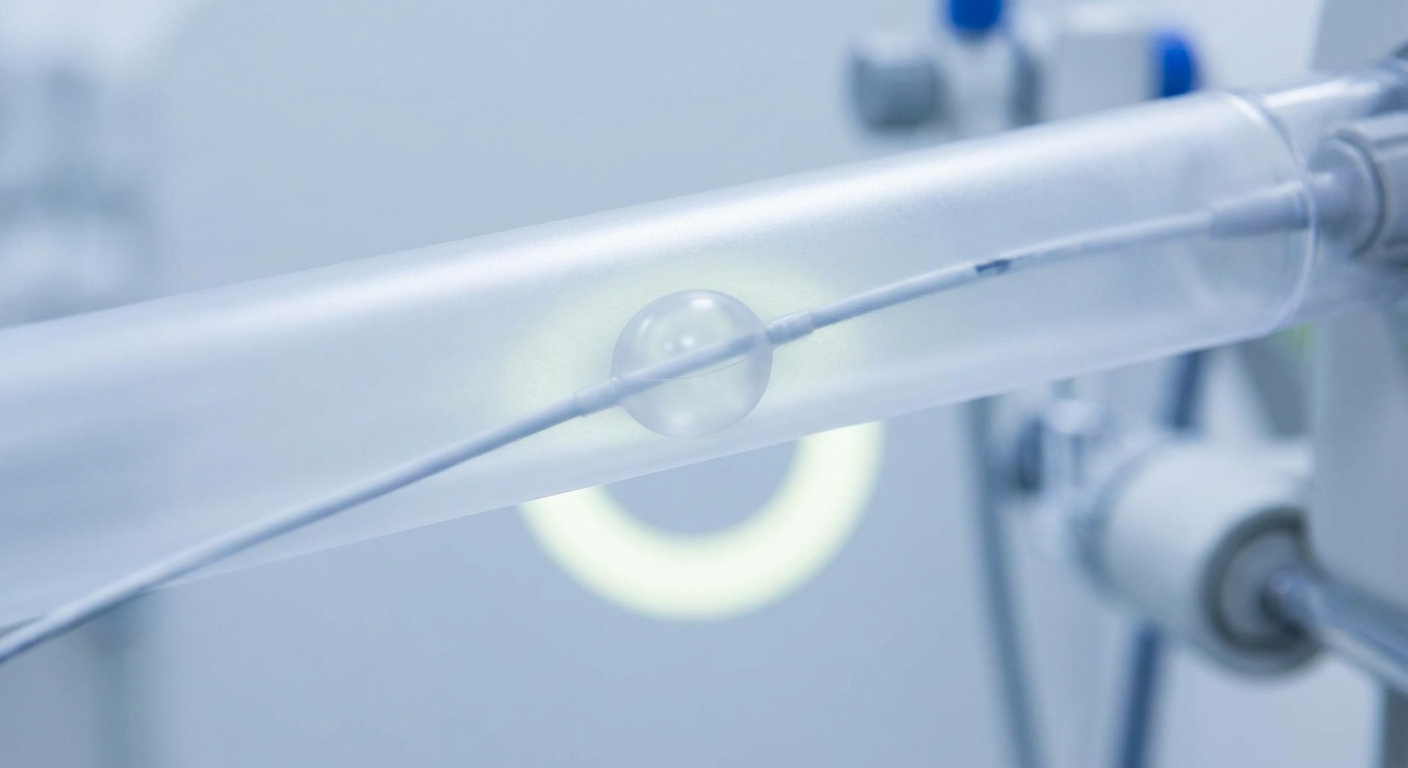
Balloon dilation is used for certain esophageal conditions, including achalasia and some benign strictures, depending on the cause and anatomy (Sources: ASGE guideline, 2020; AME Groups overview). Instead of cutting out a narrowed area, the concept is to gently stretch the target segment—often using an endoscope to reach the site.
Why it’s considered organ-preserving and less invasive
Because the approach is typically performed endoscopically (often through natural openings), it can be organ-preserving and may reduce the need for more invasive alternatives for selected patients (Source: ASGE guideline, 2020).
Effectiveness snapshot
Some summaries report high clinical improvement rates in selected patients, but results vary by condition, anatomy, and definition of success (Source: AME Groups overview).
Conclusion: Endoscopic balloon dilation can restore function with a narrow treatment zone, but effectiveness and durability depend on the diagnosis and technique.
Bringing it closer to home — Balloon-assisted septoplasty as a nasal example of reduced trauma

Balloon concepts also appear in nasal care, where the aim is to improve airflow while preserving anatomy. Balloon-assisted nasal techniques may use controlled pressure to help reposition tissue in selected patients, potentially reducing the need for more extensive cutting or removal. For a plain-language overview, see balloon-assisted septoplasty: https://www.clearpathnasal.com/blog/what-is-balloon-assisted-septoplasty
How it works at a high level
In patient-friendly terms, these techniques aim for controlled tissue displacement—moving structures toward a better position while minimizing unnecessary disruption to healthy areas. For a device-mechanics overview, see how the ClearPath nasal balloon works: https://www.clearpathnasal.com/blog/how-the-clearpath-nasal-balloon-works-a-step-by-step-guide
What a recent septoplasty cohort found (balloon-assisted technique)
A 2026 retrospective cohort reported outcomes from 107 consecutive cases using a force-directed balloon-assisted endoscopic septoplasty technique. In that cohort:
- 23 patients had pre- and post-procedure CT scans (objective measurement subgroup)
- 43 completed SNOT-22 symptom surveys (Source: Dillard et al., 2026, Rhinology Online)
Imaging changes reported
Among patients with CT data, mean symmetry improved by:
- 22% at the nasolacrimal duct (NLD)
- 45% at the point of maximal deviation (PMD)
(Source: Dillard et al., 2026)
Safety findings and limitations
In this retrospective cohort, the authors reported no major complications during the observed follow-up period, including no septal perforation, hematoma, mucosal injury, infection, synechiae, or conversion to traditional septoplasty. Findings are limited by sample size, subgroups (23 with CTs; 43 with surveys), and study design (Source: Dillard et al., 2026).
Symptom improvement (patient-reported)
In the SNOT-22 subgroup, scores improved from 58.7 to 44.8 at one month—about a 23.8% reduction—with the largest gains in congestion, headache or facial pressure, and sleep quality (Source: Dillard et al., 2026). Longer-term outcomes were not reported in this summary.
Who showed the largest alignment correction
Patients with more severe baseline deviation (>10 mm) showed the largest proportional correction, and 78% (18/23) achieved at least 30% improvement in alignment in the CT subgroup (Source: Dillard et al., 2026).
Conclusion: Early cohort data suggest feasibility and symptom improvement with limited follow-up; confirmatory studies and longer-term data would strengthen these observations.
Benefits patients often associate with balloon-based procedures (and what’s driving them)
Smaller access points can mean easier recovery
Many balloon approaches are designed to reduce cutting and limit disruption. Depending on the condition and setting, that can translate into:
- Shorter downtime
- Faster recovery milestones
- Less pain for some patients compared with more invasive alternatives
Patients often note that swelling and soreness under the surface can matter as much as the incision. Balloon-based methods aim to limit that deeper disturbance when clinically appropriate. For additional context on recovery and safety comparisons specific to nasal procedures, see recovery, safety, and results compared with traditional septoplasty: https://www.clearpathnasal.com/blog/clearpath-vs-traditional-septoplasty-recovery-safety-results
Targeted treatment can help preserve anatomy
A consistent theme across specialties is treating the target while respecting healthy structures. This targeted approach is a core reason clinicians continue exploring balloon-based methods (Source: REBOA review, 2024, PMC11002364).
Conclusion: When matched to the right problem, balloon-based care can lessen collateral tissue effects and support a smoother recovery.
The trade-offs: balloon devices still have risks (and they differ by procedure)
Device- and access-specific risks to understand
“Less invasive” doesn’t mean “no risk.” Risks depend on where the balloon is used and how access is achieved. For example:
- In major blood vessels, reduced blood flow can injure tissues if not carefully managed
- Access can sometimes cause bleeding, vessel injury, or other complications
- Any procedure can have technique-specific failure modes
Why guidelines and experienced teams matter
Because outcomes depend on selecting the right patient and timing the intervention well, protocols and experience are major safety factors—especially in high-stakes settings (Sources: BMJ TSACO, 2023, e001267; Maiga et al., 2022, PMC9791466).
Conclusion: Safety with balloon technology hinges on careful patient selection, controlled technique, and experienced teams.
How to talk with your doctor: questions that lead to safer, less invasive care
Ask about alternatives and why a balloon approach is (or isn’t) recommended
- What problem are we solving—bleeding, narrowing, structural collapse, or deviation?
- What are the non-procedural options?
- What happens if we wait?
Ask about experience, complications, and follow-up
- How often do you perform this procedure?
- What complications are most common, and how are they handled?
- What does the follow-up plan look like?
Ask what success looks like for your situation
- Symptom improvement (how you feel)
- Imaging changes (what scans show)
- Function (breathing, swallowing, mobility)
- Short-term vs long-term expectations
If you’re weighing options for nasal obstruction, discuss with an ENT surgeon whether a balloon-assisted approach may be appropriate for your anatomy and goals.
For added context on treatment intensity choices, see: https://www.clearpathnasal.com/blog/minimally-invasive-vs-invasive-where-clearpath-fits
Conclusion: A focused conversation about goals, alternatives, and risks helps match the procedure to the problem.
Key takeaways: balloon technology and reduced invasiveness—when the indication fits
The unifying theme
Across several fields, balloons can deliver targeted mechanical correction or temporary hemorrhage control in a way that may reduce the need for larger open operations and help preserve anatomy (Source: REBOA review, 2024, PMC11002364).
The bottom line for patients
- Balloon approaches have reported benefits in multiple areas, including trauma stabilization, spine fracture care, and treating esophageal conditions such as achalasia and some benign strictures (Sources: PMC11957677; ASGE guideline, 2020).
- Risks are real and vary by anatomy, access route, and team experience (Source: BMJ TSACO, 2023, e001267).
- For nasal care, balloon-assisted approaches may be considered in selected cases as part of a broader shift toward targeted treatment.
Conclusion: Balloon technology is a tool—its value depends on matching it thoughtfully to the clinical problem.
Citations
- REBOA review (2024). Resuscitative endovascular balloon occlusion of the aorta (REBOA). PMC: https://pmc.ncbi.nlm.nih.gov/articles/PMC11002364/
- Maiga et al. (2022). Systematic review of REBOA algorithms. PMC: https://pmc.ncbi.nlm.nih.gov/articles/PMC9791466/
- BMJ TSACO (2023). REBOA complications review. https://tsaco.bmj.com/content/9/1/e001267
- Balloon kyphoplasty effectiveness review (2025). PMC: https://pmc.ncbi.nlm.nih.gov/articles/PMC11957677/
- ASGE Guideline (2020). Management of achalasia. https://www.asge.org/docs/default-source/guidelines/asge-guideline-on-the-management-of-achalasia-2020-february-gie.pdf
- AME Groups (accessed 2026). Endoscopic balloon dilation overview. https://tp.amegroups.org/article/view/146072/html
- Dillard J, Koudouovoh C, Lee V, et al. (2026). Outcomes of force-directed balloon-assisted endoscopic septoplasty: a retrospective analysis with a new technique and device. Rhinology Online. doi:10.4193/RHINOL/25.018
“This article is for educational purposes only and is not medical advice. Please consult a qualified healthcare provider for diagnosis and treatment.”

Dr. David G. Dillard
Author
Share it with others!


