Nasal Anatomy 101: The Pyriform Aperture
When people think about nasal breathing, they often picture soft tissue—swollen turbinates, mucus, or allergies. But at the very front of the nose, one key structure is bone, and its size can meaningfully affect how easily air moves in and out.
That bony “entryway” is called the pyriform (also spelled piriform) aperture.
What Is the Pyriform Aperture?
In plain language, the pyriform aperture is the pear-shaped bony opening at the front of the nose—the “front door” of the nasal airway. It’s the first rigid opening air passes through before reaching the rest of the nasal cavity.
Why patients should care: if this bony opening is narrower than expected, airflow can be limited, and symptoms can range from mild congestion to serious breathing difficulty—particularly in newborns, where even small bony narrowing can lead to significant symptoms. In adults, bony narrowing is less common as a primary cause of obstruction and is usually part of a broader clinical picture that includes the septum, turbinates, and the nasal lining.
A few simple anatomy landmarks:
- The opening is formed mainly by the maxilla (upper jaw bone), with a contribution from the nasal bones at the entrance.
- It sits just in front of the nasal septum and the rest of the nasal cavity. For a quick primer on how the septum fits into overall airflow, see deviated septum anatomy (understanding your nasal anatomy): https://www.clearpathnasal.com/blog/deviated-septum-causes-understanding-your-nasal-anatomy
These typical shapes and measurements are described in morphometric research on skull anatomy (Morphometric Study, 2016): https://pmc.ncbi.nlm.nih.gov/articles/PMC4740577/

A quick “front door” analogy (why bone matters)
Soft tissue changes day to day. Bone doesn’t. So if congestion feels stuck despite allergy treatment—or if a newborn struggles dramatically with nasal breathing—clinicians may consider whether a fixed bony narrowing is part of the story.
In short: the pyriform aperture is the nose’s bony front door—if it’s tight, airflow can feel tight too.
Why the Pyriform Aperture Matters for Breathing
The “bony bottleneck” at the nasal entrance
- Even small changes in width can affect airflow and the sensation of blockage.
- Unlike swelling from a cold or allergies, bone doesn’t shrink with decongestants.
A clinician-style way of putting it: medication can calm lining inflammation, but it can’t remodel a tight bony ring.
Common situations where it becomes clinically important
- Structural nasal narrowing (congenital or developmental)
- Workups for nasal obstruction in newborns, who rely heavily on nasal breathing
- Broader evaluations of nasal airflow where the entire nasal anatomy (bone + septum + turbinates) needs to be considered
A concrete example: an adult may say, “My nose always feels tight even when I’m not sick,” while a newborn may show feeding-related breathing distress that improves when crying (because the mouth opens). Different ages, same concept: a narrow entrance can be the limiting step.
Because bone is rigid, even small narrowing at the entrance can have outsized effects on airflow and symptoms.
Normal Size: What’s Typical in Adults vs Newborns?
Adult pyriform aperture width (what research shows)
In adults, the measured width of the bony nasal opening averages about 24 mm (mean ≈ 24.15 ± 1.86 mm), with modest differences between sexes (Morphometric Study, 2016): https://pmc.ncbi.nlm.nih.gov/articles/PMC4740577/
Patient takeaway: adult measurements help clinicians recognize when the bony nasal entrance is unusually narrow compared with typical anatomy. In practice, clinicians interpret measurements alongside symptoms, exam findings, and overall facial structure rather than relying on a single perfect number.

Newborns are different—small changes matter more
Newborn nasal passages are naturally tiny. Because the airway is so small to begin with, a few millimeters of narrowing at the front bony opening can have an outsized effect on breathing, particularly during feeding and sleep.
Think of airflow like drinking through a straw: as the opening gets smaller, moving the same amount of air takes much more effort. In newborns, that extra work can show up quickly as tiring with feeds or increasing breathing effort.
Small millimeters can matter a lot—especially in newborns.

Congenital Nasal Pyriform Aperture Stenosis (CNPAS): The Key Condition to Know
Congenital nasal pyriform aperture stenosis (CNPAS) is a condition present at birth where the bony opening at the front of the nose is too narrow, causing significant nasal airway obstruction. Diagnosis and management principles have been outlined in pediatric literature (Ital J Pediatr, 2012): https://pubmed.ncbi.nlm.nih.gov/22731387/
A simple way to describe it to families: the nasal entrance is undersized at the bony level, so the baby can’t move air comfortably through the nose.
The CT definition clinicians use
For term neonates, a commonly used imaging cutoff is:
- Pyriform aperture width < 11 mm on CT → suggests CNPAS (Ital J Pediatr, 2012): https://pubmed.ncbi.nlm.nih.gov/22731387/
This is why CT measurements are important: the diagnosis depends on assessing bone anatomy, not just soft tissue.
CNPAS is a structural diagnosis made on imaging and clinical context—not just a question of swelling.
Symptoms: When a Narrow Pyriform Aperture Becomes an Emergency in Newborns
What parents may notice
- Noisy breathing
- Trouble feeding or tiring quickly during feeds
- Color changes such as turning blue (cyanosis)
- Oxygen drops (desaturations)
- Difficulty sleeping or increased work of breathing
- Symptoms that improve when crying (because the mouth opens)
A brief, real-world scenario: a caregiver may notice the baby feeds for a minute or two, then pauses, works harder to breathe, or becomes fussy—only to look better when crying or when the mouth is open. Those patterns can be meaningful clues that airflow through the nose is restricted.
Why it can be dangerous
Newborns are predominantly nasal breathers and are commonly described as obligate nasal breathers, meaning they depend heavily on nasal airflow—especially during feeding. Severe narrowing can lead to escalating respiratory support if not identified and addressed. Early recognition and appropriately timed intervention help avoid prolonged respiratory support in severe cases (When to Operate, 2024): https://pmc.ncbi.nlm.nih.gov/articles/PMC11008318/
If a newborn shows these signs, seek urgent medical evaluation.
How Doctors Diagnose Pyriform Aperture Narrowing
Physical exam + endoscopy (when feasible)
A careful exam may raise suspicion for narrowing, and in some settings nasal endoscopy can help evaluate the nasal cavity. However, because the key issue is bony, clinicians often need imaging to confirm and measure it accurately.

CT imaging: measurements that guide clinical decisions
CT imaging allows clinicians to:
- Measure the bony width of the nasal entrance (the key CT measurement)
- Evaluate other midline facial anatomy that may matter clinically
Common thresholds used in practice include:
- < 11 mm on CT in term neonates → supports CNPAS diagnosis (Ital J Pediatr, 2012)
- Very narrow widths (~5–6 mm) → strongly associated with a higher likelihood of needing surgery if conservative care fails (When to Operate, 2024): https://pmc.ncbi.nlm.nih.gov/articles/PMC11008318/ and https://pubmed.ncbi.nlm.nih.gov/22731387/
In CNPAS cohorts, the median measurement is reported around ~6 mm, and widths ≤ 5 mm are particularly associated with needing surgical widening when supportive care doesn’t get the baby breathing comfortably (When to Operate, 2024): https://pmc.ncbi.nlm.nih.gov/articles/PMC11008318/
Imaging confirms what the exam may only suggest and helps guide timing of treatment.
What Causes CNPAS? A Simple Developmental Explanation
Evidence it’s developmental—not just small anatomy:
One important clue about the cause of CNPAS comes from imaging findings: studies consistently report premature fusion of the midline palatal suture in babies with CNPAS (AJNR, 2021): https://www.ajnr.org/content/42/6/1163
In patient-friendly terms: a growth seam in the roof of the mouth may fuse earlier than expected, which can affect how the front nasal opening develops—supporting the idea that CNPAS is a developmental condition.
This perspective matters: it’s not a little congestion, and it’s not something a baby will necessarily outgrow quickly without support. It’s a structural issue that may require careful monitoring—and sometimes intervention—based on severity.
Early fusion of growth seams supports CNPAS as a developmental, structural condition.
Treatment Options: From Conservative Care to Surgery
First-line (conservative) approaches
Many care teams begin with supportive strategies tailored to the baby’s symptoms and severity, often including:
- Airway support and close monitoring (as directed by the care team)
- Feeding support strategies
This start conservative approach is commonly recommended in clinical practice (Ital J Pediatr, 2012): https://pubmed.ncbi.nlm.nih.gov/22731387/
A helpful mindset: stabilize first. If the baby can maintain oxygenation, feed safely, and rest, clinicians may try conservative measures while tracking progress closely.
When surgery becomes more likely
If conservative measures don’t work—and the CT shows a very narrow bony opening—surgery becomes more likely. In a recent review, widths in the ~5–6 mm range, especially ≤ 5 mm, were strongly associated with needing surgical widening after conservative care fails (When to Operate, 2024): https://pmc.ncbi.nlm.nih.gov/articles/PMC11008318/
The overall goal is to relieve obstruction and reduce the chance of prolonged escalation of respiratory support in severe cases (When to Operate, 2024): https://pmc.ncbi.nlm.nih.gov/articles/PMC11008318/
Surgical option (patient-friendly overview)
When surgery is needed, one commonly described approach is:
- Sublabial surgical widening (through an incision inside the upper lip area)
- Often combined with temporary stenting to help keep the airway open during healing
These options are discussed in pediatric CNPAS literature, with reports of successful relief when the procedure is appropriately selected (Ital J Pediatr, 2012; When to Operate, 2024).
Care teams start conservative when safe, and move to surgery when anatomy and symptoms show it’s needed.
How This Relates to Nasal Procedures in Older Patients (And Why Anatomy Still Matters)
In adolescents and adults, nasal obstruction is more commonly linked to issues like a deviated septum, turbinate enlargement, allergies, or sinus disease—but the bony entrance still acts as the frame for the rest of the airway.
Think of nasal breathing as a combination of:
- Frame (bone, including the pyriform aperture)
- Divider (the septum)
- Adjustable tissue (turbinates and nasal lining)

The pyriform aperture is the frame—the septum is a key divider
If you’ve been told you have a deviated septum, learning the basics of nasal anatomy can help you understand why certain treatments are recommended and what they are designed to change. A helpful companion read is this ClearPath article on deviated septum anatomy: https://www.clearpathnasal.com/blog/deviated-septum-causes-understanding-your-nasal-anatomy
Where minimally invasive septal approaches may fit (ClearPath context—light touch)
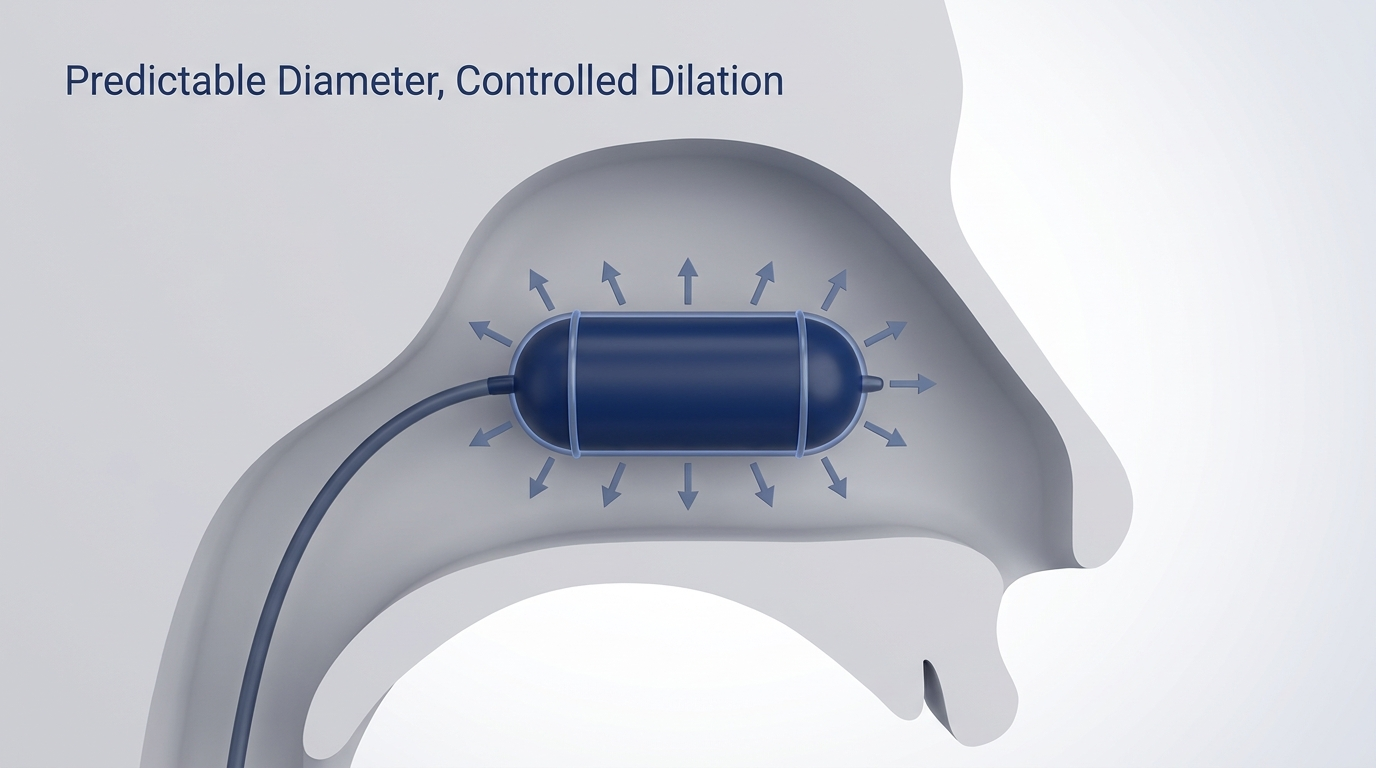
For some patients, a deviated septum may be addressed with a minimally invasive approach such as balloon-assisted septoplasty, using a dedicated device (the ClearPath Nasal Balloon) as part of the technique. Learn more about balloon septoplasty here: https://www.clearpathnasal.com/blog/what-is-balloon-septoplasty-a-minimally-invasive-option-for-deviated-septum and see what to expect during an office-based balloon septoplasty: https://www.clearpathnasal.com/blog/what-to-expect-during-an-office-based-balloon-septoplasty
Note: ClearPath develops the device mentioned; always discuss all appropriate options with your clinician.
In older patients, anatomy sets the limits—effective treatment targets the layer causing the problem.
FAQs (Patient-Friendly)
Is it “piriform” or “pyriform”?
Both spellings are used. Pyriform references the pear-like shape of the opening; piriform aperture is a common alternate spelling.
Can a narrow pyriform aperture cause chronic congestion in adults?
It can contribute, but many adults have congestion mainly from septal deviation, turbinate enlargement, allergies, or sinus disease. If you’re sorting out next steps for ongoing symptoms, see what to do about chronic nasal congestion: https://www.clearpathnasal.com/blog/deviated-septum-and-chronic-nasal-congestion-what-to-do-next
What measurement confirms CNPAS in term newborns?
A pyriform aperture width < 11 mm on CT is a commonly used diagnostic cutoff in term neonates (Ital J Pediatr, 2012): https://pubmed.ncbi.nlm.nih.gov/22731387/
When is surgery more likely in CNPAS?
Very narrow measurements (around 5–6 mm, especially ≤ 5 mm) are strongly associated with needing surgical widening after conservative therapy fails (When to Operate, 2024): https://pmc.ncbi.nlm.nih.gov/articles/PMC11008318/
Key Takeaways
- The pyriform aperture is the bony opening at the front of the nose that influences airflow through the nasal airway.
- Adults average about ~24 mm in width (Morphometric Study, 2016).
- In term newborns, < 11 mm on CT suggests congenital nasal pyriform aperture stenosis (CNPAS) (Ital J Pediatr, 2012).
- Very narrow widths ~5–6 mm (median ~6 mm in reported cohorts) strongly predict the need for surgical widening when conservative care fails—especially ≤ 5 mm (When to Operate, 2024).
- Imaging links CNPAS with premature fusion of the midline palatal suture, supporting a developmental cause (AJNR, 2021).
Medical Disclaimer
This article is for general education and is not medical advice. If you suspect breathing difficulty in a newborn or have concerns about nasal obstruction at any age, seek prompt evaluation from a qualified healthcare professional.
This article is for educational purposes only and is not medical advice. Please consult a qualified healthcare provider for diagnosis and treatment.
References
- Morphometric Study of Nasal Bone and Piriform Aperture in Human Dry Skull of Indian Origin (2016) https://pmc.ncbi.nlm.nih.gov/articles/PMC4740577/
- Congenital nasal pyriform aperture stenosis: diagnosis and management (Ital J Pediatr 2012) https://pubmed.ncbi.nlm.nih.gov/22731387/
- Congenital Nasal Pyriform Aperture Stenosis: Evidence of Premature Fusion of the Midline Palatal Suture (AJNR 2021) https://www.ajnr.org/content/42/6/1163
- Nasal Pyriform Aperture Stenosis in a Newborn: When to Operate (2024) https://pmc.ncbi.nlm.nih.gov/articles/PMC11008318/

Dr. David G. Dillard
Author
Share it with others!