How Severe Is Your Deviated Septum? Measurements Explained
If you’ve been told you have a deviated septum, the next question is usually: How bad is it? The challenge is that deviated septum severity isn’t just about how “crooked” the septum looks—it’s about how much it affects airflow, sleep, exercise, and overall quality of life.
In real life, “severity” often shows up as day-to-day friction: needing to mouth-breathe on walks, waking up with a dry throat, or feeling like one nostril is “always the problem side.” Many people also notice symptoms change with seasons, colds, or workouts—another clue that structure and inflammation often overlap.
Below is a clear, patient-friendly explanation of how deviated septum severity is measured in real clinical visits, what common “grading” language means, and how these findings often guide next-step treatment decisions (including where balloon-assisted options such as the ClearPath Nasal Balloon device may fit for some patients).

Why “Severity” Matters (and Why Symptoms Don’t Always Match the Scan)
When clinicians evaluate deviated septum severity, they’re trying to answer two questions: How much is the septum deviated (structure)? How much does that deviation affect function and health (impact/risk)?
A small deviation in a narrow airway can feel like breathing through a pinched straw, while a bigger-looking deviation might not bother you much if the rest of your nasal anatomy leaves plenty of room.
What this means for you: you can have a deviation that looks significant on imaging but causes mild symptoms—or a smaller-looking deviation that causes major breathing problems because of other contributing factors.
Bottom line: severity is about impact, not just appearance.
What Counts as a “Deviation” in the Nose?
Quick anatomy refresher (plain language)
The septum is the wall between your nostrils. It’s made of cartilage in the front and bone deeper inside. A “deviated septum” means that wall isn’t centered.
Common patterns include
- C-shaped bend (curves to one side)
- S-shaped bend (curves both directions)
- Spurs (a sharper ridge of bone/cartilage)
- Localized bends (a problem area rather than the whole septum)
Patients sometimes describe these patterns in everyday language: “one side feels collapsed,” “there’s a sharp spot,” or “air hits a wall.” Your ENT is translating those sensations into a map of where airflow is being narrowed.
The common misconception
Appearance doesn’t equal blockage. Symptoms can be amplified by factors that have nothing to do with the septum’s angle alone, such as:
- Narrow nasal valve areas (the tightest part of the nasal airway)
- Swollen turbinates (normal tissue that can enlarge with inflammation)
- Allergies or chronic irritation
- Sinus inflammation or polyps
For example, someone might breathe “okay” during the day but struggle at night because tissues swell when lying down—or during exercise because they need higher airflow. That’s why a good evaluation looks beyond a single snapshot. If you want a simple next step to understand your symptoms, this article may help: https://www.clearpathnasal.com/blog/deviated-septum-vs-allergies-how-to-tell-the-difference
Takeaway: A nose that looks “crooked” isn’t always the one that breathes the worst—and vice versa.

The 3 Main Ways Clinicians Measure Deviated Septum Severity
Think of the evaluation as a 3-part picture: how you feel, what your ENT sees, and what can be measured objectively.

1) Symptom severity scores (how you feel)
Symptom scoring makes your experience measurable and trackable over time—especially before and after treatment.
- NOSE score (Nasal Obstruction Symptom Evaluation): tracks congestion, trouble breathing through the nose, sleep trouble, and exertional airflow.
- SNOT-22 (Sinonasal Outcome Test—22 items): broader quality-of-life factors (sleep, fatigue, facial pressure, congestion).
How scores are used
- Establish a baseline for deviated septum severity
- Document whether symptoms are intermittent vs persistent
- Track improvement after medical therapy or a procedure
A concrete example: if your score is high before treatment and drops meaningfully afterward, you and your clinician have a shared way to say, “This intervention improved breathing,” even if the nose still looks a bit deviated. More on connecting scores to next steps: https://www.clearpathnasal.com/blog/deviated-septum-symptoms-when-to-consider-balloon-septoplasty
2) In-office exam findings (what your ENT sees)
A clinic exam helps identify where the blockage is coming from and whether it’s structural, inflammatory, or both.
Typical evaluation may include
- Anterior rhinoscopy (looking into the front of the nose)
- Nasal endoscopy (a more detailed look deeper inside)
Your ENT may document
- Location of the deviation (front vs deeper)
- Spurs/contact points
- Turbinate swelling
- Signs of inflammation, drainage, or polyps
Patient takeaway: this step helps separate structural blockage (septum/valve anatomy) from swelling-related blockage (inflammation/allergies).
3) Imaging and objective airflow tests (what can be measured)
- CT scan (when appropriate): helpful for sinus disease evaluation or surgical planning; not routinely required to diagnose septal deviation. Terms like “mild,” “moderate,” or “severe” must be interpreted with symptoms and exam.
- Objective airflow testing (availability varies): estimates airflow resistance or cavity size; not always necessary if symptoms plus endoscopy tell a clear story.
Important clarification: there is no single universal “gold number” that defines severe deviation for every person.
Takeaway: Your best severity picture comes from symptoms, exam, and select tests considered together.
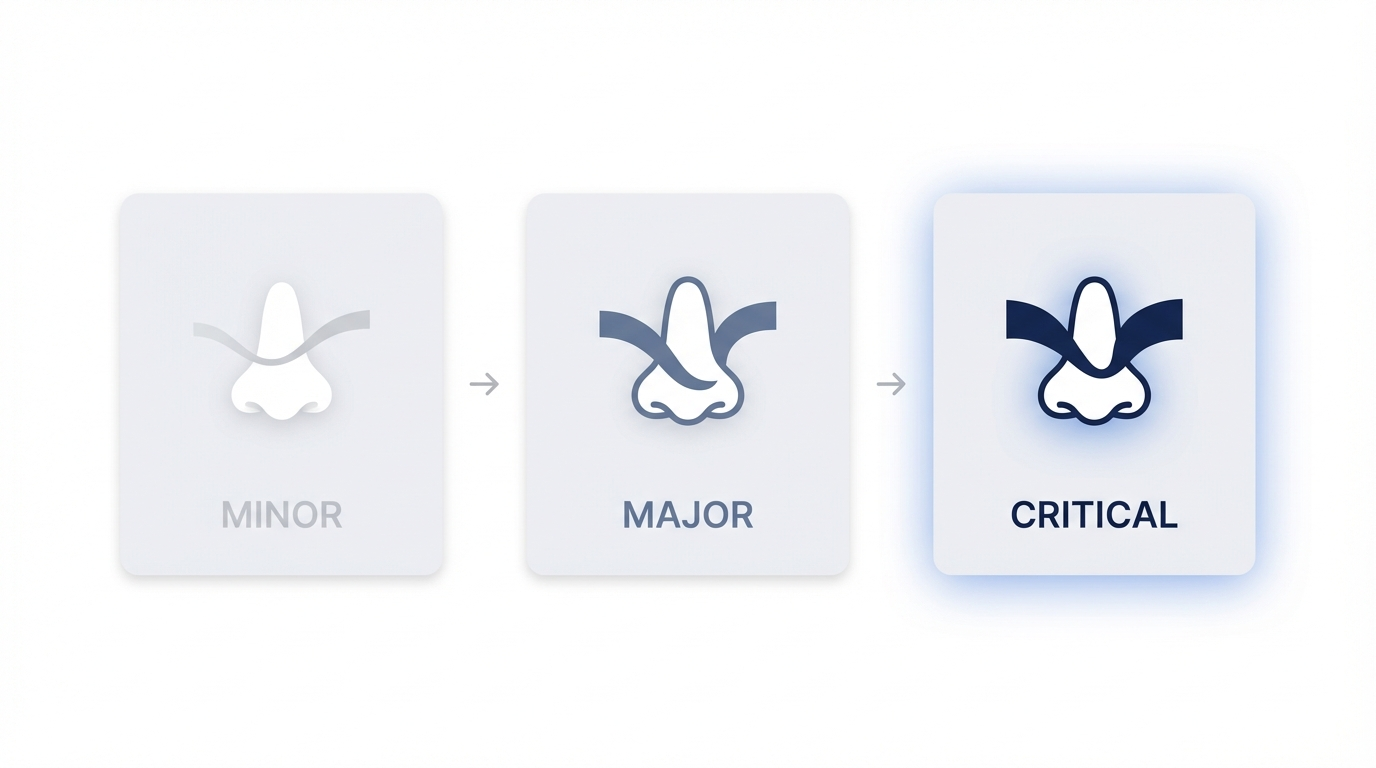
Turning Measurements Into a Simple Severity Framework (Minor / Major / Critical)
This patient-friendly framework categorizes by impact. It’s not a medical standard—please do not self-diagnose or label severity without clinical evaluation.
“Minor” deviation (low impact)
What it can look like
- Mild bend on exam and/or CT
- Symptoms are occasional, seasonal, or mainly during colds
Real-life examples
- Breathing is usually fine, except during allergy flares
- Slight nasal noise/turbulence but minimal sleep impact
Typical approach
- Conservative care first (saline, trigger management, clinician-directed medication options)
“Major” deviation (moderate impact)
What it can look like
- Consistent one-sided obstruction
- Noticeable limitation at night or with exercise
Real-life examples
- Frequent mouth breathing
- Reduced sleep quality
- Ongoing congestion that doesn’t match “just allergies”
Typical approach
- If medical therapy doesn’t relieve symptoms, it’s reasonable to discuss procedural options
“Critical” deviation (high impact / higher stakes)
What it can look like
- Severe daily obstruction or major quality-of-life impairment
- Deviation plus other contributing anatomy/inflammation
Higher-stakes examples
- Significant sleep disruption (especially if breathing issues are suspected during sleep)
- Recurrent sinus infections where anatomy appears to contribute
- Daytime functioning affected (fatigue, exercise intolerance due to nasal airflow limits)
Key point: “critical” here refers to impact, not a label you should self-assign.
Takeaway: Use categories to guide discussion—not to self-diagnose.
Why Different Clinics May Grade “Severity” Differently
No universal scoring system exists solely for septal “severity.” One ENT may weigh symptoms more; another may emphasize endoscopy or CT anatomy. Most combine:
- Symptom scores (NOSE, SNOT-22)
- Physical exam/endoscopy
- CT findings (when appropriate)
- Any objective airflow assessment available
It’s common to hear different wording from different clinicians because of variations in assessment. Many are aiming for the same goal—matching the evaluation method to the decision being made.
The documentation piece (what you can ask for)
- Where is the deviation (front, middle, or deeper back)?
- Are turbinates swollen, or is there nasal valve narrowing too?
- Which measures are being used to define my deviated septum severity?
Clear criteria and documentation make decisions easier to understand and compare over time, and they help you track progress if you try medical therapy first and reassess later.
Takeaway: Different inputs can lead to different wording, even when the plan is similar.
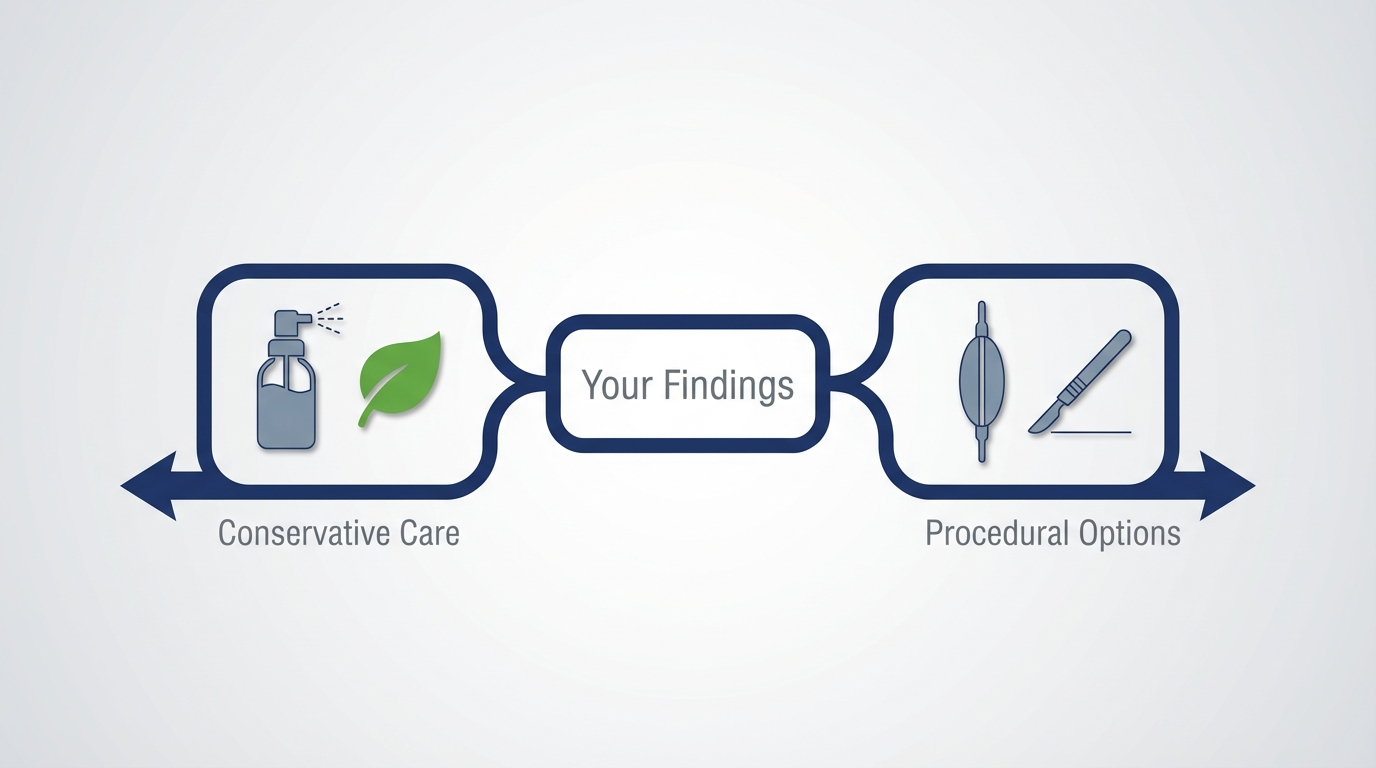
How Severity Guides Treatment Options (What Typically Happens Next)
If symptoms are mild or intermittent
- Watchful waiting
- Saline rinses/sprays
- Treating inflammation and triggers when appropriate
If symptoms improve significantly, functional severity may be considered low—even if the septum is still deviated. The goal is better breathing and quality of life, not a perfectly straight septum on a scan.
If symptoms are persistent (and structurally driven)
When blockage is consistent and the exam suggests a structural cause, the conversation often shifts to septal correction. Structural procedures address physical narrowing; they do not treat allergies or ongoing inflammation by themselves. Practical comparison: https://www.clearpathnasal.com/blog/endoscopic-septoplasty-vs-open-surgery-which-is-better
Where minimally invasive options may fit (ClearPath context)
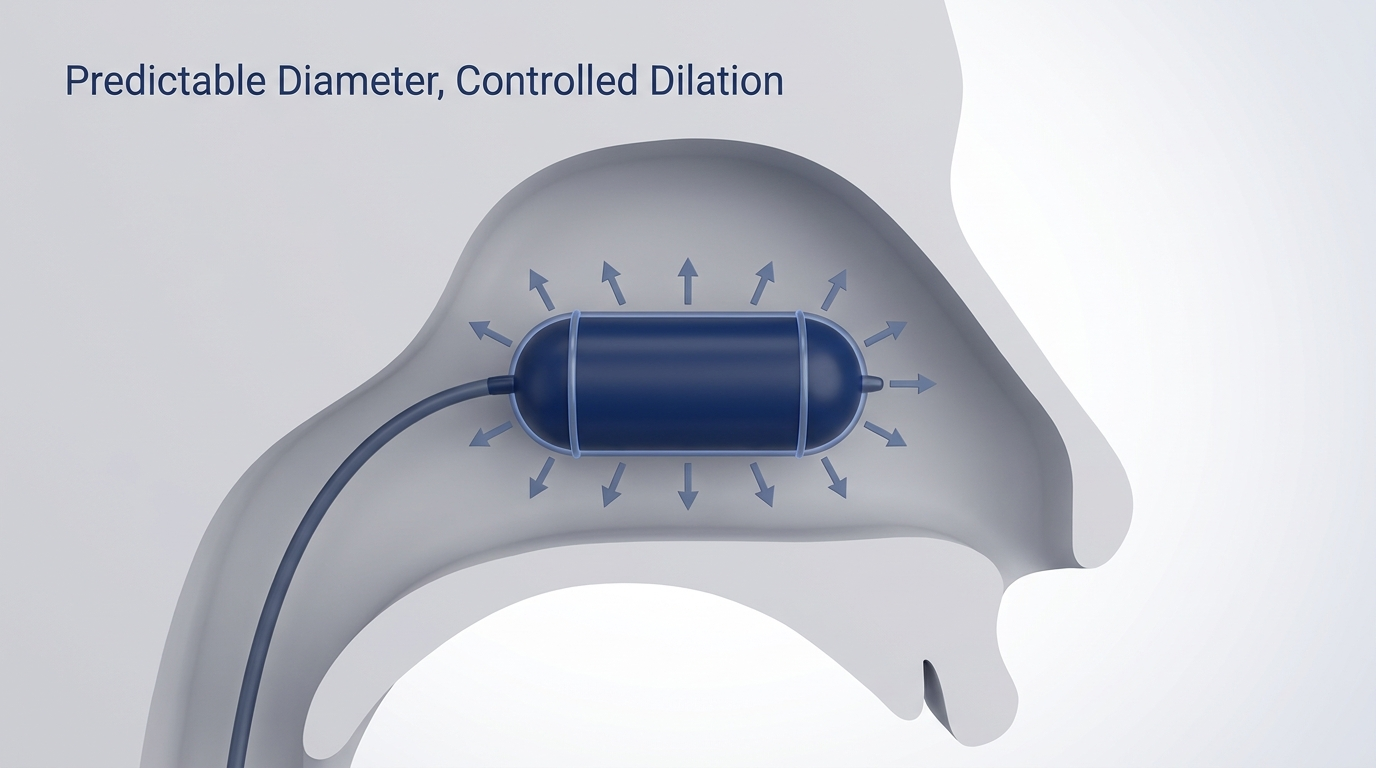
For some patients, a minimally invasive approach may be an option. ClearPath Nasal Balloon is a device used in balloon-assisted endoscopic septoplasty to help reposition septal tissue with less disruption than flap-based approaches.
Evidence snapshot (general)
- Early retrospective experiences have reported improvements in septal alignment and symptom scores with low complication rates. Publication status and details can evolve; ask your ENT for the latest peer‑reviewed evidence and whether it applies to you.
- This information is not an endorsement, and suitability depends on individual anatomy, symptoms, and clinician judgment.
If you’re comparing approaches, this explainer may help: https://www.clearpathnasal.com/blog/what-is-balloon-septoplasty-a-minimally-invasive-option-for-deviated-septum
Takeaway: The right treatment matches your pattern—treat swelling, and correct fixed narrowing when needed.
Patient FAQ
Can I tell how severe my deviated septum is by looking in the mirror?
Usually not. External appearance doesn’t reliably reflect internal airflow limitation, and severity often depends on deeper anatomy and tissue swelling.
If my CT says “severe deviation,” does that mean I need surgery?
Not automatically. A CT describes structure, but treatment decisions usually depend on symptoms, functional impact, and exam findings—plus whether non-procedural options have been tried.
What’s the most important measurement?
For many people, the most useful combination is symptom scoring (especially the NOSE score) plus endoscopic findings that show where airflow is blocked. CT can be helpful in selected cases, especially when sinus anatomy needs evaluation.
What should I bring to my ENT visit?
- A symptom timeline (how long, which side, constant vs intermittent)
- Triggers (allergies, colds, exercise, nighttime)
- Treatments tried and what happened
- Notes on sleep quality, snoring, mouth breathing, and exercise tolerance
Conclusion: “Severity” Should Feel Measurable and Explainable
Understanding deviated septum severity becomes much less confusing when you know what clinicians are actually measuring: symptoms (scores), structure (exam), and—when appropriate—imaging. If nasal obstruction is affecting sleep, exercise, or daily life, it’s reasonable to request an evaluation that includes symptom scoring and a clear explanation of findings. If your symptoms appear structurally driven, ask your local ENT whether you may be a candidate for traditional septoplasty or a minimally invasive alternative, including balloon-assisted approaches that use the ClearPath Nasal Balloon device in appropriate patients. For more detail on classification language, see: https://www.clearpathnasal.com/blog/septoplasty-outcomes-by-deviation-type-mladina-classification
Disclaimer: This article is for educational purposes only and is not medical advice. Please consult a qualified healthcare provider for diagnosis and treatment.

Dr. David G. Dillard
Author
Share it with others!