Nasal Obstruction and Poor Oxygenation: What’s Happening?
If you’ve ever gone to bed with a blocked nose and woken up feeling drained—headache, dry mouth, “heavy” sleep—you’re not imagining things. For some people, nasal blockage can contribute to lower oxygen saturation, especially overnight. This connection between nasal obstruction and poor oxygenation is one reason chronic congestion deserves more than a quick fix.
Below is a patient-friendly breakdown of why nasal obstruction can affect oxygenation, why it’s often worse at night, and what evaluation and treatment options may help.
Why oxygen levels can drop when your nose is blocked
Quick definition—what “poor oxygenation” means
“Oxygenation” refers to how well oxygen enters your bloodstream. A common measure is oxygen saturation (SpO₂)—the percentage of your hemoglobin carrying oxygen.
Small dips can happen in normal sleep. But more frequent or deeper drops—sometimes called nocturnal oxygen desaturation—may be linked to symptoms like:
- Unrefreshing sleep, fatigue, and morning headaches
- Brain fog and irritability
- Increased strain on the heart and blood vessels over time
If you’ve checked a finger pulse oximeter during a bad-congestion night and noticed lower numbers than usual, that may happen, but a single home pulse oximeter reading doesn’t confirm the cause, and readings can vary due to technique and device factors. What matters clinically is the overall pattern during sleep and whether sleep-disordered breathing is present.
The nose isn’t just a “pipe”—it helps breathing work efficiently
Your nose does more than move air. It filters, warms, and humidifies what you breathe in—and it promotes smooth airflow patterns that can make breathing more efficient and stable, particularly during sleep. When the nose is blocked, breathing becomes louder and more effortful, and many people unconsciously switch to mouth breathing. Think of nasal breathing like air flowing through a well-designed vent—quiet and controlled—while severe congestion can feel more like trying to breathe through a pinched snorkel. That extra “work” is one pathway by which nasal-obstruction-related poor oxygenation may show up in susceptible people.
Bottom line: efficient nasal breathing supports smoother, more stable sleep breathing for many people.
The 3 main ways nasal obstruction can reduce oxygenation

1) Nasal blockage increases resistance—your body has to work harder to breathe
Higher nasal resistance is like breathing through a pinched straw. Even if some air still gets through, effort rises and airflow can drop—especially when you sleep and breathing muscles relax. Research suggests that higher nasal resistance is associated with worse oxygen readings in people who already have obstructive sleep apnea (OSA). In other words, nasal obstruction may not be the only problem, but it may amplify oxygen dips when sleep breathing is already fragile. (Lan et al., 2021)
Key idea: more resistance → less smooth airflow → a higher risk of reduced ventilation during sleep.

2) Nasal obstruction pushes you into mouth breathing (and the throat is more likely to collapse)
When your nose is blocked, your body naturally looks for another route, so the jaw drops and airflow shifts to the mouth. Mouth breathing may:
- Dry and irritate the throat tissues
- Increase snoring
- Increase the likelihood of upper-airway narrowing or collapse during sleep, particularly in people with OSA
This is one of the clearest pathways linking nasal obstruction and poor oxygenation to overnight symptoms: if mouth breathing increases airway instability, breathing becomes more interrupted—and oxygen levels can dip more often. (Lan et al., 2021)
A dry mouth, sore throat, and louder snoring after a congested night often point to more mouth breathing and a less stable airway.

3) You lose helpful “nasal nitric oxide” (NO), which supports lung blood flow matching
Your nasal passages help deliver small amounts of nitric oxide into the air you inhale. Nitric oxide helps the lungs match airflow with blood flow (ventilation–perfusion matching). If nasal breathing is reduced, that nitric oxide contribution is also reduced, which may play a small role in less efficient oxygenation during sleep. (Lan et al., 2021)
Small physiologic changes from nasal blockage can add up during sleep, especially in people already at risk.
Why oxygen drops are often worse at night (and especially when you’re on your back)

Supine (on-your-back) position can increase nasal resistance
Many people feel “more blocked” as soon as they lie down. Supine nasal resistance may increase when you’re on your back, potentially reducing nasal airflow right when your airway muscles naturally relax. Studies suggest higher nasal resistance in the supine position may be associated with more oxygen desaturation events in people at risk. (Lan et al., 2021)
If symptoms spike when you lie flat, share that pattern with your clinician—it’s useful diagnostic information.
What studies show when the nose is experimentally blocked
In one study, experimentally blocking nasal breathing during sleep was associated with nocturnal oxygen desaturation, with a larger effect seen in people with obesity. (Armengot et al., 2008)
Experimental data support what many patients feel: severe or total nasal blockage can worsen sleep oxygenation, especially in higher-risk groups.
Nasal obstruction + sleep apnea: why the combo matters
Nasal resistance and OSA severity can interact
OSA usually results from multiple factors (airway anatomy, muscle tone during sleep, weight, and more). Nasal obstruction may not be the sole cause—but it may worsen the overall picture. In people with moderate-to-severe OSA, higher nasal resistance may contribute to larger oxygen drops and more fragmented sleep. (Lan et al., 2021) For more context on structure and sleep-breathing stability, see our overview of the deviated septum and sleep apnea.
https://www.clearpathnasal.com/blog/deviated-septum-and-sleep-apnea-can-clearpath-improve-breathing-at-night
Think of the nose as the “front door” of the airway—if it’s tight, the rest of the airway has to compensate all night.
When nasal blockage interferes with sleep apnea treatment
Even without naming specific equipment, it’s well recognized that nasal blockage can make sleep apnea therapy harder to tolerate consistently. Improving nasal airflow is often discussed as a way to support comfort and adherence for selected patients. (Lan et al., 2021)
Reducing nasal resistance can be one practical step toward better sleep-apnea management.
Symptoms that can suggest nasal obstruction is affecting oxygenation (especially during sleep)
Nighttime clues
- Loud, persistent snoring
- Waking up gasping or with a racing heart
- Dry mouth on waking (a sign of mouth breathing)
- Frequent awakenings or restless sleep
- Morning headaches
- Unrefreshing sleep despite “enough hours”
Daytime clues
- Ongoing fatigue or sleepiness
- Brain fog and low concentration
- Shortness of breath that may warrant evaluation for other causes
- Persistent congestion or one-sided nasal obstruction
When symptoms should prompt urgent evaluation
Seek urgent care if you have severe shortness of breath, blue/gray lips, chest pain, confusion, or dangerously low oxygen readings at home.
Persistent congestion with sleep-related symptoms deserves evaluation—urgent signs need immediate care.
Common causes of nasal obstruction (so patients can connect the dots)
Structural causes
- Deviated septum
- Turbinate enlargement
- Nasal valve narrowing or collapse
Inflammatory causes
- Allergic rhinitis
- Chronic irritation or infection
- Sinus-related inflammation
Temporary triggers
- Colds
- Pregnancy-related congestion
- Environmental irritants (smoke, strong odors, poor air quality)
Different causes often require different treatments—identifying the driver is step one.
How clinicians evaluate nasal obstruction (and whether it may be affecting oxygen at night)
History + exam basics
A clinician will typically ask about:
- Is the blockage one-sided or alternating?
- Does it worsen at night or when lying down?
- Do you mouth-breathe or snore?
- Are allergies a factor?
Tip: Consider bringing a short “sleep note” to the visit—2–3 bullet points about snoring, mouth breathing, awakenings, and morning symptoms. That context can guide whether your clinician suggests nasal treatment, sleep testing, or both.
Tools you may encounter
- Nasal exam (sometimes with a small camera called endoscopy)
- Imaging (when needed for anatomy or sinus concerns)
- Sleep testing if OSA is suspected
- Overnight oximetry in selected situations
A focused nasal and sleep history helps your clinician tailor next steps.
Treatment options that may improve breathing—and potentially oxygenation
Treatment is usually stepwise and based on cause. The goal is to improve nasal airflow, reduce resistance, and support more stable sleep breathing—key steps in addressing nasal obstruction and poor oxygenation.
Step 1 — At-home and medical approaches (first-line for many patients)
- Saline rinses/sprays to clear mucus and irritants
- Allergy management as directed (often intranasal steroids and/or antihistamines)
- Environmental control (dust, pets, smoke exposure)
- Sleep positioning (side sleeping), plus gentle head-of-bed elevation
For next-step guidance on persistent blockage, see what to do next for chronic nasal congestion.
https://www.clearpathnasal.com/blog/deviated-septum-and-chronic-nasal-congestion-what-to-do-next

Step 2 — Targeted procedures when structure is the main problem
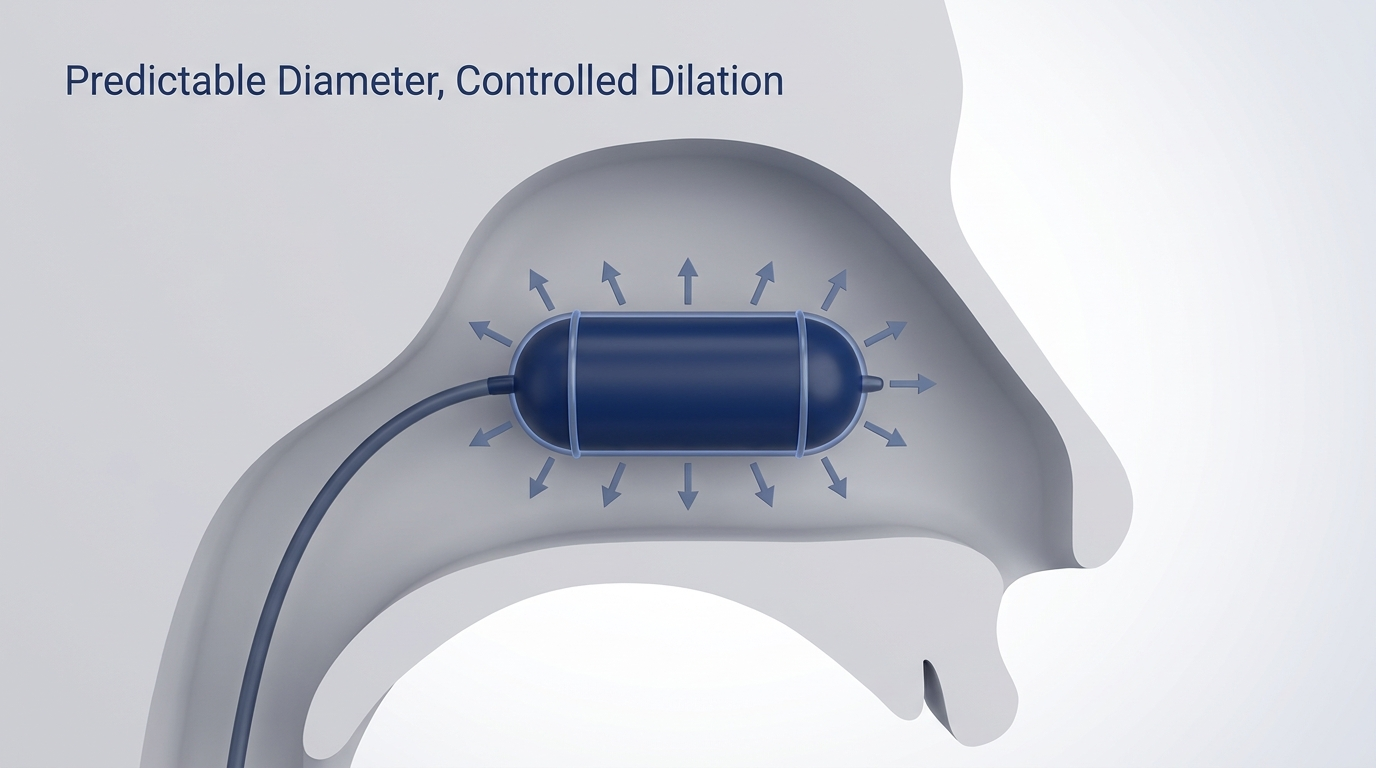
When anatomy is a major driver (like a deviated septum), procedures that improve nasal airflow may be considered. Options can include septal correction approaches and turbinate reduction when indicated. It may also be reasonable to ask your ENT about minimally invasive options, depending on anatomy and local availability—for example, balloon septoplasty (minimally invasive septum treatment).
https://www.clearpathnasal.com/blog/what-is-balloon-septoplasty-a-minimally-invasive-option-for-deviated-septum
Evidence snapshot: what clinical data suggests about minimally invasive septal approaches
- 107 consecutive cases were reported. (Dillard et al., 2026)
- In a subgroup with CT scans, septal symmetry improved 22% at the nasolacrimal duct and 45% at maximal deviation landmarks. (Dillard et al., 2026)
- No major complications were reported in this cohort (no perforation, hematoma, infection, or conversion to traditional septoplasty). (Dillard et al., 2026)
- Patient-reported symptoms (SNOT-22) improved from 58.7 to 44.8 at one month (a 23.8% reduction), with the biggest improvements in nasal congestion, facial pressure/headache, and sleep quality. (Dillard et al., 2026)
These findings represent one retrospective cohort and do not establish superiority over other treatments; individual results vary. Still, they support the idea that improving nasal airflow may help relieve symptoms that often travel with sleep-related breathing complaints.
First-line medical care helps many; when structure dominates, targeted procedures may reduce resistance and support steadier sleep breathing.
What to expect: can fixing nasal obstruction improve oxygen levels?
What the research supports
Research links nasal obstruction with worse overnight oxygen measures in OSA and shows measurable desaturation when the nose is experimentally blocked—especially in higher-risk groups. (Lan et al., 2021; Armengot et al., 2008) For a patient-focused perspective on structural correction and sleep quality, see septoplasty for better sleep and breathing.
https://www.clearpathnasal.com/blog/septoplasty-for-better-sleep-and-breathing-quality
Treating obstruction may improve nocturnal oxygen saturation and sleep-related outcomes in selected patients, especially when nasal blockage is a major contributor and other sleep-breathing problems are also addressed. (Lan et al., 2021; Armengot et al., 2008)
What it may not do
Improving nasal breathing doesn’t “cure” OSA for everyone. Many people still need a full sleep evaluation and a broader plan that considers the entire airway and overall health.
Expect benefits to depend on the underlying cause and the full sleep-breathing picture.
FAQ
Can a blocked nose lower oxygen saturation at night?
Yes. Studies show nasal blockage can contribute to measurable nocturnal oxygen desaturation, especially in higher-risk groups. (Armengot et al., 2008; Lan et al., 2021)
Why does my nose feel more blocked when I lie down?
Nasal resistance often increases in the supine position, which may worsen nighttime airflow and oxygen levels in susceptible people. (Lan et al., 2021)
Is mouth breathing bad for sleep oxygen?
It can be. Mouth breathing may increase upper-airway collapse risk and worsen sleep-breathing stability, particularly in OSA. (Lan et al., 2021)
Can treating a deviated septum help with sleep and oxygen levels?
In selected patients, improving nasal airflow may improve sleep symptoms and nocturnal oxygenation, but outcomes vary and depend on the broader airway and any coexisting sleep-disordered breathing. (Lan et al., 2021; Armengot et al., 2008)
Call to action (patient next step)
1) Track symptoms for 1–2 weeks (mouth breathing, snoring, awakenings, morning headaches).
2) Ask for a nasal exam if obstruction is persistent or one-sided.
3) Consider sleep evaluation if you suspect OSA or you’re seeing frequent nighttime oxygen dips.
You can also review what to do next for chronic nasal congestion and discuss options with your local ENT.
https://www.clearpathnasal.com/blog/deviated-septum-and-chronic-nasal-congestion-what-to-do-next
Small, practical steps—plus a focused evaluation—can clarify whether improving nasal airflow will help your sleep and oxygenation.
Medical disclaimer
This article is for general educational purposes and is not a substitute for medical advice, diagnosis, or treatment. If you have urgent symptoms (trouble breathing, chest pain, confusion, blue/gray lips, or very low oxygen readings), seek emergency care.
References
- Lan MC, et al. (2021). Nasal Obstruction as a Potential Factor Contributing to Hypoxemia in Obstructive Sleep Apnea. https://pmc.ncbi.nlm.nih.gov/articles/PMC7811484/
- Armengot M, et al. (2008). Effect of total nasal obstruction on nocturnal oxygen saturation. https://pubmed.ncbi.nlm.nih.gov/18588768/
- Mass Eye & Ear (n.d.). Nasal Obstruction — patient overview. https://masseyeandear.org/conditions/nasal-obstruction
- Dillard J, Koudouovoh C, Lee V, et al. (2026). Rhinology Online. 2026;9:18–23. doi:10.4193/RHINOL/25.018

Dr. David G. Dillard
Author
Share it with others!