Congenital vs. Traumatic: How Did My Septum Get Deviated?
If you’ve been told you have a deviated septum, one of the first questions is often: How did this happen? In many cases, the answer comes down to congenital vs traumatic deviated septum—meaning the deviation developed as you were born/growing, or it happened after an injury.
But there’s a catch: many people have a mix of both, and it isn’t always possible to pinpoint a single moment or cause. Major medical references describe septal deviation as multifactorial, influenced by development, trauma, and changes over time. (Mayo Clinic; Cleveland Clinic; PMC; LWW)
Quick Answer: Two Main Ways a Septum Becomes Deviated
Your septum is the thin wall of cartilage and bone that divides your nose into left and right nasal passages. A septum is “deviated” when it’s off-center—so one side of your nasal airway may be narrower than the other, which can affect airflow. (Mayo Clinic; Cleveland Clinic)
A helpful way to picture it: think of the septum like the divider in a two-lane tunnel. If that divider bows left or right, one “lane” gets tighter—even if the outer tunnel (your nose) looks the same from the outside.
When people search congenital vs traumatic deviated septum, they’re usually asking whether their septum was:
1) Congenital/developmental (present at birth or becomes noticeable during growth)
2) Traumatic (shifted or bent after a nasal injury)
In real life, the cause can be multifactorial—a combination of facial development, genetics, injuries (even minor ones), and the way nasal tissues change with time. (Mayo Clinic; Cleveland Clinic; PMC; LWW)
For a deeper primer on structure and airflow, see our overview of nasal anatomy and deviated septum causes: https://www.clearpathnasal.com/blog/deviated-septum-causes-understanding-your-nasal-anatomy
Bottom line: Most deviated septums arise from a blend of development and life events rather than one single cause.

What “Congenital” Means (Deviated From Birth or During Growth)
When a deviated septum is described as congenital, it can mean present at birth, or it can mean developmental—something that becomes more obvious as your nose and facial bones grow. (PMC; LWW)
In clinic, some patients describe it as, “I’ve always favored one side,” or “I thought it was normal to breathe better through my right nostril.” That kind of lifelong pattern can fit a developmental origin—though it’s not proof by itself.
How congenital deviation can happen
• Fetal development patterns: The septum may form with a curve or tilt before birth.
• Growth-related changes: A deviation might not be obvious in infancy, but as the face grows, the shape can become more noticeable or symptomatic. (PMC; LWW)
Common congenital “shapes” doctors see
Clinicians often describe developmental deviations as smoother curves, such as:
• C-shaped deviation
• S-shaped deviation
These patterns can look more like a gradual bend than a sharp “step-off.” (PMC; LWW)
Birth trauma vs “true congenital”—why this gets confusing
Sometimes a deviation is discovered later and called “from birth,” but it may actually reflect:
• Pressure/position during delivery that affected the nose (technically traumatic, even if it happened at birth), and/or
• Genetic predisposition or developmental facial growth patterns that become clearer over time. (PMC; Shah Facial Plastics)
Curious about heredity? Explore genetic vs acquired deviated septum: https://www.clearpathnasal.com/blog/is-a-deviated-septum-genetic-or-acquired
Key takeaway: Congenital doesn’t always mean “noticed in infancy”—some deviations only show themselves as the face and nose mature.

What “Traumatic” Means (Injury-Related Septal Deviation)
A traumatic deviated septum occurs when force to the nose shifts cartilage and/or bone. This can happen at any age, and it doesn’t always require a dramatic injury. (Mayo Clinic; Cleveland Clinic)
A common real-world scenario is a hit that felt “minor” at the time—an elbow in basketball, a fall onto the face, a collision in soccer—followed by a new pattern of blockage that never fully went away.
Trauma in infants: can delivery contribute?
In some cases, pressure during childbirth can affect a newborn’s nasal structures. This can be hard to recognize immediately and may only become clear later. (PMC; LWW)
Trauma in kids, teens, and adults: the most common scenarios
Common causes include:
• Falls and rough play
• Contact sports injuries
• Fights or accidental bumps
• Workplace injuries
• Motor vehicle accidents (Mayo Clinic; Cleveland Clinic)
What traumatic deviations often look like
After impact, deviation patterns may appear more:
• Irregular
• Angled
• Dislocated (a “shifted” look)
These patterns can differ from the smoother curves often described in developmental deviation—though there’s overlap, and an exam matters most. (LWW; Cleveland Clinic)
If symptoms began after a clear impact—or your nose’s shape changed suddenly—trauma is a likely contributor.

Why Your Deviated Septum Might Be “Both” (Multifactorial Causes)
Development + minor hits add up
A mild curve that started early can worsen after repeated small impacts—sports, bumps, or even unnoticed injuries. Over time, the “starting shape” and the “life hits” can combine. (PMC; LWW)
A simple analogy: a young tree that leans a little can end up leaning more after years of wind. The wind didn’t create the tree, but it can influence the final shape.
Genetics and facial growth patterns may play a role
Facial growth isn’t identical for everyone. Some people may be predisposed to certain structural patterns that make deviation more likely or more noticeable with time. (PMC; Shah Facial Plastics)
Learn more: is a deviated septum genetic? https://www.clearpathnasal.com/blog/is-a-deviated-septum-genetic-or-acquired
Aging can make deviation feel worse
Even if the septum itself hasn’t dramatically “moved,” symptoms can become more noticeable as tissues change with age—affecting airflow and dryness/irritation patterns. (Mayo Clinic)
Related read: does a deviated septum get worse over time? https://www.clearpathnasal.com/blog/does-a-deviated-septum-get-worse-over-time
Think of cause as a timeline—early development, small (or big) hits, and aging can all shape how your nose feels today.
Clues That Suggest Congenital vs. Traumatic (Without Self-Diagnosing)
You may not be able to diagnose the cause at home, but you can gather helpful clues for your ENT visit.
Questions to ask yourself (patient-friendly checklist)
• Have I always breathed better through one side? (a lifelong pattern can suggest congenital/developmental)
• Did symptoms start after a specific hit or accident? (can suggest traumatic)
• Do I play contact sports or remember a broken nose?
• Did I have childhood nasal injuries that I ignored or forgot?
Why symptoms alone don’t identify the cause
Many nasal septum deviation symptoms overlap regardless of origin, including:
• Nasal blockage (often worse on one side)
• Noisy breathing or snoring
• Frequent congestion
• Nosebleeds (in some cases; can be associated with mucosal irritation and dryness)
• Sinus pressure/infections in some people (Cleveland Clinic; Mayo Clinic)
In other words, symptoms tell you how much it’s affecting you, not necessarily how it started.
Use your history as a guide—but let an exam make the final call.

How ENTs Determine What’s Going On
Exam basics
An ENT typically uses:
• A focused history (when symptoms started, triggers, injuries)
• A careful internal nasal exam
• Often nasal endoscopy to better visualize internal structures (Cleveland Clinic)
Clinicians integrate your timeline with physical findings to understand likely contributors and map out options.
When imaging helps (and when it doesn’t)
A CT scan may be used when:
• Sinus disease is suspected, and/or
• Imaging will help plan surgery
Not everyone needs imaging just to confirm a deviated septum. (PMC; Cleveland Clinic)
Deviation patterns and classifications
Clinicians may describe deviation by:
• Location (front vs back)
• Structure (cartilage vs bone)
• Shape (C-shaped, S-shaped, spur, dislocation)
These details can influence septoplasty options and which techniques may be most appropriate. (LWW; PMC)
History + exam (and sometimes imaging) guide diagnosis and personalize treatment planning.
When a Deviated Septum Needs Treatment (And When It Doesn’t)
If symptoms are mild
Many people do well with:
• Observation
• Saline rinses/sprays
• Allergy management when relevant (Mayo Clinic; Cleveland Clinic)
Signs it may be time to talk about a procedure
Consider an ENT discussion if you have:
• Persistent one-sided blockage
• Sleep disruption or mouth-breathing at night
• Recurrent sinus infections (for some patients)
• Exercise limitation
• Medications not helping enough (Mayo Clinic; Cleveland Clinic)
Treatment is about impact—when day-to-day life or sleep suffers, it’s time to review options.

Treatment Options: From Traditional Septoplasty to Minimally Invasive Approaches
Traditional septoplasty (overview)
Septoplasty aims to improve airflow by repositioning, reshaping, or removing parts of the septum that block the nasal passage. It often involves lifting the lining over the septum (mucosal flap elevation) to access cartilage and bone. (Cleveland Clinic; Mayo Clinic)
Balloon-assisted endoscopic septoplasty (patient-friendly explanation)
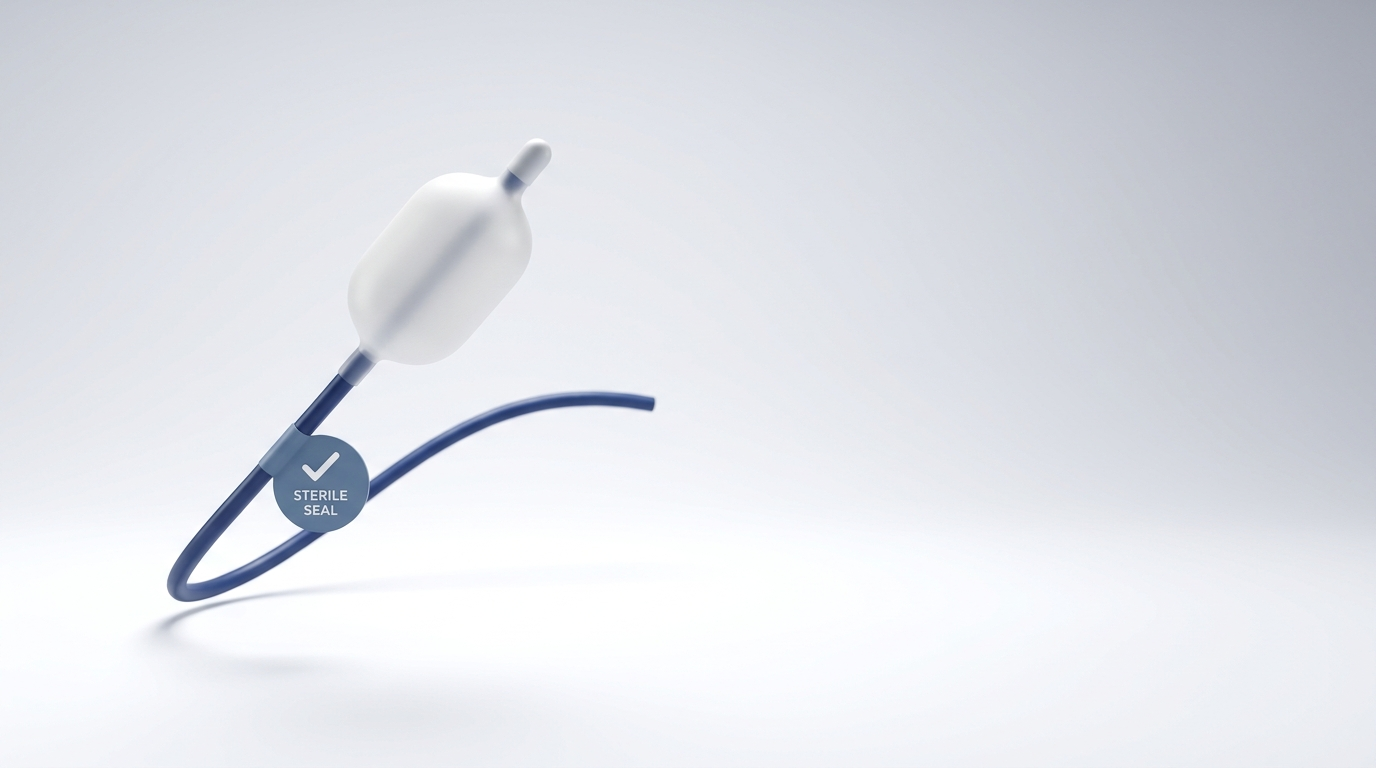
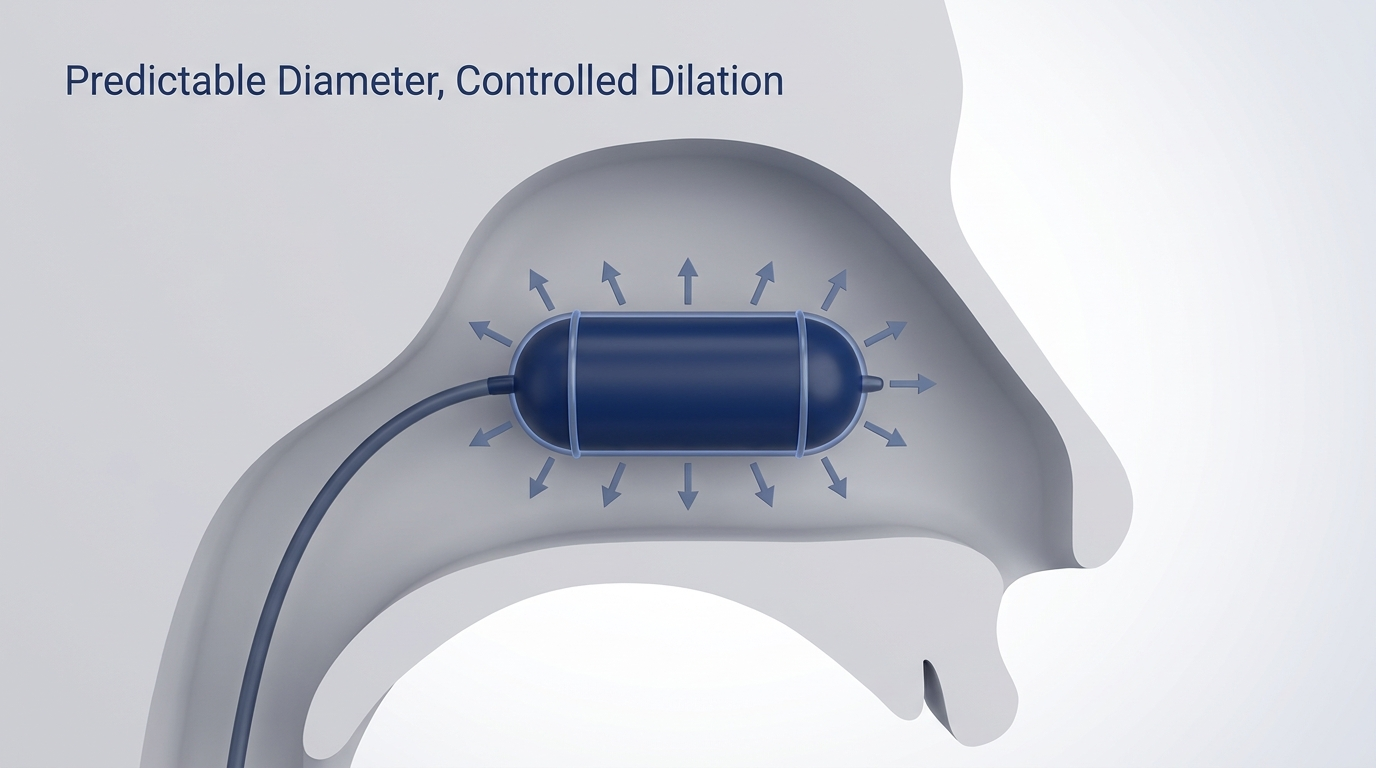
For selected patients, some ENTs may offer balloon-assisted septoplasty, which uses controlled, directional pressure under endoscopic visualization to help mobilize the septum with less tissue disruption when appropriate. One device used for this approach is the ClearPath Nasal Balloon (CNB) device.
Learn more about this minimally invasive septoplasty option: https://www.clearpathnasal.com/blog/what-is-balloon-septoplasty-a-minimally-invasive-option-for-deviated-septum
Evidence snapshot: ClearPath Nasal Balloon (CNB) outcomes
Early outcomes have been reported in a retrospective single-center series (publication year 2026; retrospective, non-comparative) evaluating balloon-assisted endoscopic septoplasty with the ClearPath Nasal Balloon device:
• Safety: In 107 cases, the authors reported no major complications such as septal perforation, hematoma, mucosal injury, or synechia. (Dillard et al., 2026)
• Imaging-confirmed alignment: In 23 patients with pre- and post-op CT scans, there was a mean improvement of 45% at the point of maximal deviation and 22% at the nasolacrimal duct (both p=0.005). (Dillard et al., 2026)
• Symptoms: Average SNOT-22 improved by ~24% at 1 month, including congestion, headache/facial pressure, and sleep. (Dillard et al., 2026)
• Efficiency: The technique may reduce steps such as extensive flap elevation, suturing, and packing—potentially decreasing anesthesia time. (Dillard et al., 2026)
Important notes:
• Evidence remains preliminary and retrospective; long-term and comparative (head-to-head) data are limited and may be pending future publications.
• Outcomes vary. Your ENT can tell you whether balloon-assisted septoplasty (including options involving the ClearPath Nasal Balloon device) is appropriate for your anatomy and goals—and how it compares with traditional approaches for your specific deviation.
• ClearPath Nasal Balloon is a proprietary device; availability varies. If a clinician or clinic has a financial relationship with a device manufacturer, they should disclose this per local regulations.
Your best procedure is the one that safely fits your anatomy, symptoms, and goals—decided with a trusted ENT.
FAQs
Can you be born with a deviated septum?
Yes. A deviated septum from birth (congenital) can occur, and some deviations become more noticeable as the face grows. (PMC; Mayo Clinic)
Can a deviated septum happen from a minor injury?
Yes. A deviated septum injury can result from a single event or repeated minor impacts over time. (Mayo Clinic; Cleveland Clinic; LWW)
Does a deviated septum get worse with age?
Symptoms can feel worse over time due to aging-related tissue changes and cumulative factors, even if you don’t notice a specific new injury. (Mayo Clinic) Learn more: https://www.clearpathnasal.com/blog/does-a-deviated-septum-get-worse-over-time
If I don’t remember an injury, does that mean it’s congenital?
Not necessarily. It’s common to forget childhood injuries, and genetics/development may also contribute—making congenital vs traumatic deviated septum hard to separate without an exam. (PMC; Shah Facial Plastics)
FAQs in brief: Yes, you can be born with it; yes, minor injuries can matter; and yes, symptoms can feel worse with time—even without a memorable accident.
Next Steps: How to Prepare for an ENT Visit
Bring a “breathing timeline”
Write down:
• When symptoms started (or if they feel lifelong)
• Whether one side is consistently worse
• Sleep and exercise impact
• Seasonal/allergy triggers
• Any remembered injuries (even “minor”)
• Treatments you’ve tried (saline, allergy medications, etc.)
Questions to ask your clinician
• Where is the deviation (front vs back)?
• Is it mostly cartilage or bone?
• What are my septoplasty options, including traditional approaches and minimally invasive approaches like balloon-assisted septoplasty? Am I a candidate for the ClearPath Nasal Balloon approach?
CTA: If nasal blockage is affecting your sleep, exercise, or daily comfort, schedule a visit with a local ENT and bring this checklist—then ask specifically about both traditional septoplasty and ClearPath-style balloon-assisted options so you can compare what fits your anatomy and goals.
A focused history and a clear set of questions make your visit more productive and personalized.
Sources
• Mayo Clinic. Deviated septum: Symptoms & causes. https://www.mayoclinic.org/diseases-conditions/deviated-septum/symptoms-causes/syc-20351710
• Cleveland Clinic. Deviated Septum. https://my.clevelandclinic.org/health/diseases/16924-deviated-septum
• PMC (NCBI). Review on septal deviation etiology/development. https://pmc.ncbi.nlm.nih.gov/articles/PMC9736816/
• LWW. Deviated Nasal Septum: A Comprehensive Review. https://journals.lww.com/dmms/fulltext/2024/19030/deviated_nasal_septum__a_comprehensive_review.6.aspx
• Shah Facial Plastics (overview; pediatric/adult considerations). https://www.shahfacialplastics.com/articles/nasal-septal-deviation-pediatric-adult-populations/
• Dillard JD, Koudouovoh C, Lee V, et al. Outcomes of force-directed balloon-assisted endoscopic septoplasty… Rhinology Online. 2026;9:18–23. http://doi.org/10.4193/RHINOL/25.018
This article is for educational purposes only and is not medical advice. Please consult a qualified healthcare provider for diagnosis and treatment.

Dr. David G. Dillard
Author
Share it with others!