Can a Deviated Septum Cause Ear Pain? (ETD Explained)
Yes—a deviated septum may contribute to ear pain in some people, usually indirectly through Eustachian tube dysfunction (ETD). ETD makes it harder for your middle ear to equalize pressure, which can lead to ear pressure, ear fullness, popping, and discomfort or pain. Ear pain has many possible causes, though, so this article explains when the septum is likely involved, what symptoms to watch for, and what treatments may help. [2][3]
Think of it this way: your nose, sinuses, and ears share the same neighborhood—when nasal airflow and drainage are off, your ear’s pressure system can get fussy too.
Quick anatomy—what your septum and Eustachian tubes do
What is a deviated septum?

Your nasal septum is the wall of cartilage and bone that divides your nose into left and right sides. A deviated septum means that wall is off-center, which can narrow one nasal passage (or both) and contribute to breathing problems.
Common symptoms include chronic nasal blockage (often worse on one side), mouth breathing, snoring, and facial pressure. Some people also notice they always sound congested or can’t comfortably breathe through their nose during exercise or sleep. [3]
Bottom line: a deviated septum narrows airflow pathways and can set the stage for persistent nasal obstruction.
What is the Eustachian tube—and why does it affect ear pain?

The Eustachian tube connects your middle ear to the back of your nose (the nasopharynx). Its job is to equalize pressure and help drain fluid from the middle ear. When the tube doesn’t open well (ETD), pressure can’t balance normally—leading to ear fullness, popping/clicking, muffled hearing, and discomfort or pain. [2][5]
A simple analogy: if your middle ear is a room, the Eustachian tube is the vent—if it doesn’t open, pressure builds.
How a deviated septum can lead to ear pressure and pain (the ETD connection)
When people ask, “can a deviated septum cause ear pain?” one common link between nasal obstruction and ear symptoms is ETD.
Many patients describe it like this: “My ear isn’t infected, but it feels blocked—especially when my nose is stuffed.” That pattern (pressure/fullness that tracks with nasal congestion) is a classic ETD clue. [2][5]
Mechanism #1—nasal obstruction can promote Eustachian tube dysfunction
A deviated septum can cause nasal obstruction and congestion, which may affect airflow and the area around where the Eustachian tube opens in the back of the nose. If the tube doesn’t open efficiently, the middle ear may not equalize pressure well—causing a plugged ear, pressure swings, and aching discomfort. [1][2]
Concrete example: you get a mild cold, but your already-narrower side swells shut. A day later, one ear starts popping and feels full—especially when swallowing—because the pressure regulation system is struggling.
Mechanism #2—altered airflow may irritate tissue near the tube opening
Some theories suggest altered airflow or inflammation may contribute to irritation near the Eustachian tube opening, though the exact mechanism is not fully understood. Over time, this may worsen deviated-septum-related ear pressure symptoms associated with ETD. [1]
If you notice seasonal patterns—spring allergies equals more ear plugging—this mechanism may be part of the story.
Mechanism #3—thicker mucus/inflammation can make the tube less likely to open normally
Nasal blockage often overlaps with inflammation (from allergies, chronic rhinitis, or sinus issues). Inflammation can increase swelling and thicken mucus, which may make the Eustachian tube less likely to open normally. This is one reason some people notice more ear symptoms during allergy seasons or colds. [1]
If you’re unsure whether symptoms point more to allergies or anatomy, here’s a helpful guide on how to tell the difference between a deviated septum and allergies: https://www.clearpathnasal.com/blog/deviated-septum-vs-allergies-how-to-tell-the-difference
In short: congestion plus a narrowed nasal passage can tip the balance toward ETD flares in certain people.
What the research says (and what it doesn’t)
Septoplasty and ETD symptoms/tests
Some studies suggest septoplasty may improve ETD symptoms and tympanometry findings in selected patients. A 2025 systematic review and meta-analysis reported improvements in ETDQ‑7 scores and tympanometry after septoplasty. [1]
What those tests mean in plain language:
- ETDQ‑7: a short questionnaire about symptoms like ear pressure/fullness and discomfort.
- Tympanometry: measures how the eardrum responds to gentle pressure changes to assess middle-ear pressure/function.
More severe deviation may correlate with worse tube function
A prospective study found that more severe septal deviation correlated with worse Eustachian tube function, and function improved after surgical correction—supporting the idea that nasal structure can influence ETD in some patients. [4]
Takeaway: nasal structure can matter for ETD in some people, but study findings don’t mean the septum explains every episode of ear pain.
Important nuance—ear pain isn’t always from the septum
Even with evidence linking nasal obstruction and ETD, ear pain can come from many sources. If you have ongoing ear discomfort plus nasal obstruction, it’s reasonable to consider an ENT evaluation to look at both the ear and the nose. [2][3]
Avoid anchoring on a single cause—your plan should match your specific pattern of symptoms.
Symptoms that suggest your ear pain could be ETD-related

Common ETD symptoms people describe
- Ear pressure/fullness (often described as plugged)
- Popping or clicking
- Muffled hearing that fluctuates
- Discomfort during flying, elevator rides, or driving in the mountains (pressure changes) [2][5]
If you’re trying to figure out can a deviated septum cause ear pain, a helpful clue is a pattern of ear fullness and pressure changes alongside chronic nasal blockage. If persistent nasal blockage is part of your story, this guide on chronic nasal congestion—what to do next may help: https://www.clearpathnasal.com/blog/deviated-septum-and-chronic-nasal-congestion-what-to-do-next
A quick self-check: ETD discomfort often changes with swallowing, yawning, altitude shifts, or congestion level—whereas infection pain may be more constant and progressively worse. Only an exam can confirm the cause. [2]
Red flags—when ear pain needs urgent medical care
- Fever, drainage from the ear, or rapidly worsening severe pain
- Sudden hearing loss
- Significant dizziness/vertigo, especially with neurologic symptoms
- Severe one-sided throat pain or swelling
If any red flags appear, get medical attention promptly rather than waiting for symptoms to pass.
Other common causes of ear pain (so you don’t miss something important)
Ear and infection-related causes
- Middle ear infection (otitis media)
- Swimmer’s ear (otitis externa)
- Fluid behind the eardrum (middle ear effusion)
Referred pain (pain felt in the ear but coming from elsewhere)
- Jaw joint problems (TMJ) or clenching
- Dental issues
- Throat inflammation
- Neck muscle tension
Pressure/irritation triggers
- Allergies, colds, sinus inflammation (see deviated septum vs allergies: https://www.clearpathnasal.com/blog/deviated-septum-vs-allergies-how-to-tell-the-difference)
- Reflux in some people
- Smoke exposure or irritants
Matching your symptom timing and triggers to the right cause prevents missed diagnoses and unnecessary treatments.
How an ENT evaluates “ear pain + deviated septum” (what to expect)

History: the pattern matters
An ENT visit often starts with detailed questions, such as:
- Does ear discomfort flare with congestion, seasons, colds, or flights?
- Do you have one-sided vs. both-sided nasal obstruction, snoring, or sleep disruption?
- Do symptoms come and go or persist most days?
A common clinician question is, Which came first—nasal blockage or ear symptoms? The sequence can help narrow the likely driver. [2][3]
For more on next steps if blockage is persistent, see what to do about chronic nasal obstruction: https://www.clearpathnasal.com/blog/deviated-septum-and-chronic-nasal-congestion-what-to-do-next
Exam and testing
Common next steps may include:
- Nasal exam (sometimes with endoscopy) to assess septal deviation, swelling, or polyps
- Ear exam (otoscopy)
- Tympanometry and/or a hearing test if symptoms persist
- Sometimes an ETDQ‑7 questionnaire to track ETD symptoms (commonly used in research) [1][2]
The goal is to connect your symptom pattern with objective findings so treatment targets the true cause.
Treatment options (step-by-step, starting conservative)

First-line (non-surgical) options for ETD symptoms
Many cases of ETD improve with medical management, especially when inflammation is driving symptoms:
- Saline rinses/sprays to help clear irritants and mucus
- Intranasal corticosteroid sprays when allergies or inflammation contribute
- Short-term decongestants in select patients (avoid overuse; follow label/clinician guidance)
- Allergy management when relevant
- Autoinflation techniques/devices when appropriate (gentle strategies intended to help the tube open and equalize pressure) [2][5]
For a deeper dive into deviated septum management without an operation, see non-surgical treatment options: https://www.clearpathnasal.com/blog/deviated-septum-treatment-without-surgery-what-are-the-options
Start with inflammation control and gentle pressure-equalizing strategies; many people improve without a procedure.
When septoplasty is considered
If you’ve tried appropriate medical therapy and still have significant nasal obstruction—especially with persistent ear pressure associated with a deviated septum or ETD symptoms—septal correction may be discussed.
Research suggests septoplasty may be associated with improvements in ETD symptom scores (ETDQ‑7) and tympanometry findings in selected patients. Results vary and depend on the true cause of your ear symptoms. [1][4]
Septoplasty aims to fix airflow and space issues in the nose; if those are contributing to ETD for you, ear pressure may improve as well.
Where minimally invasive “balloon” approaches may fit (context + evidence)
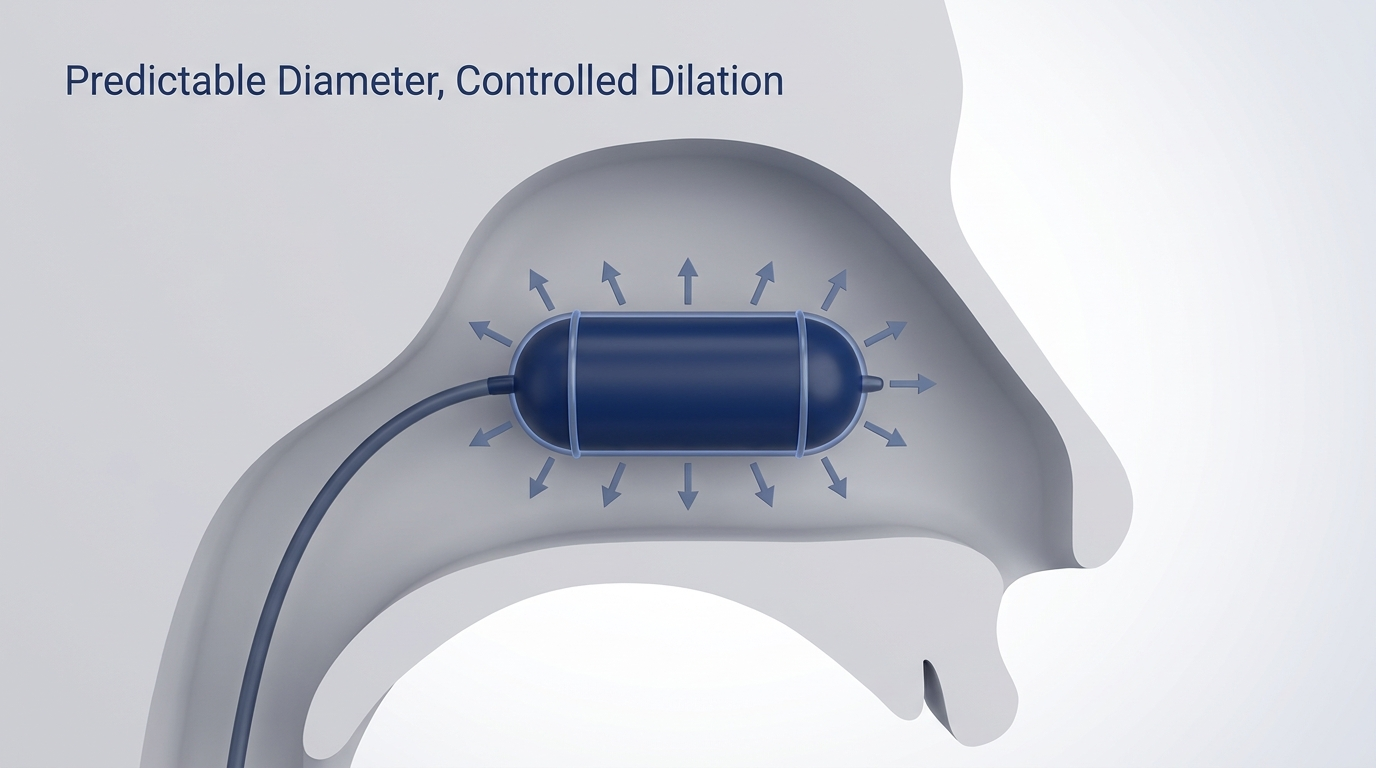
A minimally invasive, office-based approach may be discussed for selected patients, depending on anatomy and clinician expertise. Evidence is still evolving, and outcomes vary. In one 2026 report of 107 consecutive cases using a catheter/needle/balloon-assisted technique, a CT subgroup (n=23) showed improved septal symmetry at key landmarks, symptom scores improved at 1 month in a SNOT‑22 subgroup, and the authors reported no major complications in that cohort—though larger studies are needed.
If you and your clinician are considering this path, here’s more on what to expect during an office-based balloon septoplasty: https://www.clearpathnasal.com/blog/what-to-expect-during-an-office-based-balloon-septoplasty
Minimally invasive options can be appropriate for some anatomies, but shared decision-making and realistic expectations are essential.
Practical tips if ear pressure flares with colds, allergies, or flying
Before flying / altitude changes
- Start congestion control early: saline and any prescribed nasal sprays
- Use gentle pressure-equalizing strategies as advised by your clinician
- If you’re actively sick and severely congested, discuss travel timing and symptom management with a medical professional [2][5]
During an upper respiratory infection
- Avoid forceful pressure maneuvers if they cause sharp pain
- Get checked if pain escalates, fever develops, ear drainage occurs, or hearing changes suddenly [2][5]
Plan ahead for pressure changes, and don’t push through severe congestion or pain.
FAQs
Can a deviated septum cause ear pressure without an infection?
Yes. ETD can cause ear pressure and ear fullness without an infection because it’s primarily a pressure-equalization problem. Infections more often involve fever, worsening pain, or drainage—though not always. [2][1]
Will fixing my deviated septum cure my ear pain?
Sometimes—particularly if ETD is being driven by chronic nasal obstruction. Some studies suggest many patients have improved ETD symptoms and middle-ear function tests after septal correction, but ear pain can also come from other sources (like infections or TMJ). [1][4]
What does ETD feel like?
Common sensations include fullness/pressure, popping or clicking, muffled hearing that comes and goes, and discomfort during altitude changes. [2][5]
When should I see an ENT for ear pain and nasal blockage?
Consider an ENT visit if symptoms are persistent or recurrent, if nasal obstruction is significant, or if you develop any red-flag symptoms (fever, drainage, sudden hearing loss, severe dizziness). [3][2]
Conclusion (clear next step)
So, can a deviated septum cause ear pain? It may—most commonly by contributing to Eustachian tube dysfunction (ETD) that leads to ear pressure, ear fullness, and discomfort. The key is that ear pain has many causes, and ETD is just one of them.
If you’re dealing with ongoing ear pressure plus chronic nasal obstruction, consider an evaluation with a local ENT. Ask whether your symptoms fit ETD, what treatment options are appropriate, and whether any procedural options may be suitable for you.
A targeted plan—starting conservatively—usually yields the most reliable relief.
Citations
[1] Awan et al. Effect of deviated nasal septum on Eustachian tube dysfunction (systematic review & meta-analysis), 2025. https://pmc.ncbi.nlm.nih.gov/articles/PMC12324937/
[2] Cleveland Clinic – Eustachian Tube Dysfunction, 2024. https://my.clevelandclinic.org/health/diseases/22527-eustachian-tube-dysfunction
[3] Mayo Clinic – Deviated Septum (Symptoms & causes), 2025. https://www.mayoclinic.org/diseases-conditions/deviated-septum/symptoms-causes/syc-20351710
[4] Lima et al. Nasal septum deviation and Eustachian tube function (prospective study), 2022. https://www.sciencedirect.com/science/article/abs/pii/S0001651920301990
[5] Chelsea & Westminster Hospital – ETD patient leaflet, 2023. https://www.chelwest.nhs.uk/your-visit/patient-leaflets/ent-audiology/eustachian-tube-dysfunction
This article is for educational purposes only and is not medical advice. Please consult a qualified healthcare provider for diagnosis and treatment.

Dr. David G. Dillard
Author
Share it with others!